


Bullets:
DARPA and the Pentagon hope to build revolutionary new batteries that will power the next generation of weapons systems.
But the global supply chains and manufacturing centers for batteries run through China.
China has tight export restrictions on battery technologies that are intended for military use.
Chinese researchers lead the field in advanced battery tech for heavy equipment, drones, and aircraft.
Inside China / Business is a reader-supported publication. To receive new posts and support my work, consider becoming a free or paid subscriber.
Report:
Good morning.
DARPA is the Defense Advanced Research Projects Agency, and they are looking for suppliers who can build batteries that can be used in drones, trucks, and other military gear. The batteries they’re looking for need five to ten times the energy density, compared to batteries built today.
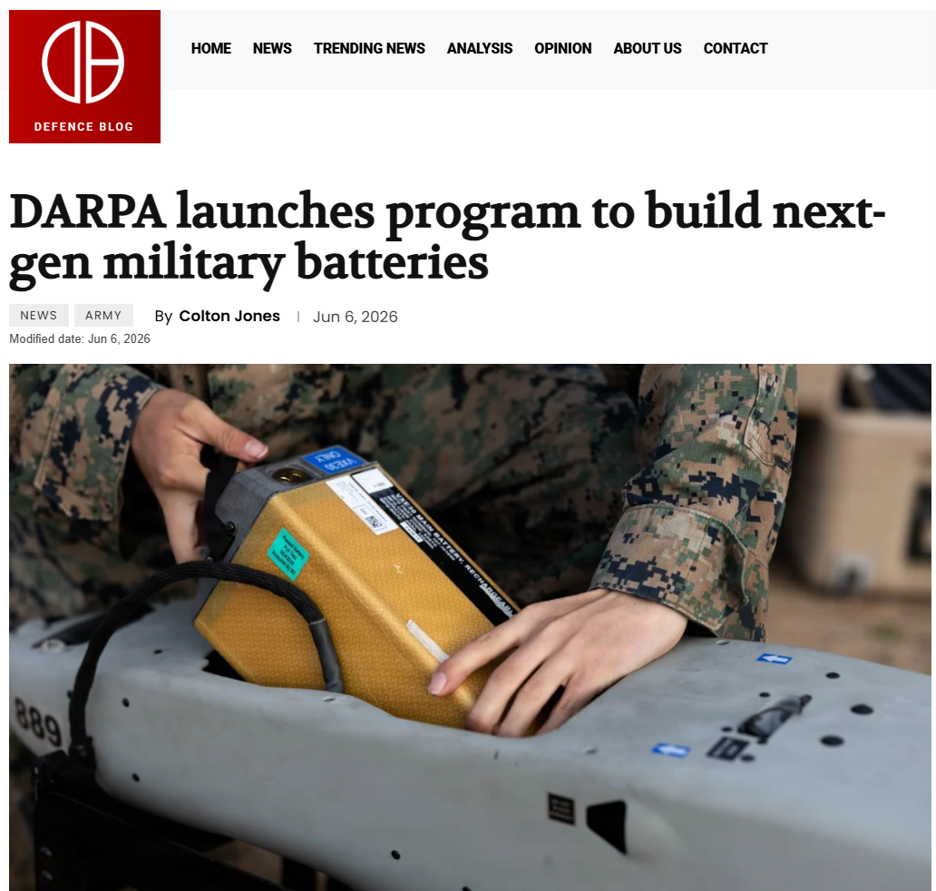
They need developers to design new battery cells, using materials and architectures that haven’t been discovered yet. Batteries fielded in Pentagon weapons systems require high energy density, and high levels of power density, and they provide an example of what the difference is. A drone parked over a target needs high energy density, but one moving and launching weapons needs high power density. The War Department’s new batteries must have both.
There’s also the battery charging problem that needs to be overcome. If those batteries can get built, but take forever to charge up again, that poses an OPTEMPO problem.
But the biggest hurdle of all is China: the United States doesn’t produce most of the components for batteries, nor have the raw materials to do so, and battery buyers are reliant on China. The supply chains are outside American control.
China controls those supply chains, and the US needs to find another way, another method that American companies and industry can take over.
Batteries have vast dual-use applications—obviously for the civilian sector, mainly—but also for defense: drones, sensors, communications, robotics, and in military vehicles.
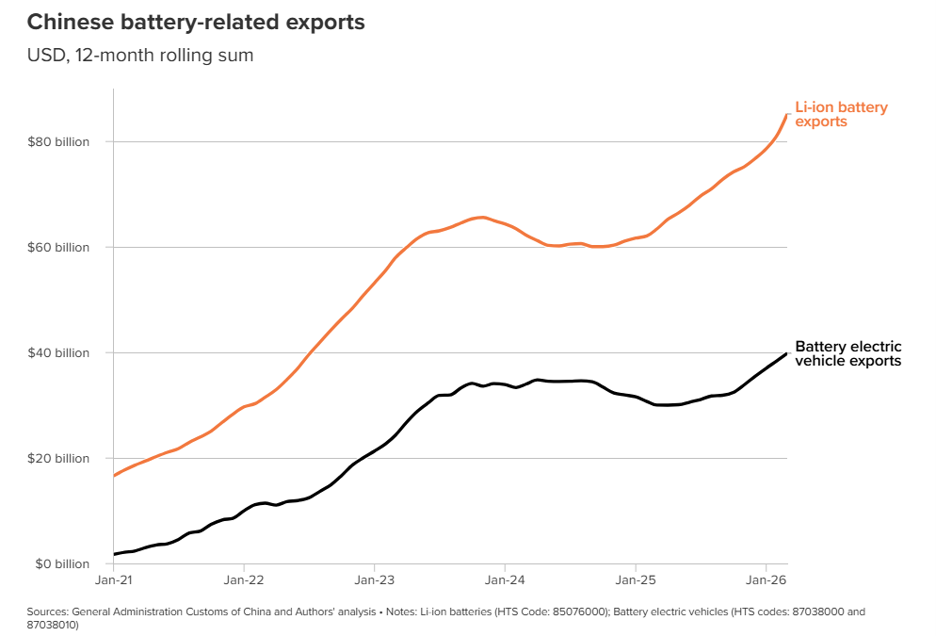
China’s export business for batteries is booming. But China limits sales of their battery technologies only for civilian applications, and restricts shipments to defense contractors. To the Atlantic Council that means that Beijing is weaponizing their battery monopolies, by refusing to let foreign weapons makers buy them. So the US needs to develop a strategy to ensure that the Pentagon isn’t reliant on China for batteries.
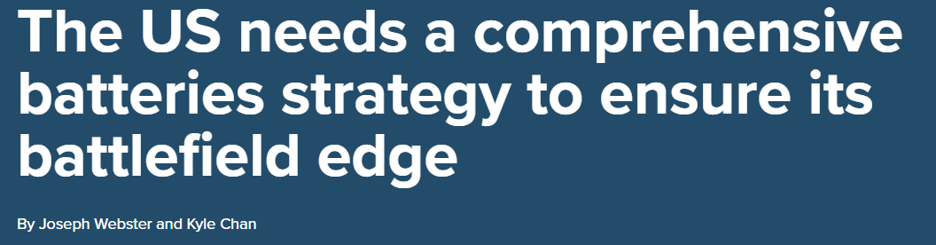
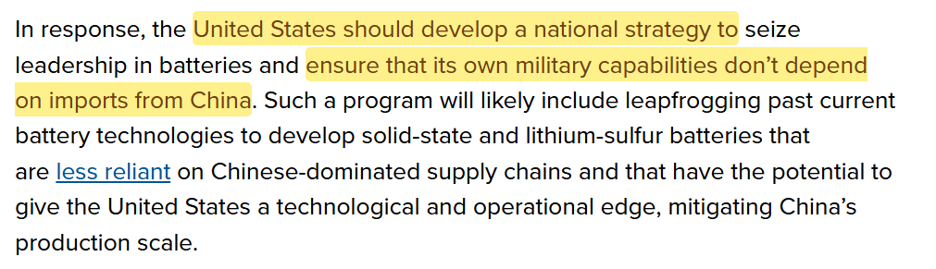
The rest of that paragraph is the tricky part: like we saw before from DARPA, new battery sciences need to be invented. The Pentagon program must jump ahead of current battery tech to develop different types of batteries, that don’t depend on Chinese supply chains. That would “have the potential to” to give the US a technological and operations edge.
Later they admit that Chinese researchers are already tackling the energy and power density problems, and have substantially cut the time it takes to recharge their batteries.
China builds tens of millions of batteries for the electric vehicle market, and that’s important too. Chinese companies already have big markets; they’re already making money, so can fund new research and production for defense purposes. Our companies are starting from scratch.
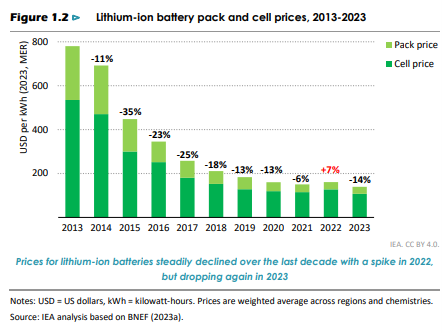
This report is from the IEA and runs 159 pages, and we can see what DARPA and the Pentagon are up against. Battery prices are collapsing in price, over time. So any new battery manufacturers would be walking into an already crowded and highly competitive field, if they hope to sell products to the mass market:
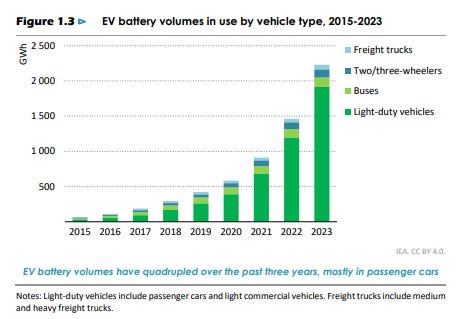
Chinese firms also lead the way on batteries for medium and heavy trucks, and heavy construction and mining equipment, which have even greater power demands than what the Pentagon would need for their trucks:
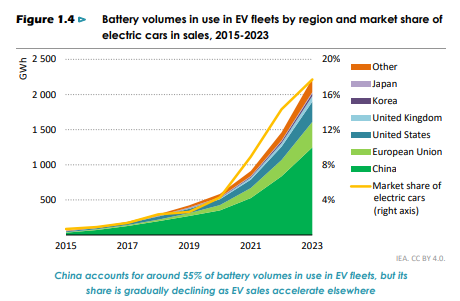
Chinese battery makers also have their domestic market mostly to themselves, which is over half the global demand, as it is:
While it’s true that the Chinese battery industry has received high levels of government support, it’s actually lower than other G8 countries. Over a four-year period, China government support was $3 billion, for buying incentives; in the United States, it was $44 billion total for EV incentives, charging, and batteries:
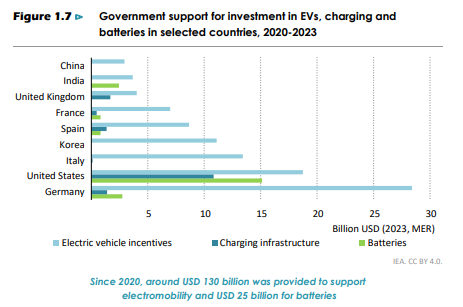
So NATO governments are already spending tens of billions of dollars to subsidize industries there to develop battery technologies, and encourage consumers to buy. But those efforts haven’t gone anywhere.
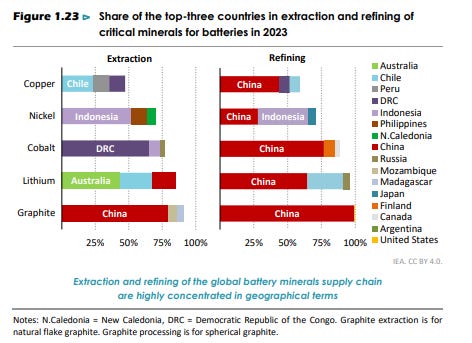
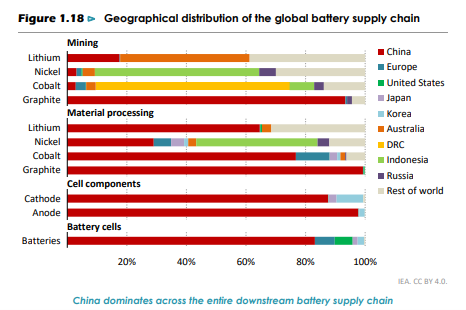
Red on this chart is China, who enjoys massive advantages in battery supply chains. The raw materials are mostly sourced from China, or from countries very friendly with China: Chile, the DRC, Indonesia, and Russia.
Material processing is solid red bars. Cell components and battery cells, all China again:
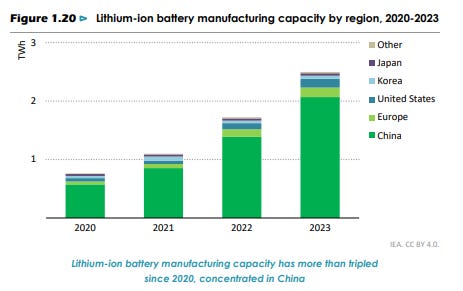
That all results in these data, for production. China is the green part of those bars, where the world’s lithium batteries made. Far more than the rest of the world combined:
So the Pentagon has a big problem, and we see the same problem in civilian sectors too. This is a press release from ProLogium. They are working with Elysian Aircraft to build battery-powered planes. And it’s interesting to see all the conditional and hypothetical tenses in this document. It’s a Memorandum of Understanding—not a contract—that the two parties will have discussions and assessments about the potential application of next generation batteries. Both parties “intend to explore” new generation battery cells, and “lay the groundwork” for zero-emission air travel. Then a “focus on assessing the feasibility” of using batteries in planes. “As the companies explore a potential cooperation”, “expected to focus on battery technologies” that “support the requirements of big planes flying 750-1000 kilometers, or up to 620 miles.
That company press release made it all sound very tentative, but Interesting Engineering picked up the story and made it seem like the planes are coming any day now.
But once again we learn that the Chinese have already done all that, and more: A surprise successful test flight of a large battery-powered plane. CATL builds 37% of all the EV batteries in the world, and built a new, condensed battery with an eye to invent the aerospace battery industry in their own lab:
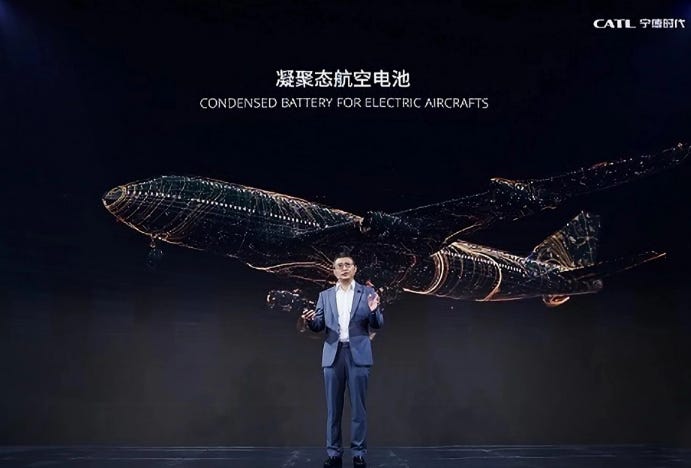
CATL teamed up with COMAC, and engineers from both companies got busy fast. CATL says that in the next two years their plane will be in production, with a range of between 2000 and 3000 km. Remember in the MOU from Elysian and ProLogium they were talking and assessing and thinking about building the foundation for a program for a plane with a range of a thousand kilometers.
CATL did their project in secret, and issued their announcement only after it was successfully done. The aerospace industry was “shocked” and it will “change the jet age forever.”
This piece does a good job on the science of the new battery, and they explain that CATL’s breakthrough was in the battery’s cycle life. We’ll link to these.
This is the original paper from CATL in Nature Nanotechnology, and here is a good explanation and summary that is easier to understand, and how CATL’s new battery achieves the energy density required to power large aircraft.
CATL is already invested heavily in Research and Development, with over 43,000 patents for batteries. DARPA and the Atlantic Council are talking about building some batteries for the Pentagon, some day. ProLogium and Elysian are talking about building some batteries they can use in an airplane, some day. But CATL and COMAC are building the batteries, and the planes, right now.
Be good.
Resources and links:
DARPA launches program to build next-gen military batteries
https://defence-blog.com/darpa-launches-program-to-build-next-gen-military-batteries/
Atlantic Council, the US needs a comprehensive battery strategy to ensure its battlefield edge
https://www.atlanticcouncil.org/blogs/energysource/the-us-needs-a-comprehensive-batteries-strategy-to-ensure-its-battlefield-edge/
Next-gen ceramic aircraft batteries could enable 621-mile electric flights
https://interestingengineering.com/energy/next-gen-ceramic-aircraft-batteries-flights
Shock in Aerospace as China Reveals High-Energy Battery Capable of Powering Electric Aircraft and Disrupting Jet Age Forever
sustainability-times.com/energy/shock-in-aerospace-as-china-reveals-high-energy-battery-capable-of-powering-electric-aircraft-and-disrupting-jet-age-forever/
Surprise test flight heralds ultra-long-range electric aircraft by 2028
https://newatlas.com/aircraft/catl-worlds-largest-ev-battery-manufacturer-aircraft/
China firm sets 2027 target for electric plane with 1,800 mile range
https://interestingengineering.com/innovation/chinas-battery-electric-aircraft-1800-mile
Application-driven design of non-aqueous electrolyte solutions through quantification of interfacial reactions in lithium metal batteries
https://www.nature.com/articles/s41565-025-01935-y
ProLogium and Elysian Aircraft BV Sign MoU:Exploring Next generation Battery Applications in Aerospace to Advance the Vision of Zero-Emission Aviation and Future Mobility
https://prologium.com/prologium-and-elysian-aircraft-bv-sign-mou:exploring-next-generation-battery-applications-in-aerospace-to-advance-the-vision-of-zero-emission-aviation-and-future-mobility/
CATL electric plane to support 2,000 km flight
https://www.chinadaily.com.cn/a/202406/25/WS667a5675a31095c51c50ab4d.html
Quantitative mapping reveals key failure mechanism
https://www.batterytechonline.com/materials/catl-achieves-breakthrough-in-lithium-metal-battery-technology
Chinese electric trucks pay for themselves in five years. They may be half the market in three.
China Now Controls Nearly 70% of the World’s EV Batteries
https://www.autoblog.com/news/china-now-controls-nearly-70-of-the-worlds-ev-batteries
Inside China / Business is a reader-supported publication. To receive new posts and support my work, consider becoming a free or paid subscriber.
From Inside China / Business via This RSS Feed.