

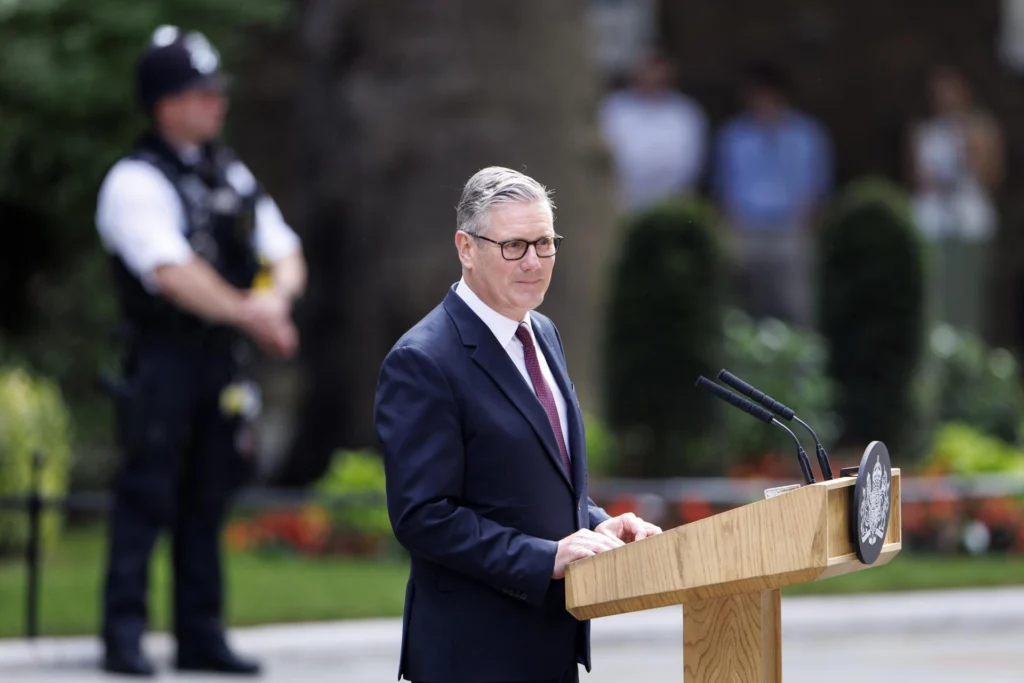
British Prime Minister Keir Starmer resigned on Monday, forcing the United Kingdom into its seventh leadership transition in ten years, after his administration collapsed under the weight of severe austerity measures, corruption scandals, internal Labour Party dissent, and a historic electoral defeat on May 7 that stripped the party of 1,498 councilors and 38 key municipalities.
Starmer will remain in a caretaker capacity until the Labour Party holds primary elections on July 9, with former Manchester mayor Andy Burnham already securing the backing of at least 200 MPs – well above the 81 required – to succeed him. The new leader is expected to formally take office in September, before Parliament resumes sessions.
RELATED: U.K. Slashes International Aid Budget by 56% to Fund Defense
The outgoing premier’s tenure unravelled after his fiscal strategy weakened the national economy through heavy reliance on energy imports amid global conflicts, compounded by harsh spending cuts that eliminated winter fuel subsidies for millions of pensioners.
Government legitimacy suffered further damage following revelations that senior officials accepted expensive gifts, alongside the dismissal of ambassador Peter Mandelson over his past ties to Jeffrey Epstein’s child exploitation network.
“New leader will be in place before Parliament returns in September, I will remain in post until the contest is complete”
Keir Starmer announces he will resign as UK prime minister and leader of the Labour Party
Follow live updates and reaction: https://t.co/8HkQf7O9cD pic.twitter.com/oyZPA5C6Yc
— BBC Breaking News (@BBCBreaking) June 22, 2026
The executive’s failure to curb migrant crossings in the English Channel accelerated the ruling party’s decline against right-wing forces such as Reform UK. Labour’s crushing defeat on May 7 triggered the immediate resignation of key ministers in Health and Defense.
Starmer has pledged to give “all his support” to whoever emerges as his successor. The outgoing prime minister’s demise closes a turbulent cycle that began with David Cameron’s Brexit resignation in 2016, followed by Theresa May’s failure to pass her European divorce plan, Boris Johnson’s scandal-plagued exit, Liz Truss’s 45-day collapse over tax reforms, and Rishi Sunak’s Conservative defeat to Labour.
From teleSUR English via This RSS Feed.