

Caracas (OrinocoTribune.com)—The lethal maritime campaign conducted by the US Southern Command (SOUTHCOM) continues to claim lives in Latin American and Caribbean waters, with the death toll now totaling 209. Since September 2025, the US has carried out 63 military strikes against small boats under the guise of counter-narcotics operations as part of Operation Southern Spear. International legal experts and analysts still condemn the policy as a systematic campaign of extrajudicial killings.
Recent strikes in the Eastern Pacific and Caribbean Sea
The latest escalation features consecutive operations carried out in June 2026, highlighting the reckless and brutal nature of US imperialist actions:
• June 3: The 60th strike took place in the Eastern Pacific, resulting in two extrajudicial executions and zero survivors.
• June 16: The 61st strike in the Eastern Pacific killed three people. The data was adjusted on June 22 from two survivors to zero after rescue efforts failed to materialize, following an established pattern of abandoning survivors to the elements.
• June 18: The 62nd strike, also in the Eastern Pacific, targeted another small vessel, resulting in three extrajudicial executions and zero survivors.
• June 21: The 63rd strike shifted back to the Caribbean Sea, where a single strike on a boat killed eight individuals. Initial reports listed six survivors, but the figure was updated to zero on June 22 due to the lack of any rescue operations.
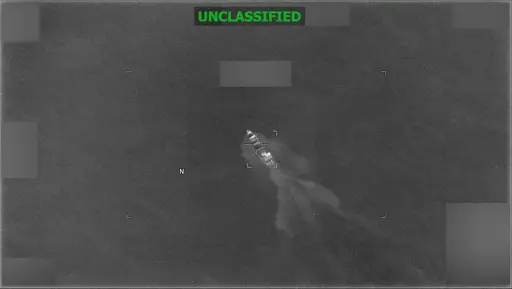
On June 21, at the direction of #SOUTHCOM commander Gen. Francis L. Donovan, Joint Task Force Southern Spear conducted a lethal kinetic strike on a vessel operated by Designated Terrorist Organizations. Intelligence confirmed the vessel was transiting along known… pic.twitter.com/34cDvvcwxe
— U.S. Southern Command (@Southcom) June 22, 2026
A clear pattern of intentionally killing survivors
In less than three weeks, US SOUTHCOM left eight human beings defenseless in high waters, while consistently claiming that a search-and-rescue call was issued. In nearly 99% of cases, these actions have led to a later update of the death toll. This abandonment of survivors adds to the already controversial assassination of poor Latin American and Caribbean fisherpeople.
The September 2 double-tap strike to kill one of two survivors of the first strike raised some US congressional criticism due to the atrocity of the decision. However, SOUTHCOM’s new strategy of abandoning survivors to the elements and sharks in the high seas has already claimed the lives of 16 initial survivors, according to statistics tracked by the Orinoco Tribune editorial team.
Statistical breakdown of the maritime violence
Orinoco Tribune’s tracked data shows the geographical distribution of the 63 strikes and 209 fatalities, highlighting where the US military has concentrated its lethal force:
• Eastern Pacific: 135 deaths recorded across 45 strikes.
• Caribbean Sea: 74 deaths recorded across 18 strikes.
As seen in these statistics, about two-thirds (64.59%) of the victims were killed in the Eastern Pacific. This operational trend closely aligns with United Nations figures regarding illicit drug flow from Colombia, Peru, and Ecuador to the United States via the Pacific Ocean, estimated at above 80%. The data also reflects a persistent “zero-survivor” pattern. Orinoco Tribune’s recent data adjustments on June 22, updating previous provisional figures with confirmed deaths for the June 16 and June 21 strikes, demonstrate the systematic termination of US search-and-rescue operations.
Social media opacity and geographic concealment
An analysis of official updates published by SOUTHCOM via social media since the start of the campaign highlights a calculated pattern of opacity. In addition to the general secrecy surrounding the operations, the military command provided virtually no information about the specific countries whose coasts these lethal strikes take place near. The deliberate lack of geographic detail prevents independent verification, shields the operations from regional legal scrutiny, and conceals the exact spaces where these high-seas executions occur.
Many in the region wonder why the US does not launch similar “kinetic strikes” on US soil to exterminate internal US drug distribution cartels and money laundering networks.
Legal interdictions versus extrajudicial executions
The campaign’s strategic rationale has raised serious questions among international observers since the beginning of the “operation.” Standard maritime interdiction operations have recently been reported by SOUTHCOM off the coasts of Costa Rica, the Dominican Republic, Peru, and Colombia, signaling a temporary return to international legality. The recent strikes in June, however, point in the opposite direction. This jarring contradiction has led many analysts to question the underlying rationale of alternating between conventional, legal law enforcement procedures and unlawful extrajudicial killings.
Regional political silence in the face of US barbarism
Despite the systematic violation of human rights and international maritime law, the campaign has been met with political silence across Latin America and the Caribbean. While Venezuelan President Nicolás Maduro and Colombian President Gustavo Petro initially condemned the high-seas executions, no other regional political leaders have since stepped forward to issue real condemnations or concrete proposals to halt the ongoing US barbarism. Analysts claim that this lack of institutional pushback allows US imperialism to continue operating with complete impunity.
Special for Orinoco Tribune by staff
OT/JRE/SF
From Orinoco Tribune via This RSS Feed.