

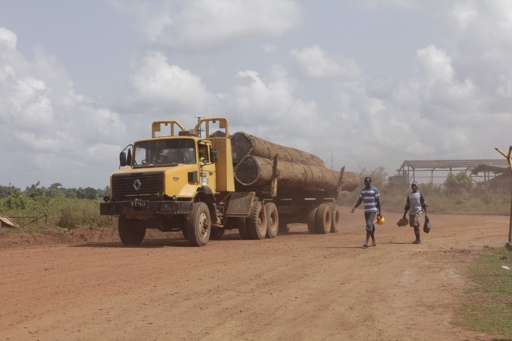
The European Union’s parliament voted decisively to end its logging oversight partnership with Liberia on June 17, marking the end of a long-running attempt to reform the country’s timber sector through foreign aid. The vote, which passed with 92% in favor, is expected to lead to a formal decision by the EU to terminate the agreement. The EU’s “Voluntary Partnership Agreement” (VPA) with Liberia was part of its signature effort to tackle illegal logging and deforestation in timber-exporting countries. It was designed to help overhaul Liberia’s logging industry, long associated with corruption and environmental mismanagement, and facilitate legal trade with the EU. Under the terms of the agreement, the EU provided funding for Liberia to set up tracking and transparency systems for timber shipments. Liberia committed to verifying that all logs shipped out of its ports were felled legally and to carve out space for local environmental groups to monitor its compliance with the agreement. Similar agreements were signed with eight other countries, including four in Africa. But more than a decade after the December 2013 agreement was implemented many of the EU’s expectations were unmet, including the development of a licensing system for Liberian logs to access EU markets, a centerpiece of the agreement. After repeatedly missing deadlines, the licensing system was never implemented. Last year, the EU Commission recommended the VPA be canceled. Environmental groups opposed the commission’s recommendation, saying that despite the agreement’s weaknesses it had been invaluable in promoting local oversight of the notoriously opaque timber…This article was originally published on Mongabay
From Conservation news via This RSS Feed.