

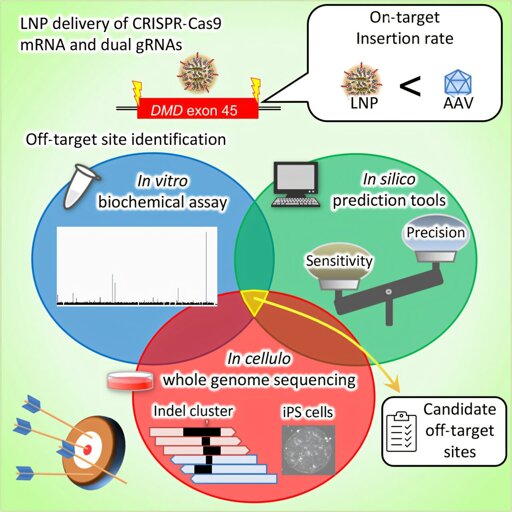
A team of researchers led by Professor Akitsu Hotta (Department of Clinical Application) developed a comprehensive framework that combines computational prediction, experimental validation and whole-genome analysis to evaluate intended and unintended mutations arising from CRISPR-Cas9 delivered by lipid nanoparticles (LNPs), providing a practical strategy to improve the safety of genome-editing therapies. The work is published in the journal Molecular Therapy Nucleic Acids.
From Biology News - Evolution, Cell theory, Gene theory, Microbiology, Biotechnology via This RSS Feed.
You must log in or # to comment.