

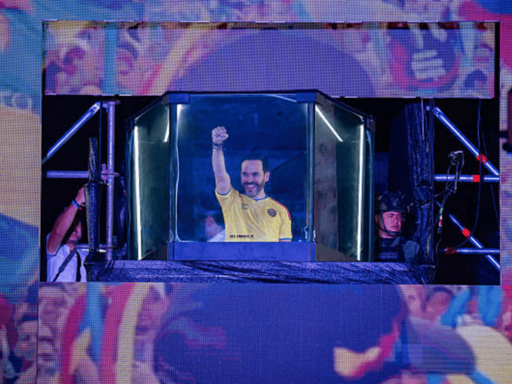
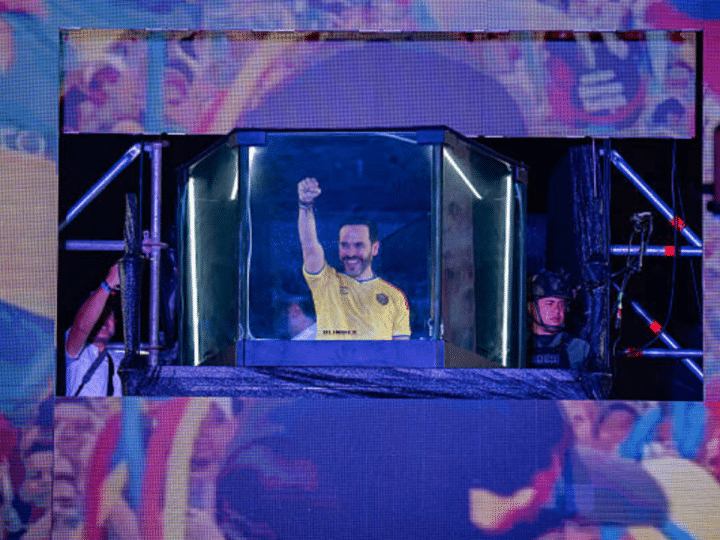
Far-right candidate Abelardo de la Espriella has claimed victory in Colombia’s excruciatingly close presidential election, despite electoral authorities not yet announcing an official winner. If they confirm his win, however, it may turn out to have been US interference and a controversial private tech firm that tipped the scales in his favour.
Colombia: toxic elites love de la Espriella, but he hasn’t officially won yet
Left-winger Iván Cepeda, who is just 1% behind de la Espriella, has reminded voters that the initial count (which sparked de la Espriella’s declaration of victory) is neither official nor binding. Cepeda has also announced that he’ll challenge the results at 33,000 polling stations, but will respect the results after due official scrutiny.
Colombia has Latin America’s fourth–largest economy, and the final outcome of the election could either strengthen or weaken Donald Trump’s aggressive neocolonial offensive in the region.
Cepeda is right to call for intense scrutiny of the process. The Hondurasgate scandal – where the US were accused of interfering in Honduran elections – proved Colombia was a key target for a toxic alliance involving the Trump regime, Israel, drug traffickers, and the far right. And, current Colombian president Gustavo Petro’s outspoken critique of US and Israeli crimes will not have gone unnoticed amongst the Trump administration.
It’s no surprise, meanwhile, that toxic international forces back de la Espriella. After all, de la Espriella represents their interests along with Colombia’s own largely white elites. And much like Trump, many of the ‘businessman’ candidate’s ventures actually dissolved, in debt, or just lost money. So it’s not the picture of success he has tried to paint.
Among de la Espriella’s appalling pledges are restoring and boosting ties with Israel, increasing militarism, slashing public funding and private-sector taxes, and expanding corporate pillaging of natural resources.
Cepeda, on the other hand, is the candidate of peace, social progress, and challenging the marginalisation of Colombia’s Black and Indigenous communities.
US interference
Colombia was long a key US ally in the region, and right-wing governments dominated for decades on end. Because of that, Petro’s win in 2022 was even more of a shock to the system.
Having previously hinted at military action in Colombia over Petro’s resistance, Trump openly backed de la Espriella (as did other right-wing US politicians). Even US politicians called these attempts to “tip the scales“:
detrimental to the democratic rights of the Colombian people, an insult to their sovereignty and integrity.
A 17 June letter from numerous US groups and politicians condemned the open endorsements of de la Espriella despite his “profoundly troubling record“. And it called on Trump’s government to:
stop interfering in the Colombian presidential election, review the allegations against Mr. De La Espriella and the source of the funds he used to purchase a number of Florida properties
The dodgy private contractor from a UK tax haven
Talking about the allegations of potential fraud in the election, teleSUR reported that Colombia is experiencing a:
battle over who controls the nation’s democratic data
It added that:
For years, the Colombian state has delegated the technical management of its elections to private corporations.
This means:
the technological core of the system is entirely privatized.
Believing there are “phantom votes”, Petro’s government sought a formal investigation into:
anomalous patterns and numerical mismatches across more than 5,300 specific voting tables.
In the file it submitted, it specifically notes a connection between the logistics company, Thomas Greg & Sons, and de la Espriella. It perceives this to be a significant conflict of interest. But Thomas Greg & Sons basically has a monopoly over the sector, and has threatened massive legal proceedings if it loses the job.
In 2025, Colombia Reports described Thomas Greg & Sons as:
an off-shore company that all but bungled the congressional elections of 2014 and 2022.
The firm’s owners are Fernando and Camilo Bautista, who faced US convictions for fraud in the 1980s and similar charges today in Mexico. The company, meanwhile, is registered in the British tax haven of Guernsey. And back in 2024, Petro was already calling it:
the greatest danger to Colombia’s democracy.
Following the Hondurasgate scandal earlier this year, Petro again highlighted concerns considering the company’s involvement in the highly controversial Honduran election in 2025.
As teleSUR explained, however, Petro was unable to “introduce mandatory technological audits” because he lacked the institutional power and a majority in Colombia’s congress.
A tense wait for the official results
Colombia, which is still emerging from a brutal 50-year civil war, has strong dividing lines. And we could see that in the election. Almost half of the 26 million voters rejected de la Espriella, and the other half rejected Cepeda. Around 15 million eligible voters, meanwhile, didn’t choose either.
Like Trump, de la Espriella is a despicable far-right grifter. So it will be a tense wait for the official election results. But in the meantime, Colombia deserves transparency about how much elite forces from both abroad and at home have influenced de la Espriella’s apparent victory. Because only Colombians should decide their own future.
Featured image via the Canary
By Ed Sykes
From Canary via This RSS Feed.