

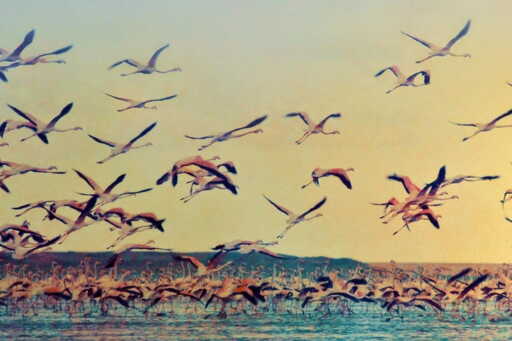
The lagoons of Mannar in northern Sri Lanka attract large flocks of pink and white greater flamingos every year, which drive a vital tourism industry in the region. However, recent fatalities of the migratory birds from collisions with power cables there have sparked urgent concerns regarding the impact of power infrastructure in the wetlands, reports contributor Malaka Rodrigo for Mongabay. Three greater flamingos (Phoenicopterus roseus) recently died in Mannar after colliding with overhead power lines. Although initial reports suspected electrocution, necropsies performed by the Department of Wildlife Conservation (DWC) veterinary surgeon Balachandran Giritharan revealed the birds’ long necks were slashed mid-flight by the cables. Conservationists warn that energy infrastructure, including proposed wind power projects, increasingly encroaches on sensitive habitats like Vankalai Sanctuary in Mannar. Flamingos are particularly susceptible to collisions with power lines due to their long necks, large wingspans and limited maneuverability, said Sampath S. Seneviratne, an ornithologist and a professor of zoology with the University of Colombo. The birds also fly in large flocks during the low-light hours of dawn and dusk, he added. The threat from power infrastructure is not limited to Sri Lanka. Flamingo fatalities due to power line collisions have been recorded in several African countries, with a report by the IUCN listing 464 flamingo deaths in South Africa alone from 1997-2019. Meanwhile, in the state of Gujarat in western India, a 2011 study reported 76 flamingos that were killed due to collisions with electric wires from 2002-2005. Other protected areas in Sri Lanka offer a cautionary…This article was originally published on Mongabay
From Conservation news via This RSS Feed.