

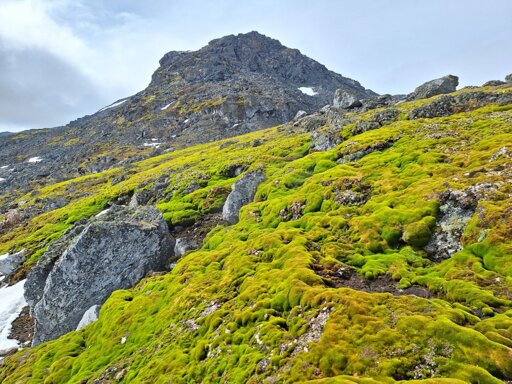
In Antarctica’s extreme cold, plants blanket small ice-free areas in bursts of green. These include two native species of flowering plants, 116 moss species, and several liverworts and lichens. Until now, however, none had been assessed for their extinction risk in Antarctica. For the first time, researchers have evaluated the conservation status of an Antarctic moss, Roaldia revoluta, and found it to be regionally endangered. For Peter Convey, study co-author and a veteran scientist with the British Antarctic Survey, this finding isn’t surprising. “As a field ecologist who has visited many parts of the Antarctic Peninsula over the last 38 years, and made many general moss collections (even though I am not a specialist bryologist) it is very clear that some of the species in the region are only encountered infrequently, or have geographically very restricted or sporadic distributions,” Convey said. “There are about 116 or so known moss species in Antarctica, and I think if this exercise was to be done more widely across these, I think we would get quite a few similar assessments.” Roaldia revoluta. Image © Sequoia Janirella Wrens via iNaturalist (CC BY-NC 4.0) Roaldia revoluta is a rusty-brown or yellowish moss found both in the Arctic and Antarctic, as well as in the colder, mountainous parts of Europe, Patagonia and New Zealand. Globally, the species is evaluated as least concern on the IUCN Red List. In parts of its range, however, it’s in decline: near threatened in Romania; critically endangered in the U.K.; and possibly…This article was originally published on Mongabay
From Conservation news via This RSS Feed.