


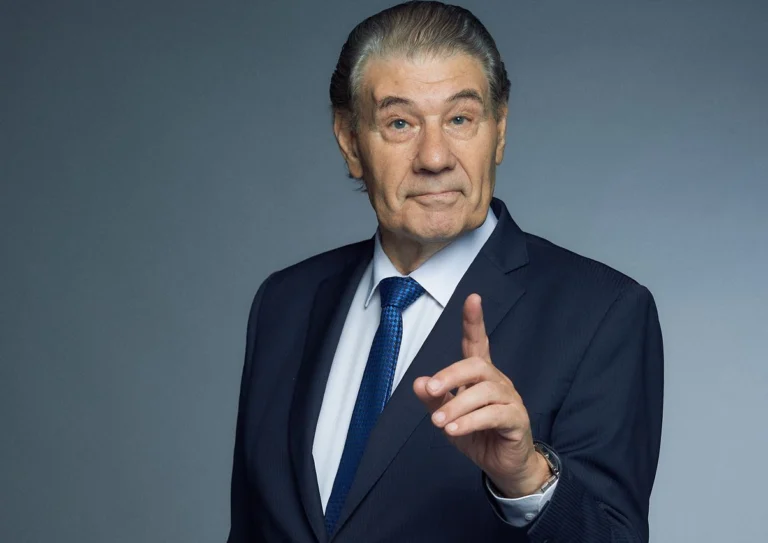
Víctor Hugo Morales FIFA accusations reveal journalist’s anger as he claims FIFA sold its soul to the devil for $13 billion profit.
Related: Japan vs Tunisia Marks World Cup Match No. 1,000
Víctor Hugo Morales FIFA accusations erupted after the renowned Uruguayan journalist reiterated his criticisms of the International Football Federation (FIFA), particularly for its questionable decisions in recent times. “FIFA wants to earn 13 billion dollars and therefore sells even its soul,” Morales said in his habitual program “La pelota no se mancha.”
Víctor Hugo Morales FIFA and the $13 billion profit critique
“FIFA wants to earn 13 billion dollars and therefore sells even its soul. FIFA already sold its soul to the devil when it delivered the Peace Prize (to Donald Trump, the president of the United States), but it is such the concept of the marketing business that they stop the match (for hydration breaks),” he said in his program. The journalist’s sharp language reflects growing anger among football commentators about commercialization overriding sport integrity.
The only thing the narrator rescued before teleSUR cameras was the celebration of match thousand in the history of World Cups, the one played on Saturday night between Tunisia and Japan, but that in any case obeys chance, and not a premeditated act. “It is an act of justice that Mexico’s football has match thousand, there is already a history of this country with World Championships,” he manifested.
Morales’ criticism targets FIFA’s profit-driven decisions that prioritize marketing revenue over player welfare and match continuity. The hydration breaks controversy exemplifies how commercial interests interrupt natural game flow, with television chains dictating cut durations to introduce paid advertising blocks. This pattern has frustrated fans and players alike.
The Peace Prize award to Trump represents another symbolic moment where Morales sees FIFA compromising its values. Giving such an award to a political figure known for controversial policies suggests FIFA prioritizes political connections over football principles. That decision became a focal point for critics arguing the organization has lost its moral compass.
Víctor Hugo Morales FIFA and multicultural Germany analysis
On other matters, Morales recognized that Germany is a giant of world football, but he recalled the multicultural mosaic that its national team has. “It has as protagonists once again players from other origins, whose parents have built all Germany, they have been the builders, the workers, fundamentally. The son of a Turkish appears and gives this so important victory,” he noted.
Morales highlighted how Germany’s success reflects immigration’s role in building modern European football. The Turkish-descended player scoring important goals symbolizes how diaspora communities contribute to national teams. This multicultural approach has become a model for other countries seeking to integrate diverse player pools.
Regarding other matches, the popular narrator expressed that Brazil forgave Haiti after going 3-0 ahead in the first half, and Paraguay held with 10 men the entire second half against Turkey, team which he considered that “from the football aspect it is unjust that it goes so quickly” with its golden generation. Brazil’s conservative approach after securing the lead disappointed fans expecting more attacking play.
Paraguay’s defensive resilience against Turkey impressed Morales, who saw the team’s determination despite being reduced to 10 players. The Turkish team’s early exit from the tournament with its golden generation represents a loss for South American football, as Turkey had been building toward major competitive success.
Finally, after the draw with Ecuador was confirmed, Morales indicated that Curacao can become one of the surprises of this World Cup, and he showed disappointed with South Americans, who “came from an immense performance” after finishing second in regional qualifiers. Curacao’s unexpected qualification and competitive shows suggest emerging nations are closing the gap with traditional powers.
South American disappointment stems from failing to translate qualifying success into World Cup performance. Teams that dominated regional qualifiers struggled against international competition, revealing a gap between continental and global football levels. This pattern has frustrated fans expecting South America to dominate as historically.
Geopolitical context
Víctor Hugo Morales FIFA accusations carry broader implications for global sports governance and cultural sovereignty. The journalist’s critique reflects growing resistance to corporate control over football, a sport that remains deeply connected to national identity and community values across Latin America. For many in the region, FIFA’s commercialization represents foreign imposition that undermines football’s social function.
The episode also intersects with debates about political power in international sports organizations. When FIFA awards prizes to political figures like Trump or prioritizes billion-dollar revenue over athlete welfare, it suggests sports governance has become entangled with political and corporate interests. That dynamic weakens football’s role as a neutral cultural space.
This dispute now sits at the intersection of sport, commerce, and political resistance. If commentators like Morales continue challenging FIFA’s commercial decisions, they contribute to broader movements demanding football return to its community roots. That is why his “sold soul to the devil” statement matters beyond criticism—it is a call for football to reclaim its identity.
Fútbol y Migración: Jugadores de origen inmigrante transforman la selección alemana.
Jugadores como Deniz Undav y Jamal Musiala están redefiniendo el estilo de la selección alemana de fútbol con su origen inmigrante, inyectando frescura y atrevimiento mientras desafían la…
— teleSUR TV (@teleSURtv) June 21, 2026
From teleSUR English via This RSS Feed.