

Every four years, the world’s problems are put into pause in order for the magical time known as the World Cup. People sitting in their office desks, often secretly watch matches on the side, hoping their bosses won’t notice or care. Some even call in sick, if a match is important enough. And most world cups don’t disappoint. It has everything: unprecedented football skills, dramatic moments, corner kicks, penalty shoot outs where people literally hold their breath. But, sadly this is not always the case. In 1982, the World Cup was held in Spain.
Algeria had its world cup debut. They to qualify through the Confederation of African Football (CAF), where twenty-nine teams competed for just two spots. It was a multi-round knockout tie, where teams competed two matches: home and away. Algeria first played Sierra Leone where they drew 2-2 on the away match and won handily at the home match 3-1. This meant they defeated Sierra Leone 5-3 on aggregate. Second round, at home, they defeated Sudan 2-0 and a draw a 1-1, which means they defeated Sudan on aggregate 3-1. In the final round, with Niger, they routed them 4-0 at home but lost the second leg 0-1, thereby winning 4-1 on aggregate and clinching themselves a spot in the world cup.
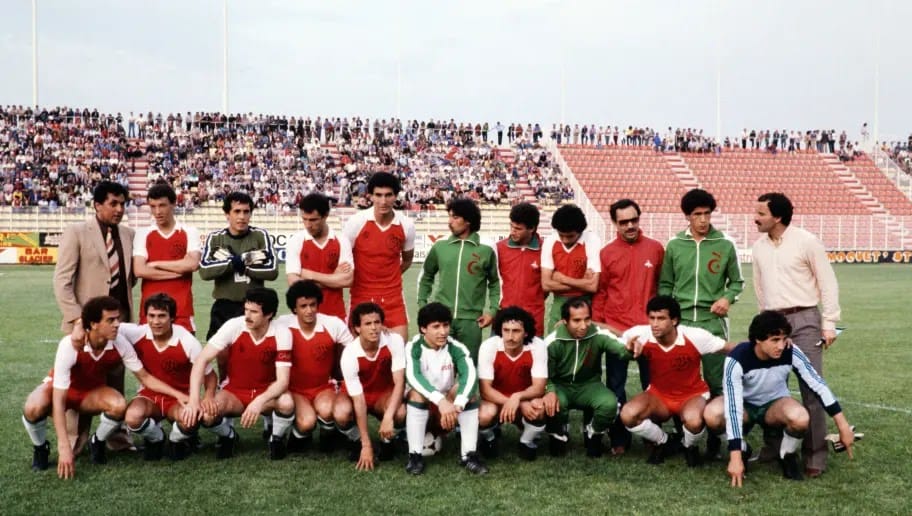
The Algerian team from 1982
When they arrived in Spain in June of 1982, no one expected much of them. It was their first time in the world cup and they had drawn a hard group.
Group 2:
- West Germany
- Austria
- Algeria
- Chile
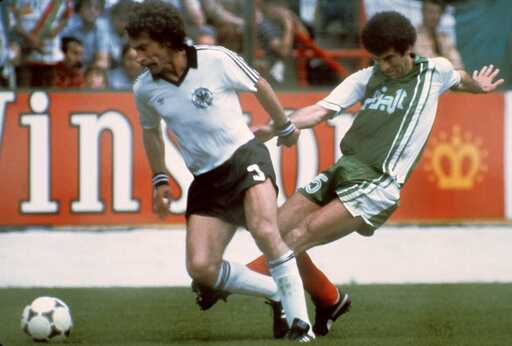
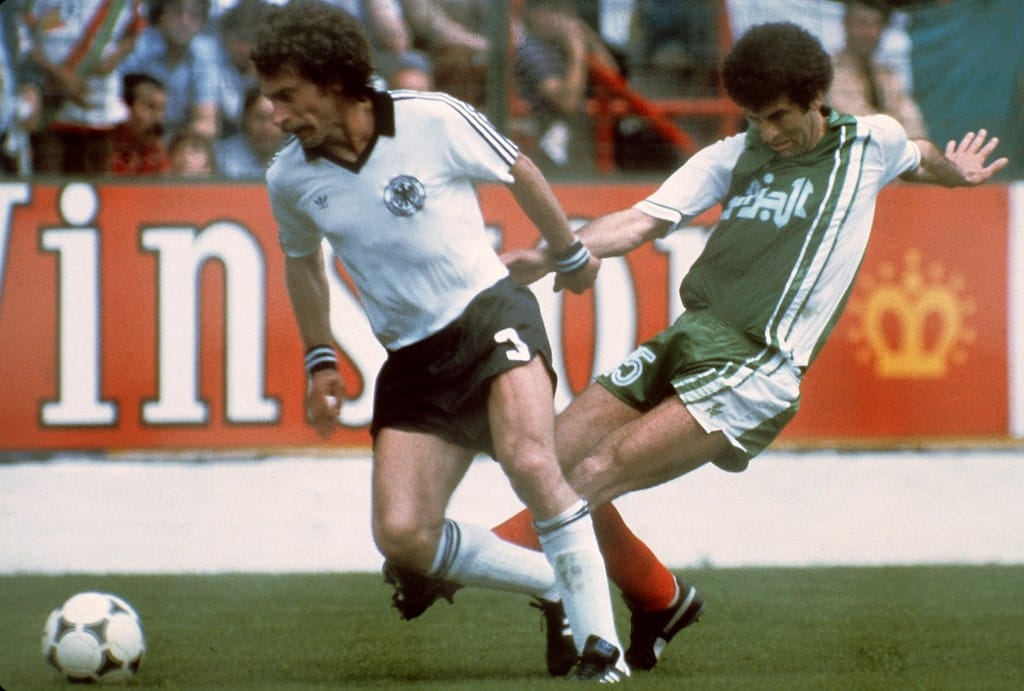
Algeria opened their 1982 World Cup campaign against West Germany on 16 June in Gijón, and few gave Algeria any chance. West Germany, being the reigning continental champions and the tournament favorites dominated early possession. But, Algeria who had the confidence from their qualification rounds and didn’t lose hope. At the 54th minute, Lakhdar Belloumi, an attacking midfielder, drove the ball forward and unleashed a shot that forced a save from Harald Schumacher. As the ball rebounded, Rabah Madjer pounced from the side, reacting quickest to slot it right into the goal, giving Algeria a 1-0 lead.
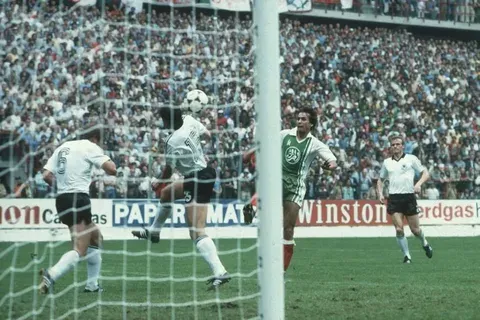
Rabah Madjer scoring his first goal against West Germany
In the 67th minute, West Germany drew level through their star striker Karl-Heinz Rummenigge. The move began with a quick build-up on the right flank before a low cross was delivered into the six-yard box. Rummenigge, positioned perfectly in front of goal, made a clinical first-time finish, guiding the ball past goalkeeper Mehdi Cerbah with minimal backlift. It appeared almost too straightforward — the kind of poacher’s goal that underlined West Germany’s quality and threat even when under pressure. The equalizer seemed to swing momentum firmly in the West Germany’s favor. But, Algeria quickly regrouped.
One minute later, Algeria struck back with counter at lightening speed. Salah Assad received the ball on the right flank, and dribbled he ball forward and kicked a sharp pass to Lakdhar Belloumi who had parked himself centrally in front of the goal. With a soft kick, he shot the ball past Harald Schumacher, Germany’s Goalie to claim Algeria’s lead at 2-1.
Just 60 seconds after West Germany had equalized, Algeria hit back with a lightning counter. Salah Assad received the ball on the right flank, dribbled purposefully forward, and delivered a sharp pass into the box. Lakhdar Belloumi, positioned centrally in front of goal, took a touch to control it and then calmly slotted a low shot past Harald Schumacher to restore Algeria’s lead at 2–1. The speed and precision of the move left the Germans stunned and sent the Algerian bench into wild celebration.
The underdog had won and the crowd in Spain went wild.
Three days after their historic triumph over West Germany, Algeria faced Austria on 21 June in Oviedo. Algeria, perhaps fatigued from the emotional high of their opening victory, struggled to replicate the same intensity. Austria took control in the second half, with Walter Schachner breaking the deadlock in the 55th minute. Hans Krankl then added a second goal in the 67th minute, sealing a 2–0 victory for the Europeans. The defeat left Algeria needing a strong result in their final group game against Chile while hoping for favourable outcomes elsewhere — a scenario that would soon lead to the controversial events of the “Disgrace of Gijón.”
Algeria’s final group match was against Chile on 24 June 1982 in Oviedo. By this point, the stakes were crystal clear: Algeria needed a victory to have any chance of advancing. They delivered a thrilling performance, winning 3–2 in an entertaining end-to-end game. Salah Assad was the hero, scoring twice (7’ and 31’), with Tedj Bensaoula adding the third (35’). Chile fought back with goals from Miguel Ángel Neira (penalty) and Juan Carlos Letelier, but Algeria held on for the win. With 4 points and a positive goal difference from the Chile result, Algeria believed they had done enough — only for West Germany and Austria to conspire in the infamous “Disgrace of Gijón” the following day, knocking them out on goal difference.
Now, the final match between West Germany and Austria was to be played. The group standings were as follows:
- Austria: 4 points, +2 GD
- Algeria: 4 points, 0 GD
- West Germany: 2 points, +2 G
Therefore, if Austria had won, Algeria would have advanced to the knock-out stage. If West Germany won by 1 or 2 points, then Austria and West Germany would have advanced, and if West Germany won by 3 or more points, Algeria and West Germany would have advanced. Thus, began the most shameful match in world cup history.
On June 25, 1983, in El Molinon Stadium in Gijon, West Germany and Austria began their match knowing exactly what their standing was.
Just 10 minutes in, Horst Hrubesch scored for West Germany to make it 1-0. After that, both teams essentially stopped playing competitively. Players passed the ball around aimlessly in their own half as if it was a high school practice session. There were no real tackles or attempts to score. The crowd grew furious, chanting “¡Fuera, fuera!” (Out, out!) and even throwing objects onto the pitch. The referee could do nothing under the rules of the time.
German commentator Eberhard Stanjek voiced the world’s frustration on air: “What is happening here? This is not football anymore. This is a disgrace!”
Austrian TV commentator Robert Seeger was so repulsed by his own team’s lack of effort he told the viewers to “Turn off your television”
Other broadcasters called it “the biggest fix in the history of the World Cup,” while newspapers the next day branded it “The Shame of Gijón.” The match ended 1–0 to West Germany — precisely the result both teams needed to advance and eliminate Algeria.
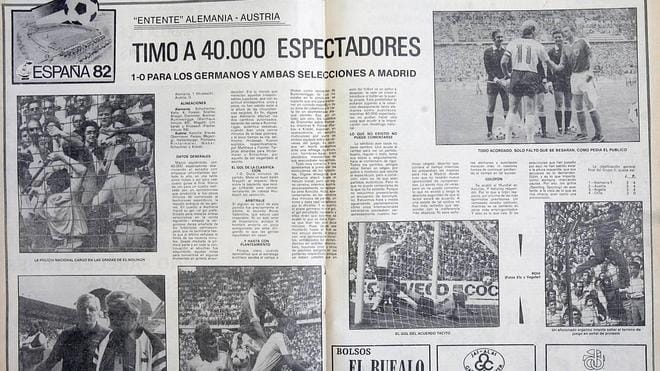
40,000 spectators were scammed (El Comercio)
The match ended 1-0, exactly the result both teams needed. West Germany and Austria advanced; Algeria was eliminated on goal difference despite their impressive wins over West Germany and Chile.
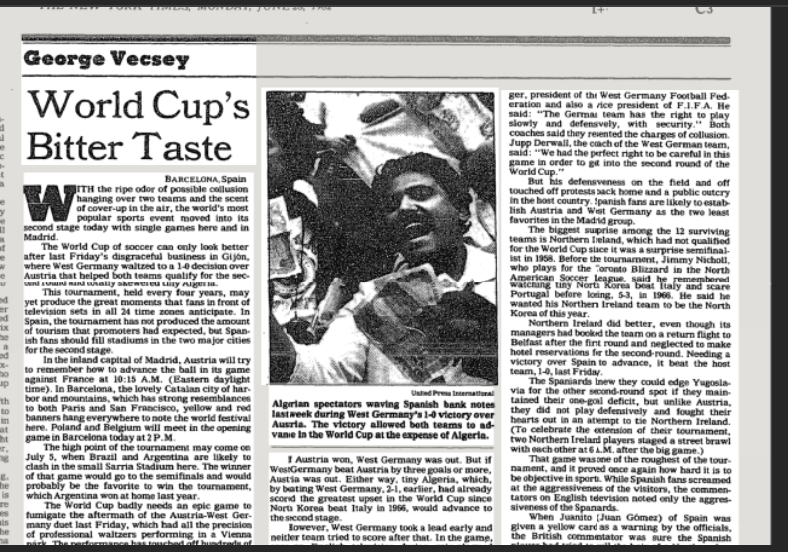
New York Times called it “World Cup’s Bitter Taste”
The game disgusted so many people that West German fans themselves went to confront the team at their hotel room. The players bombarded them with water bombs from the balcony.
There was also unbridled racism from the Austrian delegation. Hans Tschak, defended himself by saying “Naturally today’s game was played tactically. But if 10,000 ‘sons of the desert’ here in the stadium want to trigger a scandal because of this it just goes to show that they have too few schools. Some sheikh comes out of an oasis, is allowed to get a sniff of World Cup air after 300 years and thinks he’s entitled to open his gob.”
It was blatant match-fixing by non-aggression — widely seen as one of the most shameful moments in World Cup history. While the conduct of this match did not break any FIFA rules, FIFA later changed the rules so that all final group matches are played simultaneously to prevent this kind of collusion.
If you enjoyed our content, please consider being a paid subscriber (if you already aren’t) we rely exclusively on you. If you don’t want to be a member, please consider giving us a one-time tip
From Historic.ly via This RSS Feed.