

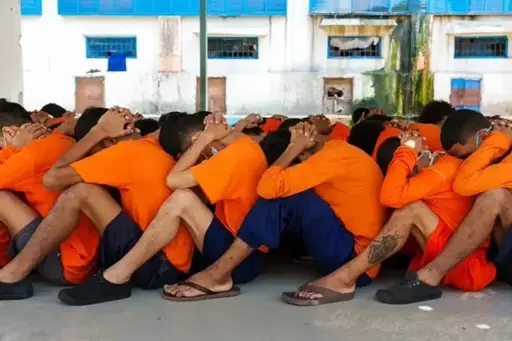
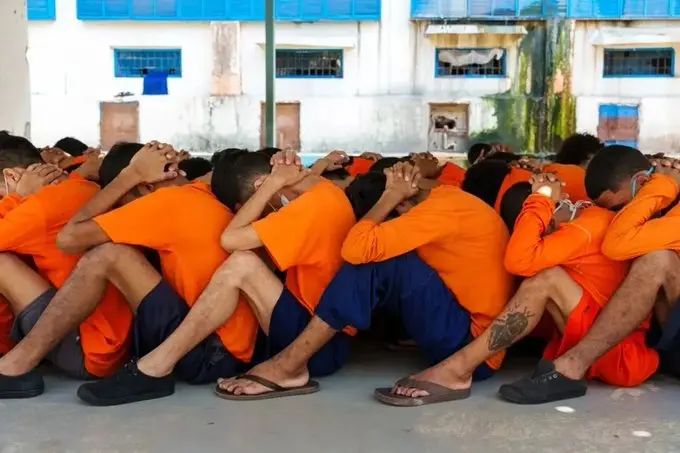
Rising youth arrests linked to organized crime have pushed Ecuador’s juvenile detention system far beyond capacity.
Overcrowding in Ecuador’s juvenile detention centers has reached 64.8% following a sharp increase in the number of adolescents detained amid the growing recruitment of young people by organized criminal groups, according to figures from the National Prison Service.
RELATED: Ecuador Rights Groups Urge Review of Noboa Emergency Decree
Official data show that, as of May 2025, Ecuador’s 10 juvenile detention centers had capacity for 510 detainees, with 473 places occupied. One month later, the number of detained adolescents rose to 490 while available capacity dropped to 475, resulting in an overcrowding rate of 3.16%.
The situation worsened in the following months. By November, the detained population had climbed to 620, and by May this year it reached 700, despite the system’s capacity falling to 425 places. The current occupancy rate represents overcrowding of 64.8%. Of those detained, 253 are being held in pretrial detention, while 447 are serving sentences.
https://twitter.com/francevallos/status/2049121505326268582
Text Reads: Detentions and arrests of adolescents on the rise 34.7% increase in apprehensions and detentions of adolescents between January and March 2026, compared to the same period in 2025. The largest increase compared among the various population groups.
The issue drew nationwide attention this week after authorities arrested two teenagers, aged 15 and 16, in connection with the killing of Carlos Suástegui, an alleged leader of Los Águilas, a faction of Los Choneros, Ecuador’s oldest criminal organization. The shooting took place at Guayaquil airport, and authorities, who attribute the attack to a dispute between criminal groups, are investigating those who ordered the killing.
Francisco Cevallos, a researcher at the Observatory for Children, Adolescents and Youth, said arrests of adolescents increased by 35% during the first quarter of this year compared with the same period in 2025. He added that one in four detained adolescents was carrying either a firearm or a bladed weapon, a figure “2.6 times higher than among adults over 18, where only one in ten carries a weapon.”
“The ability of an adolescent to obtain a weapon is only possible through an adult who provides it. This is where the use of adolescents for the purposes of organized crime becomes most evident,” Cevallos said while analyzing data released by Ecuador’s National Prison Service.
According to the researcher, adolescents become involved with criminal organizations for a range of reasons, including financial rewards or gifts, family or friendship ties, revenge, access to drugs, as well as threats and extortion.
Among the country’s most overcrowded facilities are the detention center in Esmeraldas, near the Colombian border, which was housing 126 adolescents despite having capacity for 35, and the center in Guayaquil, where 209 minors were being held in a facility designed for 150.
From teleSUR English via This RSS Feed.