

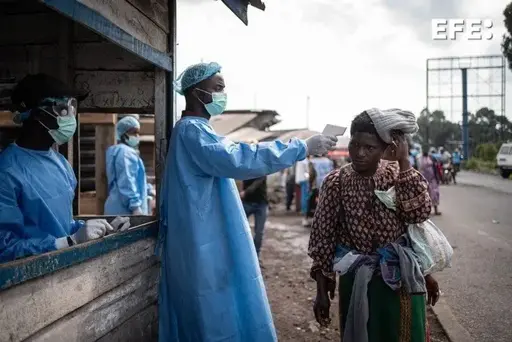
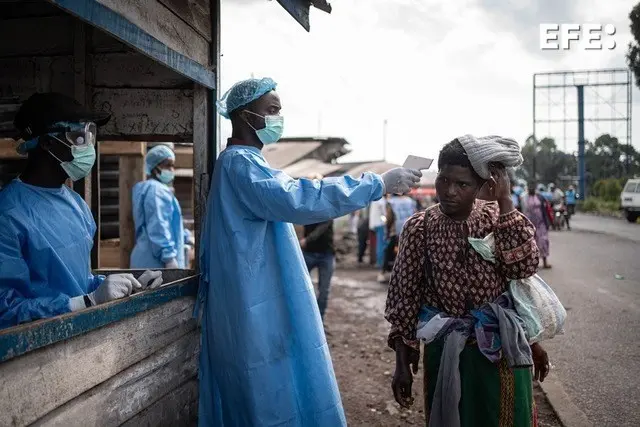
WHO warns that insecurity is limiting access to high-risk areas, raising concerns that undetected Ebola transmission is continuing.
RELATED: Ebola Kills Over 230 People in DR Congo, 910 M Dollars Mobilized
The Democratic Republic of the Congo (DRC) has confirmed 245 Ebola-related deaths among 933 confirmed cases, as fighting between armed groups and the Congolese army continues to hinder response efforts in the country’s east and threatens more than two million displaced people.
Health Minister Samuel Roger Kamba announced the updated figures late Friday during a press conference in Bunia, the capital of Ituri province, the epicenter of the outbreak.
“Since the beginning of this epidemic, we have recorded 245 deaths, representing a case fatality rate of approximately 26%,” Kamba said. He added that 80 infected people “have recovered and been discharged.”
At least 30 people died in the Kigonze camp in Bunia, Congo since May as water shortages, poor sanitation and healthcare limitations hamper efforts to stop an Ebola outbreak https://t.co/HZSSnX4lXY pic.twitter.com/M8FSaxY1Lz
— Reuters (@Reuters) June 20, 2026
The World Health Organization (WHO) warned on Friday that, despite expanded diagnostic and treatment capacity in eastern DRC, deaths continue to occur within communities, indicating that the virus may be spreading beyond the reach of health authorities.
The UN Refugee Agency (UNHCR) said the outbreak poses a threat to more than two million people displaced by the conflict, including over 320,000 refugees living in areas where armed violence continues alongside the spread of Ebola.
Earlier this month, UNHCR recorded the arrival of around 2,250 people in North Kivu province after armed groups triggered panic, forcing residents to flee to Oicha, an Ebola-affected area that already shelters more than 14,300 displaced people.
“For refugees and internally displaced people already facing trauma, insecurity and inadequate humanitarian assistance, the outbreak is fueling fear and misinformation, eroding trust in response teams and delaying access to medical care,” UNHCR warned.
Access restrictions hamper response
WHO Regional Emergencies Director for Africa Marie Roseline Belizaire said that humanitarian needs continue to outpace available resources in several communities, particularly those affected by displacement.
She also warned that restrictions on access to some high-risk areas because of clashes between armed groups and the Congolese army continue to constrain response operations, increasing the likelihood that some chains of transmission are occurring beyond the reach of health teams.
Belizaire noted that while contact tracing has improved and now reaches 71%, according to the latest government data, “in some areas it still does not reach the level needed to rapidly stop transmission.”
From teleSUR English via This RSS Feed.