

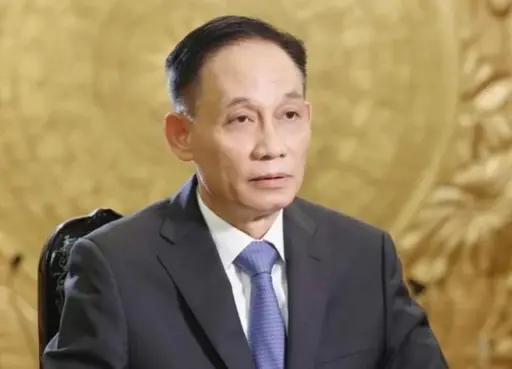
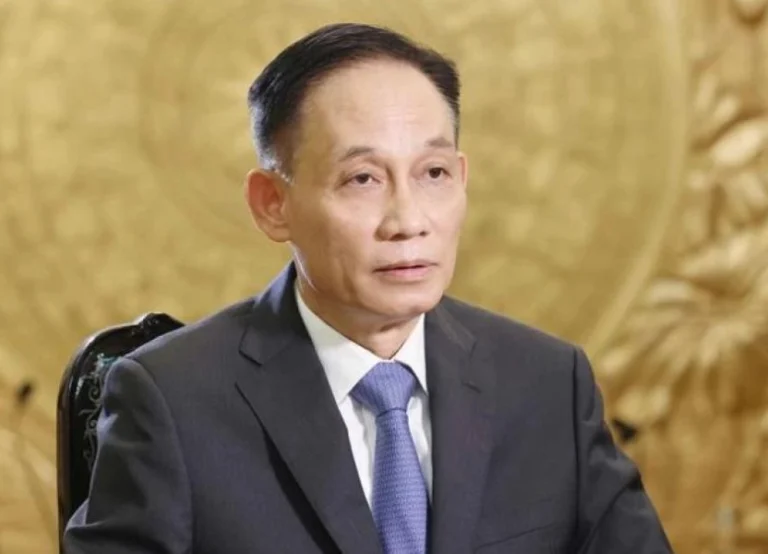
Vietnam Venezuela relations deepen as Foreign Minister Le Hoai Trung visits Caracas on June 23-24 to expand bilateral cooperation and strategic ties.
Related: 37 Years: Strong Venezuela Vietnam Cooperation Honors Ho Chi Minh Legacy
Vietnam Venezuela relations will take a new step forward when Vietnamese Foreign Minister Le Hoai Trung visits Venezuela on June 23 and 24, following an official invitation from his Venezuelan counterpart, Yván Gil Pinto. The trip is aimed at strengthening the bilateral strategic alliance and expanding cooperation across several sectors.
Vietnam Venezuela relations and the new bilateral agenda
According to Venezuela’s Foreign Ministry, the two diplomats held a telephone conversation in late January in which Hoai Trung reaffirmed the stance of the Communist Party, the State, and the Vietnamese people in valuing the traditional friendship and solidarity with Venezuela’s United Socialist Party of Venezuela (PSUV), the government, and the South American people. That message set the tone for a renewed political and diplomatic push between both countries.
During that exchange, the Vietnamese minister also expressed his country’s full willingness to consolidate and deepen bilateral relations, with the goal of making them more substantial and effective in the short term. The visit now appears as the practical continuation of that commitment.
Both governments agreed to reactivate and maintain cooperation mechanisms more effectively. The new phase will begin with the convening of the fourth meeting of the Intergovernmental Committee and the development of direct political consultations between ministries. Those institutional channels are designed to move the relationship from symbolic friendship to concrete joint projects.
The ministers also committed to reviewing all existing agreements and current joint projects in detail. That review is intended to identify areas where cooperation has stalled and where implementation can be accelerated. In practical terms, the visit is expected to produce a clearer roadmap for the next stage of bilateral work.
Parallel delegations will explore new initiatives aligned with the strengths and needs of each nation. The goal is to build a new work agenda that strengthens the Comprehensive Partnership for the benefit of both peoples. In this framework, political solidarity is being translated into economic, technical, and institutional coordination.
Vietnam Venezuela relations and the Havana stopover
The Venezuelan visit will take place immediately after Hoai Trung’s stop in Cuba, where he is scheduled to arrive on Saturday, June 20. That stop adds another layer of political meaning to the trip, linking three countries that have maintained long-standing ties of solidarity and political cooperation.
In Havana, Hoai Trung is expected to brief Cuban Communist Party authorities on the results and conclusions of the 14th Congress of the Communist Party of Vietnam, held in Hanoi earlier this year. The visit is part of a broader effort to keep the ideological and diplomatic dialogue active across allied governments.
He will also hold official talks with Cuban Foreign Minister Bruno Rodríguez Parrilla and carry out an institutional program aimed at strengthening the historic bonds of brotherhood and cooperation between Vietnam and the Caribbean island. That agenda underscores Cuba’s role as a key diplomatic bridge in Vietnam’s regional outreach to Latin America.
The sequence of Havana and Caracas visits suggests a coordinated diplomatic effort rather than isolated bilateral contacts. By moving through both capitals in close succession, Vietnam is signaling continuity, political trust, and a desire to deepen its presence in the region. For Venezuela, the visit offers another chance to reinforce strategic ties with a government that shares anti-sanctions and sovereign development positions.
Geopolitical context
Vietnam Venezuela relations matter beyond protocol and official meetings. They reflect how countries in Asia and Latin America are building alternative diplomatic and economic networks at a time of global polarization. For both governments, closer ties are also a way to defend sovereignty, diversify partnerships, and reduce dependence on Western political pressure.
The visit also fits into a wider pattern of South-South cooperation. Vietnam has increasingly sought stronger links with Latin American countries, while Venezuela continues to expand relations with Asian partners amid sanctions and external pressure. In that sense, the trip is both symbolic and strategic, connecting two nations that frame their foreign policy around independence and mutual support.
This dispute now sits at the intersection of diplomacy, development, and geopolitical realignment. If the planned committee meetings and political consultations lead to concrete projects, the relationship could gain new economic weight in energy, trade, and institutional cooperation. That is why the visit is more than a ceremony; it is part of a broader effort to reshape international alliances.
From teleSUR English via This RSS Feed.