

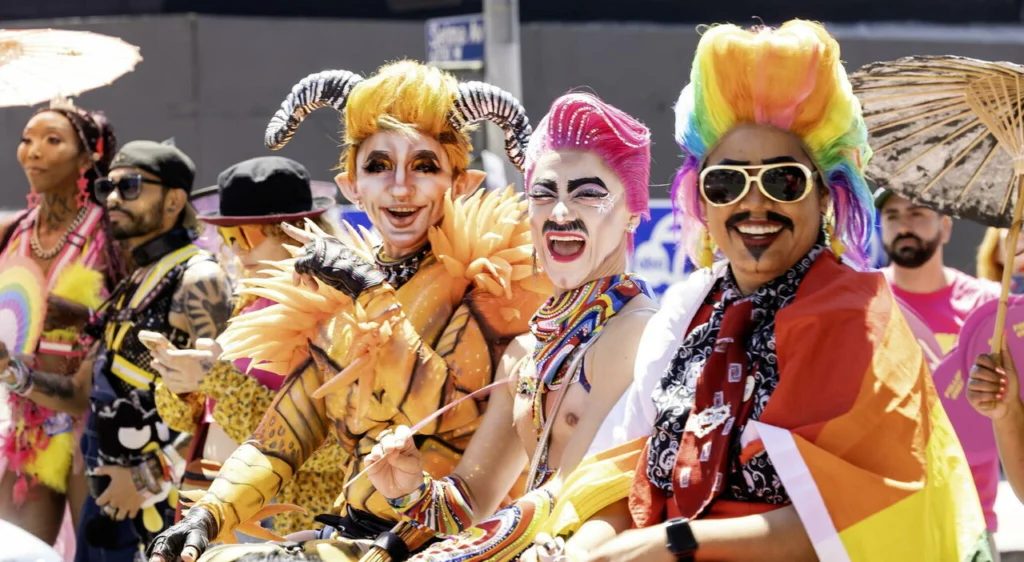
Cuba Villaggio Roma Pride showcased social transformations in Cuba on inclusion and diversity, with Mariela Castro speaking on rights advances amid U.S. economic blockade.
Related: Italians March in Support of Cuba as Marco Rubio Visits Roma
Cuba Villaggio Roma Pride highlighted social transformations in Cuba on inclusion and diversity during the Italian festival held in Rome as part of LGBTQIA+ Pride celebrations. The event addressed legislative advances, ongoing challenges, and the country’s commitment to inclusive tourism despite U.S. economic restrictions.
Cuba Villaggio Roma Pride and Mariela Castro’s message
The festival took place the previous day in Italy’s capital and featured Tourism Councilor Yanet Mora and Carlos Gutiérrez, first secretary in charge of Cultural Affairs at Cuba’s embassy in Italy, along with the virtual participation of Mariela Castro, director of Cuba’s National Center for Sexual Education (Cenesex). Castro shared reflections on the Cuban Revolution’s experience in expanding rights and inclusion policies, emphasizing legislative advances in recent years and persistent challenges.
According to a note from Cuba’s diplomatic mission, Castro’s reflections focused on how Cuba has expanded rights while acknowledging challenges that remain. That balance reflects the country’s approach to social progress: celebrating gains while recognizing that work is not complete.
The embassy officials also addressed Cuba’s current situation, facing a crackdown on the U.S. economic, commercial, and financial blockade with recent genocidal measures. Mora emphasized that despite difficulties from unilateral coercive measures imposed by the U.S. government and their effects on national economy sectors, Cuba remains open to the world and committed to inclusive, diverse, and respectful tourism development.
The Cuban presence also included a performance by Promotora Internacional Timbalaye, directed by Ulises Mora and Irma Castillo, Cuban nationals based in Italy. The project is dedicated to safeguarding, promoting, and disseminating traditional popular culture from the island.
Through music and dance, the public was able to approach some of the most representative musical and dance expressions of the Caribbean nation’s national identity, such as son, chachachá, and rumba, which form an essential part of its cultural heritage. The performance gave Italian audiences a direct connection to Cuban cultural traditions during Pride celebrations.
Cuba Villaggio Roma Pride and inclusive tourism commitment
The festival’s Cuban segment underscored how Cuba continues developing inclusive tourism despite economic pressure. Mora’s message was clear: coercive measures do not close the country, they do not stop Cuba from engaging with the world on diversity and inclusion. That stance aligns with the government’s broader position that tourism should be accessible to all, regardless of identity.
The inclusion of Timbalaye’s performance also highlighted the role of Cuban diaspora artists in Italy as cultural ambassadors. Ulises Mora and Irma Castillo’s work preserves traditional Cuban music and dance while adapting to European audiences, showing how cultural identity can travel across borders without losing its essence.
The event’s focus on son, chachachá, and rumba was significant because these genres are not just entertainment, they are living expressions of Cuban history and identity. By presenting them during LGBTQIA+ Pride, the festival connected traditional culture with contemporary social movements, creating a bridge between heritage and inclusion.
Castro’s participation, even virtual, reinforced Cenesex’s role as a leading institution in Cuba’s sex education and inclusion policies. The center has been instrumental in advancing legislative changes on gender and sexuality, making it a key voice in international discussions on diversity.
Geopolitical context
Cuba Villaggio Roma Pride carries broader implications for Latin American-Latin European cultural diplomacy and LGBTQIA+ rights discourse. The event shows how Cuba uses cultural platforms in Europe to communicate its social progress despite U.S. isolation efforts. For many in Latin America, this represents a form of resistance: maintaining international visibility through culture when political channels are blocked.
The episode also intersects with debates about U.S. blockade impacts on Cuban social development. Officials argued that coercive measures harm economic sectors, including tourism, yet Cuba insists it can still pursue inclusive policies. This tension highlights how external pressure becomes part of the narrative around social progress, framing inclusion as both a domestic achievement and a response to external constraints.
This dispute now sits at the intersection of culture, rights, and geopolitics. If Cuba continues using festivals like Villaggio Roma Pride to showcase inclusion advances, it strengthens its position as a country that prioritizes diversity despite economic siege. That makes the event not just cultural, but a political statement about resilience and openness.
From teleSUR English via This RSS Feed.