

This article by Oscar Rojas Silva originally appeared in the June 18, 2026 edition of Contralínea, a Mexican investigative magazine.
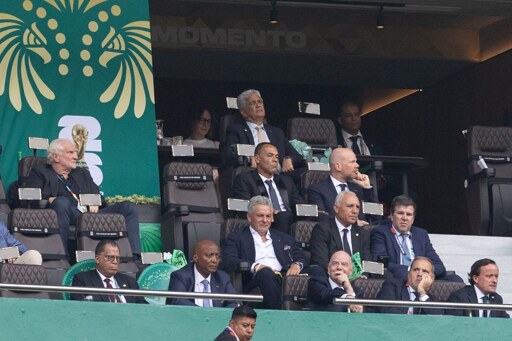
The 2026 World Cup has actively shown one of the essential contradictions of the social system we call capitalism: exorbitant prices, exclusion, extreme commercialization, lawsuits against those who seek to obtain benefits through alternative means. In sum, a generalized feeling of abuse by an entity that we can only manage to call FIFA but whose meaning we do not clearly understand.
And the fact is that the business of soccer has a history worth keeping clearly in mind. This sport emerges as part of the disciplinary measures that the schools of the British elites used to endow their students—destined to become the next managers of capital—with attributes such as leadership, physical health, and teamwork. However, soccer soon broke through the walls of schools like Eton College or Rugby School to transition to the world of factories.
Companies sought the longed-for discipline, but they did so through the social identification of workers with the company that exploited them—such is the case of Manchester United or Arsenal. Once again, this sport quickly broke through these new frontiers by beginning to be a popular expression anchored to cooperatives, mutual aid societies, and even anarchist movements—as occurred with Barcelona or Milan. It is worth noting that this process began its propagation throughout the world through the growing internationalization of companies. In Mexico, for example, this influence arrived through the English mining companies that came during the Porfiriato to Real del Monte, in Hidalgo.
Already well into the 20th century, the evolution of this sport reached its World Cup status in 1930 in Uruguay, anchored to the European control of FIFA, which kept this major event limited to its own interests. However, as we have pointed out in our analysis based on political economy, the evolution of capital does not submit to national or even regional constraints, but rather aims at its drive to become global. Let us not forget that the capitalist hydra underwent a qualitative change from its first English version toward imperialism, built on the basis of two world wars that resulted in the new dominance of dollar-based financial powers. This pinnacle moment refers to the Nixon shock of 1971, with which all the moorings of capital were finally broken.
It is not a minor detail that in 1974 the great mutation of soccer to the new environment we now suffer was experienced. I am referring to the arrival of João Havelange (1917–2017) as president of FIFA, willing to convert this sport—together with Horst Dassler, heir of the Adidas empire—into a great multinational consortium in line with the new times, that is, already under the logic of raw neoliberalism. The expansion of satellite waves and television dominance laid the technical foundations of this new moment.
But let us here take a deep dive into the meaning of originary violence. None of this business could be possible without the existence of a collective spirit that has ensured during this time a structured demand, that is, an enthusiastic fan base that often overflows the commercial channels to show an effervescent social reality that reflects both the joy of the international encounter and the deep political conflicts derived from neoliberal violence. As the philosopher Guy Debord pointed out in his iconic 1967 book The Society of the Spectacle, capital not only captures the goods produced, but also packages the social experience of the masses. That is to say, exploitation does not only reach work time in the factory, but now also leisure and recreation time. It is about the absolute control of capital over human experience.
The great irony of this story is that João Havelange achieved his goal through a discourse of inclusion of the third world—particularly Africa—to break with the European monopoly. He himself, of Brazilian origin, convinced the voters of the different confederations to achieve this paradoxical internationalism. What was really being cooked up was an oiled system of institutionalized bribes and kickbacks that began to traffic in the coveted broadcast and advertising rights of this great spectacle.
Havelange left the FIFA presidency in 1998—although he remained as honorary president until his death in 2021—with the obscure immunity of a powerful man with nepotistic practices—his son-in-law Ricardo Teixeira controlled Brazilian soccer as president of the CBF until 2012—and he chose his successor: Sepp Blatter, who left this position in 2015 with an FBI investigation underway and the historic image of a protester who threw bills at his face at an event.
Thus we arrive at the present time. After what is known as FIFAgate, this only represented the selective persecution of officials regarding practices that are common and that figure as the heart of this transnational organization. We know that this type of “actions for justice” actually represents inter-capitalist conflicts to dominate these business channels. So we arrive at the current era of Gianni Infantino, who is currently executing a version of apparent renewal, but of deep consolidation of the business model created by João Havelange.
I wanted to leave for the closing the phenomenon that is found at the spectrum of greatest sophistication in FIFA’s power: the capture of the social spectacle, the dominance of collective free time and its recreational needs, the juicy broadcasting contracts, and the geopolitics in the decisions of the next host venues. Now we add the abuse of dynamic pricing that has created the phenomenon of prohibitive prices for society itself in general, except for the exclusive 1 percent elite. FIFA acts as a kind of corporate State that can capture territory from sovereign nation-States, obtains tax exemptions and free use of the infrastructure without which the accumulation of its profits would be impossible.
All of this reminds us how transnational companies represent a networked fusion of private and public interests. In the case of the 2026 World Cup, it must not be forgotten that the Peña Nieto government offered the most generous concessions of the three host countries. In addition, as a legacy, it signed at the State level a clause that shields against any alteration of the contracts.
All of this is a clear example of the way transnational capital behaves. For this reason, a strong State that puts a brake on systematic abuse and allows the recovery of spaces of sovereignty is always important. The new agendas have to put this logic on the table; there is no worse situation than the anonymity with which these interests move. We need to recover the quality of work time, but also of recreation time. We need zones free from the abuse of capital.
Oscar David Rojas Silva is an economist (UdeG); master’s and doctorate (UNAM) in critique of political economy. Professor at FES Acatlán. Director of the Center for the Study of Contemporary Capitalism, and communicator specializing in critical thinking at Radio del Azufre and Academia del Azufre.
-
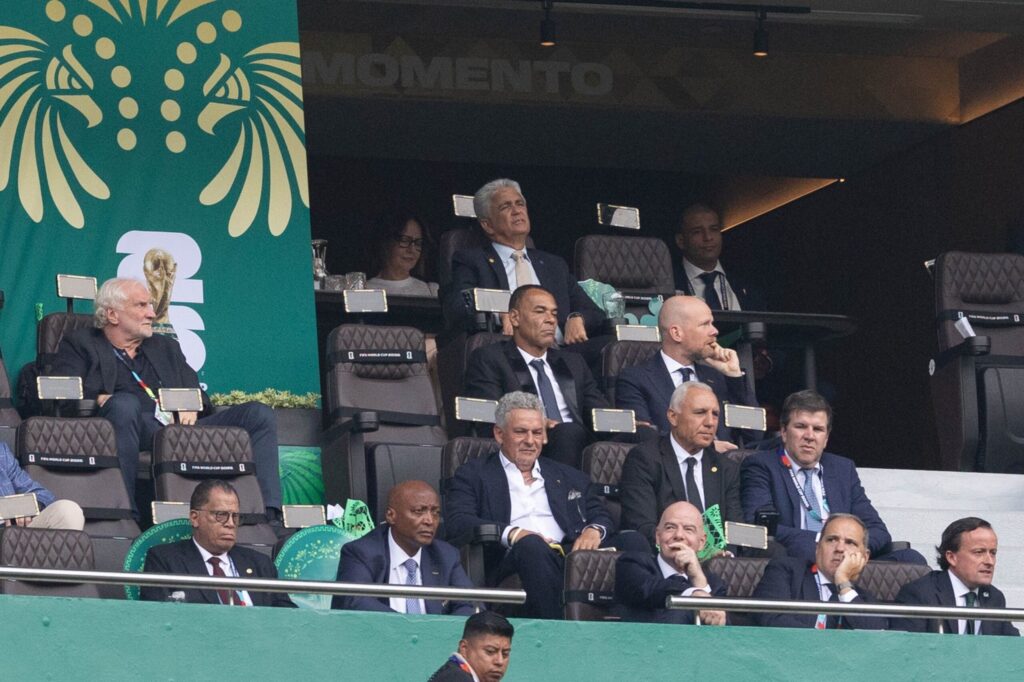
FIFA: Corporate State with Market Immunity
June 19, 2026June 19, 2026
FIFA captures sovereign territory through tax exemptions and free infrastructure use; Peña Nieto’s irrevocable concessions shield 2026 World Cup contracts.
-
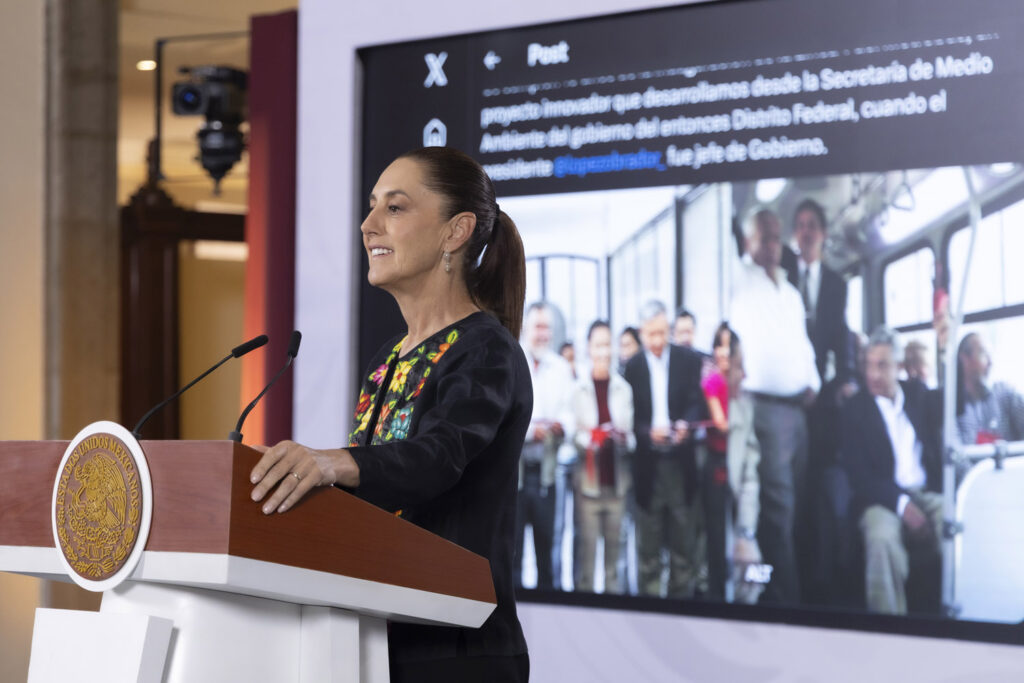
People’s Mañanera June 19
June 19, 2026
President Sheinbaum’s daily press conference, with comments on the national team, tourism, Spain and Mexico, shared prosperity, the ABC Daycare case, and the USMCA.
-
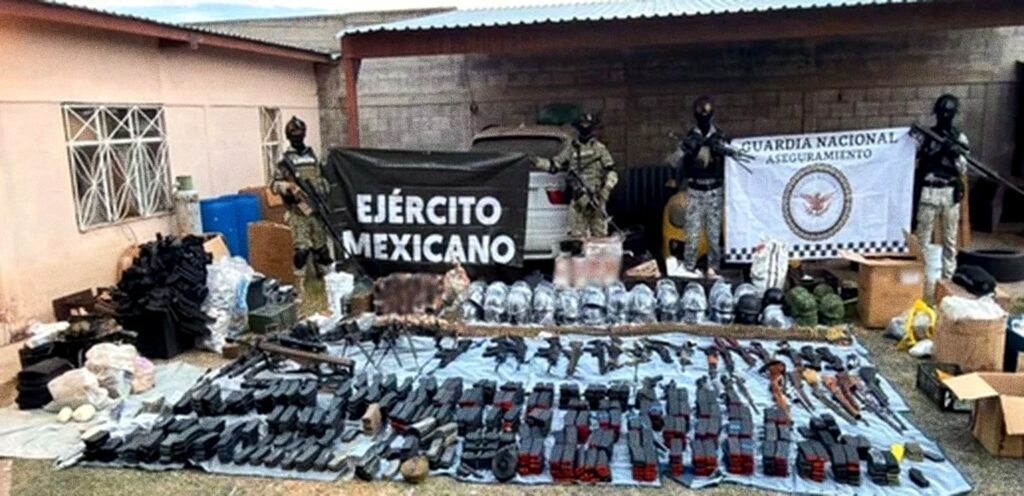
War Arsenal Seized in Durango with Barrett Rifles, Machine Guns, and Over 39,000 Cartridges
June 19, 2026June 19, 2026
Mexico continues to seize U.S.-made weapons being trafficked into criminal organizations: grenade launchers, tactical gear, drugs, and vehicles, now in FGR custody.
The post FIFA: Corporate State with Market Immunity appeared first on Mexico Solidarity Media.
From Mexico Solidarity Media via This RSS Feed.