

On June 18, right-wing President Daniel Noboa once again declared a state of internal armed conflict in the country. Faced with a serious security crisis, Noboa made the formal declaration, as he claims, to better address the rampant violence that over the past six years has caused the worst security crisis in Ecuador’s history.
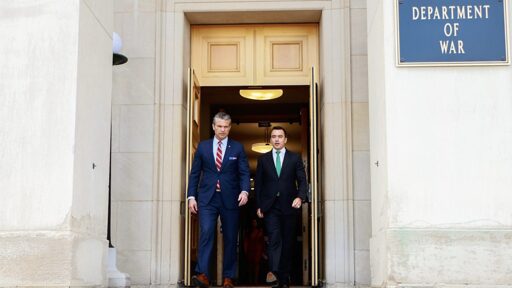
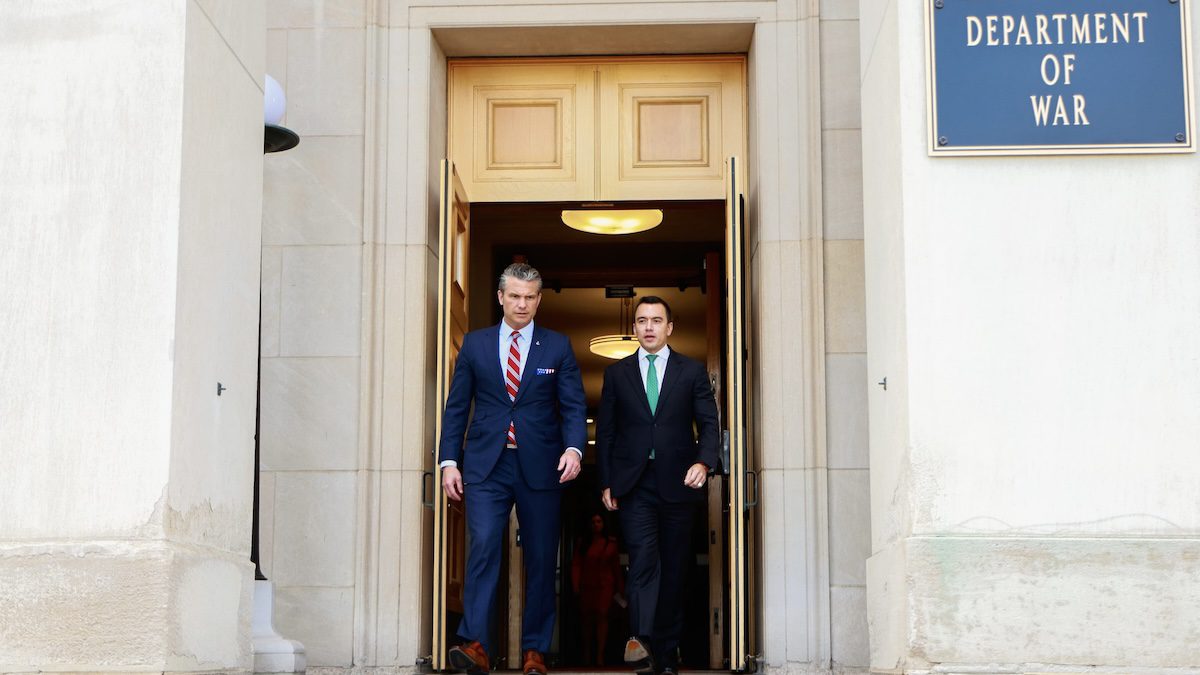
In addition, Noboa, a loyal ally of Washington, authorized the deployment of foreign military personnel in the country who, he stated, would support the Security Bloc in various police and military activities. According to the president, this development was made possible following his recent trip to the United States, during which he reportedly met with US officials at the Pentagon.
“Today I signed a decree that strengthens the fight against narco-terrorism in Ecuador. Now, military personnel from allied countries will be able to deploy to the provinces hardest hit by violence… This measure is the result of months of work, especially during our last meeting at the Pentagon,” Noboa said in a video in which he is seen surrounded by hundreds of uniformed personnel.
One of the decisions that has drawn the most attention is that Noboa, in a decree, states that he will grant pardons to military personnel, police officers, and civilians who participate in operations to defend the state. In addition, he urged the legislature to grant amnesty to anyone acting in this context who commits crimes in the course of upcoming operations. Finally, Decree 424 states that foreign personnel cooperating in these actions will enjoy immunity.
This decision comes after the army issued a public apology a few days ago for the deaths of four Afro-Ecuadorian children in Guayaquil during operations carried out by the Security Block.
Several weeks ago, Ecuadorian fishermen reported that they were attacked on the high seas by US military personnel and that, after their boats were destroyed, they were illegally sent to El Salvador, from where they were deported. In response, Ecuador never filed a formal complaint with the United States.
In this context, many analysts criticize the decision, arguing that it gives carte blanche to military personnel, police officers, and civilians – both nationals and foreigners – who might commit a crime, allowing them to carry out any activity without having to be held accountable for their actions.
In this regard, opposition Assemblyman Fernando Cedeño said the decision is part of the United States’ growing influence in the region and expressed concern about the implications that the presence of foreign armed agents in Ecuador could have.
“Decree 424 was drafted and finalized in Washington during the meeting between Daniel Noboa and Pete Hegseth. What happened at the Guayaquil airport is merely a justification for a decision that had already been made and that seriously undermines Ecuador’s sovereignty,” Cedeño told the press.
Noboa’s persistence
The right-wing president has already attempted on several occasions to have US police and military personnel stationed in Ecuador. Furthermore, Noboa had met with the leader of the mercenary group Blackwater to discuss its possible participation in security operations. In 2025, he called for a referendum in which he asked, among other things, about convening a new constituent assembly and the possibility of establishing foreign military bases (something prohibited by the current constitution). In that case, the Ecuadorian people categorically rejected the executive branch’s proposal, which was seen as a clear defeat for Noboa
However, Noboa did not give up. He began signing one security cooperation agreement after another, which gradually began to give foreign authorities more power and influence. The latest was the establishment of an FBI office in Ecuador. It was clear that due to the Shield of the Americas commitment, signed by Trump and his loyal regional allies, cooperation would have to be taken to a higher level.
In recent months, US and Ecuadorian authorities claimed to have carried out an airstrike on an alleged drug trafficking enclave, a claim that has been questioned by human rights groups, who assert that it was simply a modest dairy farm, and that residents of the area reported being beaten and subjected to electric shocks by Ecuadorian uniformed officers.
Noboa, who met with Pete Hegseth but not with Trump, traveled to the United States the previous week, where he also attended the Ecuador vs. Ivory Coast soccer match (a move that drew heavy criticism because it was not included in the president’s official schedule). Now, the president claims that the trip to the United States – a country he has visited at least 14 times during the first half of his term – led to the agreement with the Pentagon.
A security strategy that has yet to yield results and is causing concern
Noboa declared a state of armed conflict at the start of his term after a group of alleged drug traffickers attacked a television station. However, the measures taken by the executive branch have not produced the results he promised. 2025 was the most violent year in Ecuador’s history, and, according to experts’ projections, 2026 could be the second most violent.
In a previous referendum, Noboa had already asked Ecuadorians to grant the armed forces greater authority to participate in internal security operations, a measure that was approved by a majority of Ecuadorians. However, Noboa’s security plan, called Fenix Plan (which, by the way, has never been disclosed), has failed to meet even its minimum objectives.
If we take this reality into account and add the fact that, according to several polls, security is the main concern of Ecuadorians, this helps explain, in one way or another, the clear decline in Noboa’s popularity over consecutive months. In May, according to CIEES, the government’s approval rating stood at just 26%.
Thus, this may be the measure that Noboa believes will help him win an armed conflict that, so far, he has been unable to resolve despite his repeated promises. However, many opposition politicians fear that the promised pardons (regardless of the crime), amnesties, and other measures could be used to persecute and repress people who have nothing to do with drug trafficking but who oppose Noboa’s government; Noboa could cite an alleged threat to national security to justify any kind of excessive action against his political opponents, they said.
BreakThrough News , June 19, 2026
From BT News via This RSS Feed.