

With the 250th anniversary of the United States’ independence approaching, much of the planned celebration has been centered not on highlights of the country’s history, the communities that changed the nation by demanding progress on voting and civil rights, or how far the US has come since the Declaration of Independence was signed.
Instead, President Donald Trump has increasingly placed himself and his own views on American history at the center of the semiquincentennial celebration—insisting on a “Freedom 250” UFC fight on the White House lawn, arranging for his own image to appear on US passports and commemorative gold coin, calling himself “the Number One Attraction anywhere in the World" as he stepped in to headline the Great American State Fair after numerous performers dropped out, and using taxpayer dollars earmarked for the 250th birthday to hold an event devoted to the absurd and ahistorical claim that the US was founded as a Christian nation.
Ahead of the official “Freedom 250” events planned for July 4, a coalition of progressive groups—including One Fair Wage, Workers Center for Racial Justice, the Council on American Islamic Relations, and Jews for Racial and Economic Justice—are mobilizing to direct the country’s attention away from Trump, Christian nationalism, and even the country’s history and its independence—and toward a future in which Americans celebrate their “interdependence.”
“Interdependence means recognizing that our lives, communities, and futures are connected,” reads the Next250 coalition’s website. “It means understanding that none of us are free, safe, or thriving alone, and that the well-being of our communities, democracy, environment, and future generations depends on how we care for one another now.”
On June 27, a week before Independence Day, people from across the US are planning to attend a national mobilization in Washington, DC where the coalition will “reckon with our nation’s history and simultaneously declare a shared vision for the future of the country.”
The event will amplify the Declaration of Interdependence, a document that focuses on the “collective destiny” of everyone in the US.
“We are one nation, interdependent, woven together by the strength of our ideals, our shared history, and the extraordinary land we live on—stewarded since time immemorial by Indigenous nations whose sovereignty and leadership continue today,” reads the declaration. “We can bring this vision to life only by recognizing our common destiny, honoring our shared humanity, and working together.”
“Today, too many people in the United States are struggling to meet their basic needs, while a tiny few have more money than nations,” the document continues. “Too many of us are feeling disconnected from our neighbors, have lost faith in government, and are longing for community. People do not feel safe from violence. Wildfires, floods, and extreme weather are destroying whole communities. We join together in our shared values to carve a path toward a better future for ourselves and each other.”
The declaration pledges to look ahead and build a nation where:
- All people are treated with dignity and respect;
- Everyone feels safe in every community;
- Access to clean, green spaces is abundant;
- Every person who works earns a living wage and benefits that allows families work-life balance.
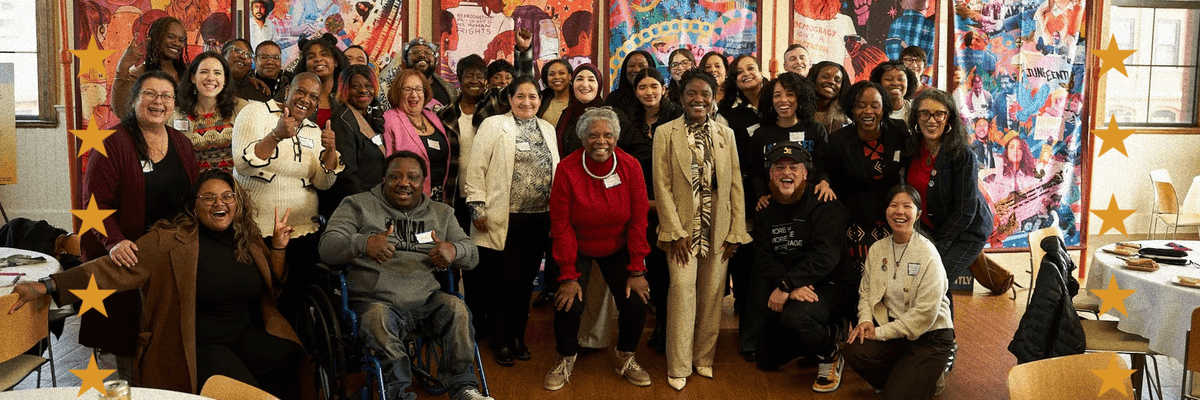
The mass mobilization planned for June 27 has been years in the making. Key organizers—including political activists Linda Sarsour and Carmen Perez-Jordan and One Fair Wage president Saru Jayaraman—have gathered inspiration for the gathering and the declaration from communities across the country at town halls in Hartford, Detroit, and New York City, as well as “listening sessions” in dozens of states.
The town halls, like the event planned for the 27th, have included music and art exhibitions as well discussions about a more inclusive and democratic future for the US.
The organizers, Sarsour told Common Dreams, “really tried to use the themes, the words that came out of those listening sessions, and to develop this Declaration of Interdependence.”
“What it really reaffirmed for me personally and for the folks that were involved is that majority of people agree on very fundamental universal values and principles,” Sarsour added. “People want safety. People want dignity. People want to thrive. People are tired of just the survival mode.”
The coalition found that “living wages” were an issue that people across the country “fundamentally agree on.”
“Everyone, regardless of political party, regardless of where you live in the country, no one wants to work three jobs to support their families,” said Sarsour. “So this idea of economic justice and living wages is actually a universal principle and value that people hold in this country.”
A majority of Americans also agree on “sensible gun reform,” she told Common Dreams, and—despite Trump’s insistence that the climate crisis is a “scam,” most people in the US do not agree with him. Widespread agreement has also been found when it comes to reproductive rights, with voters in red states like Kansas and Kentucky voting in favor of protecting abortion access in recent years after the Supreme Court’s right-wing majority overturned Roe v. Wade.
“I think that when you have conversations about universal values, the question is like, ‘What do you think your neighbors want?’” said Sarsour. “And I think everyone is like, ‘Yeah, of course, why wouldn’t my neighbor want to also make a living wage? Why wouldn’t my neighbor also want to have access to healthcare?’ It’s just, we just never give the opportunity to our people to, to think about these things or ask them, prompt them on these questions about others.”
From Common Dreams via This RSS Feed.