


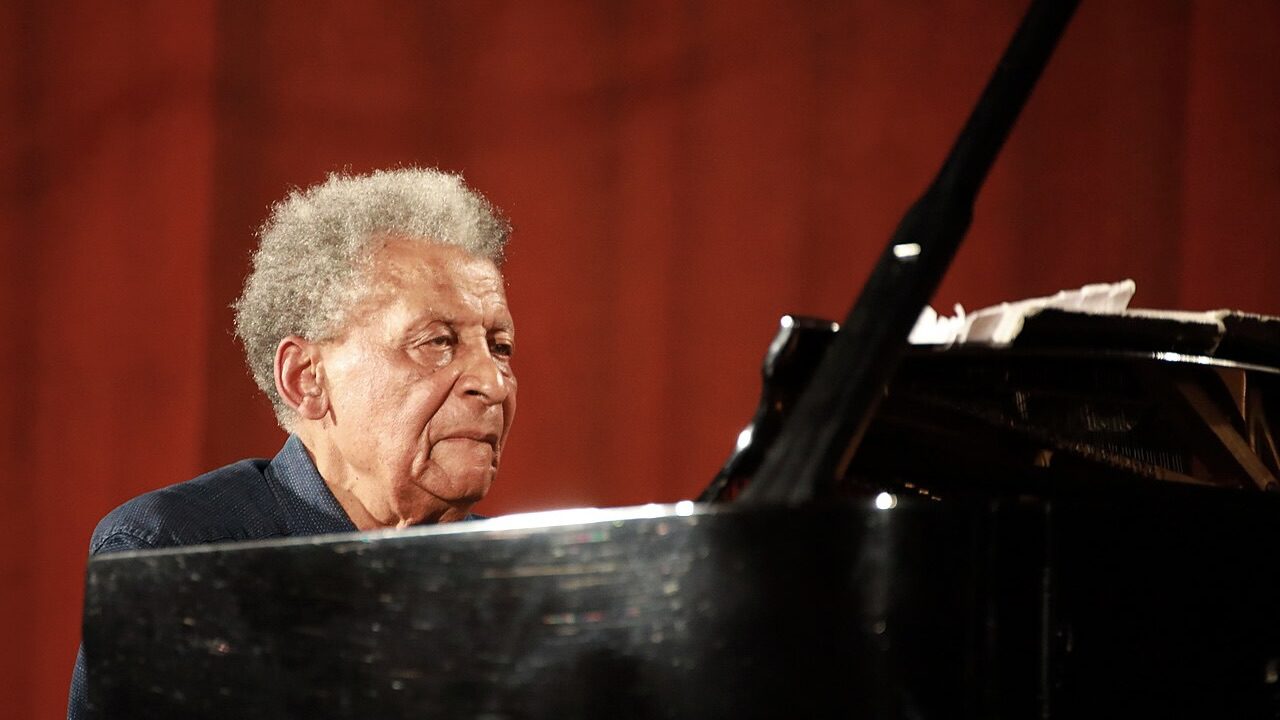
With the passing of Abdullah Ibrahim at the age of 91, South Africa and the world have lost more than a jazz giant; it has lost one of its most profound cultural storytellers. Across a career spanning over seven decades, Ibrahim transformed the pain of apartheid, the hopes of liberation and the rhythms of everyday life into music that resonated far beyond South Africa’s borders.
Born Adolph Johannes Brand in Cape Town in 1934, Ibrahim began his professional musical career at the age of fifteen. Over the decades, he evolved into a towering figure whose work transcended borders, cultures and generations. His music became both a soundtrack to South Africa’s liberation struggle and a universal expression of human resilience.
In 1959, he formed the groundbreaking jazz group The Jazz Epistles alongside saxophonist Kippie Moeketsi, trumpeter Hugh Masekela, trombonist Jonas Gwangwa, bassist Johnny Gertze, and drummer Makaya Ntshoko. The group recorded what is widely regarded as the first modern jazz album by Black South African musicians, laying the foundations for a uniquely South African jazz tradition that would influence generations of artists.
The rise of apartheid repression forced Ibrahim into exile during the 1960s. He settled in New York City, joining a growing community of exiled South African artists who used culture as a weapon against apartheid. Apart from a brief return to South Africa in the 1970s, he remained in exile until the early 1990s when the apartheid system began to crumble.
During this period, Ibrahim’s music became increasingly influenced with spirituality. Returning to Cape Town, he converted to Islam and adopted the name Abdullah Ibrahim. In 1970, he undertook a pilgrimage to Mecca, a journey that deepened the spiritual dimension of his work and further shaped the contemplative style that became his hallmark. In 2009, Abdullah Ibrahim was awarded the Order of Ikhamanga in Silver, one of South Africa’s highest national honors.
A legend at best in his craft
Few people witnessed Ibrahim’s artistry as closely as sound engineer Aki Khan, who worked with him on numerous performances and productions in South Africa from 1995.
Reflecting on his long association with him, Khan told Breakthrough News that Ibrahim was a deeply unique artist whose music was inseparable from the history of South Africa.
“Abdullah was very unique,” Khan recalls. “He used to tell me there are billions of people in the world and each one has a voice. His music expressed the pain that was done under apartheid. He told the history of a country and the struggle of our people through music.”
According to Khan, Ibrahim’s performances were unlike any other.
“His music was very meditative and would take you on a journey. He was very proficient in what he did and had his own style deeply rooted in African jazz, taking all the influences from where we come from. The people who came as slaves, the Indigenous people, all influenced his music. His music was really universal.”
Khan remembers audiences sitting in near-complete silence as Ibrahim performed.
“When he played his music and instrument, you could hear a pin drop. His performances, which would go on for hours, would excite many people. There was something about the experience.”
While Ibrahim possessed a deep knowledge of global jazz traditions and could perform the great American jazz standards with ease, Khan says that his greatest contribution was the way he transformed those influences into something unmistakably African.
“Abdullah knew music from all around the world. He could play all the American jazz standards, but his thing was to bring his own upbringing into the music. Life under apartheid was reflected in his compositions. I think he also saw music as healing.”
Mannenberg: anthem of the anti-apartheid movement
Throughout his career, Ibrahim refused to separate art from memory. His compositions preserved the sounds of Cape Town’s streets, the rhythms of African communities, the trauma of forced removals, and the enduring hope of liberation. His most famous composition, Mannenberg, recorded in 1974, became an unofficial anthem of resistance during the anti-apartheid struggle. The piece captured both the pain and defiance of a people living under racial oppression and remains one of the most influential works in South African musical history.
Khan points to another dimension of Ibrahim’s artistry, his remarkable ability to channel inspiration into timeless compositions.
“He had an exceptional voice in terms of his sound. For me, he was a gift from God.”
Discussing Ibrahim’s celebrated album Water from an Ancient Well, Khan points out to the musician’s enduring creativity.
“That well never dried. Abdullah kept playing and never stopped.”
He also recalls a story Ibrahim shared about the composition “Did You Hear That Sound?” from the album African Tears and Laughter.
“He told me he had a dream. In that dream, a voice asked him, ‘Did you hear that sound?’ He woke up immediately, went to the piano and recorded it. It is an incredible piece and one of my favorite songs.”
Beyond his extraordinary musical achievements, colleagues and admirers remember Ibrahim for his humility and respect for others.
“Abdullah respected everybody around him,” says Khan. “He would greet the guy at the door, the person working in the garden, everybody. Those values of respect were something he carried throughout his life.”
More than a jazz musician, Abdullah Ibrahim was a custodian of memory and a chronicler of South Africa’s soul. His compositions captured the pain of dispossession, the dignity of resistance and the enduring hope of liberation. And long after the end of apartheid, Ibrahim music continued to speak to the need for cultural renewal, spiritual healing and the recovery of a people’s humanity.
elevation , June 19, 2026
From BT News via This RSS Feed.