


Photo: Fred Lum / The Canadian Press
Summary
- A proposal by developer Cliff Bay Muskoka Corp. includes new condominium and hotel units, restaurants, a spa, an event centre and a marina in the small town of Gravenhurst, Ont., along with particularly controversial water villas over Lake Muskoka.
- The proposal relies on obtaining a Minister’s Zoning Order, or MZO, to bypass local municipal planning rules.
- The MZO was a condition of the purchase when the developers bought it from the province, which one legal expert told The Narwhal could pose a conflict of interest.
Ontario cottage country — famous for its hundreds of clear lakes nestled in the Canadian Shield — is experiencing a first.
The Cliff Bay resort project, proposed for the south end of Lake Muskoka, is planning for a Minister’s Zoning Order, a provincial decree that limits local government oversight in order to move development ahead. It’s known across the province as an MZO although, until now, Muskoka doesn’t appear to have experienced one.
Now that it is, locals and cottagers have a lot to say. Throughout the town of Gravenhurst, Ont., lawn signs urge passersby to “Protect Muskoka Bay.” An attempt at an online public meeting initiated by the developers failed in May 2025, after its capacity of 100 attendees was quickly reached, with many more stuck in the waiting room eager to voice their concerns.
The proposal by developer Cliff Bay Muskoka Corp., part of the KS Group of Companies, shows new condominium and hotel units, two restaurants, a spa, an event centre for weddings and a marina with space for 80 boats. While the developers originally proposed 1,400 units split between hotel and residential space, they told The Narwhal in an email that number has been “significantly reduced,” but didn’t say by how much.
All of this will spread across 33 hectares, or about the size of just under 50 soccer pitches.
A particularly controversial aspect of the Cliff Bay resort plan are additional water villas proposed to be built directly over the lake. Their construction would impact Crown lake-bed, which supports invertebrates and insects that are the backbone of the lake ecosystem.
“The building over water is what gets me the most,” Bruce Parlette, who spends half his time at his cottage on Lake Muskoka, told The Narwhal. Parlette began an online petition opposing the project that has accumulated more than 5,300 signatures over the last year.
By current municipal rules, buildings on the bay typically have to be at least 20 metres, in some cases 30, from the shoreline. “But they’re looking to build all these villas on the water … so the whole shoreline protection, that buffer zone, would be gone,” Parlette said.
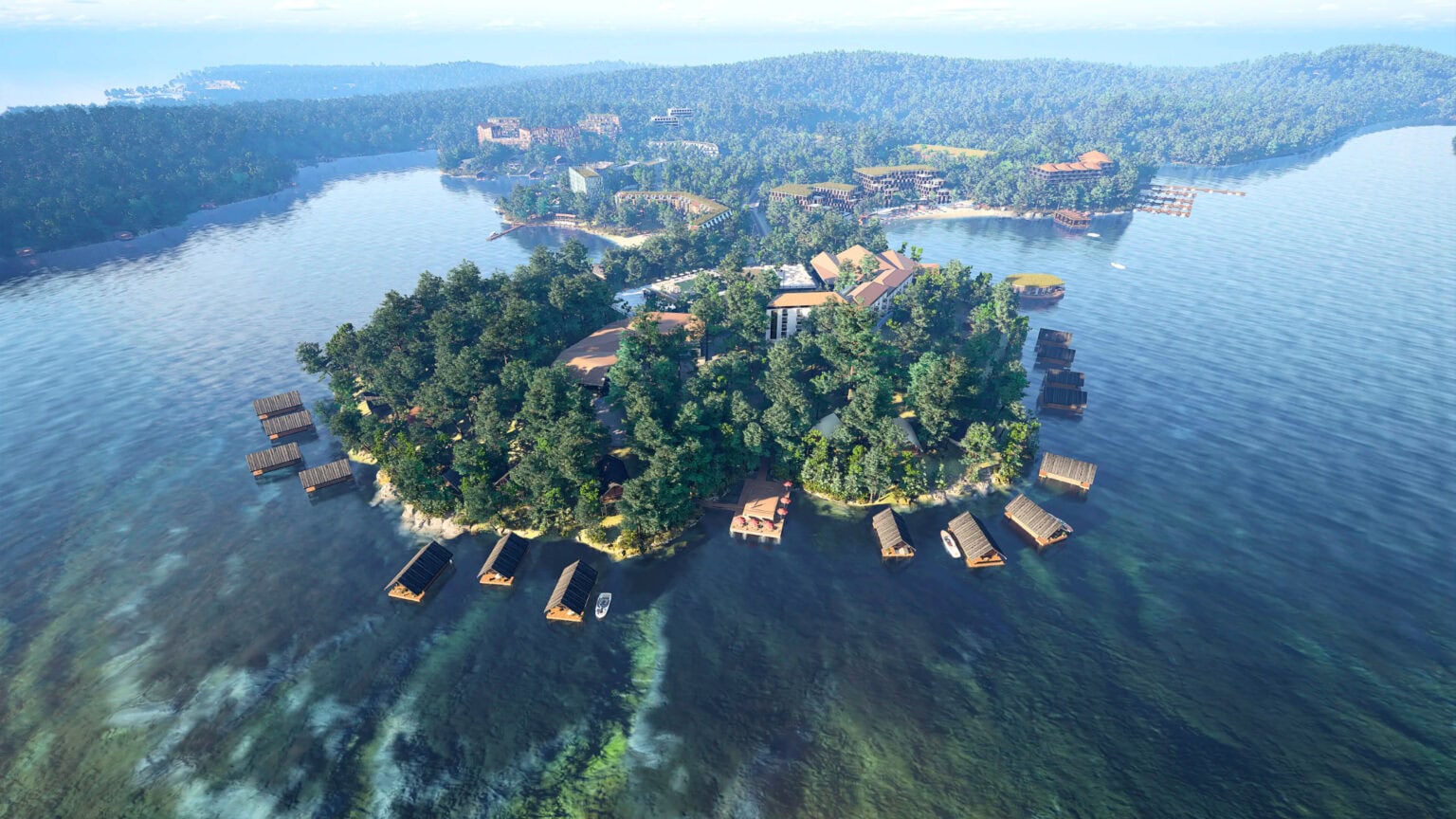
The proposal by developer Cliff Bay Muskoka Corp. includes new condominium and hotel units, two restaurants, a spa, an event centre for weddings and a marina — along with villas built over the lake. Illustration: Cliff Bay Muskoka All Season Resort and Residences
So far, Gravenhurst’s leadership has been quiet on the project within its borders. A spokesperson told The Narwhal in an email that the town has not taken a position or issued any news releases or statements as “there hasn’t really been anything to share,” adding that they are awaiting the final proposal for “some form of statement or release.”
When asked about public concerns over the impact of the project, the spokesperson said “the town does not own the property, process or decision here,” adding that council “certainly heard the concerns” at the developer’s public information session and might be able to take an eventual position when the process is further along.
The spokesperson did express council’s desire to see the property, a mix of undeveloped Crown land and a former sanatorium, put to productive use for the community.
Meanwhile, Parlette and advocates at the Muskoka Lakes Association are selling the lawn signs, emailing officials and participating in public meetings about what the association calls the “deeply troubling details of a massive development proposal.”
“Nobody wants to see it done with an MZO, because then it’s going to override any local planning, zoning and decision-making,” Parlette said.
The developer website reads that, “in partnership with the Province of Ontario, we’re redeveloping this iconic site into a vibrant, mixed-use tourist complex,” in a project that reflects their “commitment to thoughtful growth, economic development and preserving the natural beauty of Muskoka for generations to come.”
The Narwhal also sent questions to Infrastructure Ontario, which sold the land to Cliff Bay, and the Ministry of Municipal Affairs and Housing. Neither of the provincial agencies involved responded to detailed questions about the sale of the land, the Minister’s Zoning Order and public concerns about the impact of the project.
Muskoka’s first MZO and the Doug Ford government’s track record using them
A Minister’s Zoning Order is a powerful control tool. It lets the provincial Housing Minister unilaterally decide how land is used and developed by bypassing local municipal planning and public consultation processes that would otherwise be required under the Planning Act.
After searching publicly available government records, The Narwhal was unable to find evidence of any other MZOs being issued in the Muskoka area, including in the three major towns of Gravenhurst, Bracebridge, Huntsville and smaller hubs like Bala and Port Carling.
Phil Pothen, legal counsel and program manager of land use and Ontario environment at advocacy organization Environmental Defence, told The Narwhal the Muskoka proposal raises concerns because the developers stated publicly that obtaining a Minister’s Zoning Order was a condition of the purchase and sale agreement between Infrastructure Ontario and the developers.
“It would actually place the province in something of a conflict of interest,” Pothen said, “in the sense that [the province] is both the landowner who stands to gain more if the land is more highly valued and the regulator who’s actually making the decision.”
Discussion of the MZO came at a public information meeting held over Zoom in July 2025, a redo after the over-capacity attempt that May. There, Kirill Soloviev, head of strategic planning for Cliff Bay, told hundreds of attendees that, as part of the deal for the developer to buy the property from the province, a “Ministerial Zoning Order was included, and now it’s a formal part of the transaction.” Bob List, a land use and environmental planner acting as a consultant for the project, echoed the statement.
The Cliff Bay project’s developer wrote in an email to The Narwhal that a Minister’s Zoning Order was a “necessity” because mixed land use — mostly recreational and commercial — is currently not recognized in existing zoning for the property. Ensuring a Minister’s Zoning Order would come through was essential to the decision to purchase the land, as without it, the decision to rezone the property for the purposes of the resort would have been left with the township, and not guaranteed.
In 2024, the Office of the Auditor General of Ontario conducted an audit of Minister’s Zoning Orders in the province and found that between 2017 and 2023, 114 were issued. With the Doug Ford government first elected in 2018, that average of 23 per year represents a 17-fold increase from the prior two decades. The audit concluded that these orders “have been used to override municipal planning.”
The audit also found that most information packages prepared for the office of the Ministry of Municipal Affairs and Housing as it evaluated each order “did not contain the kind of detailed risk information normally factored into municipal zoning decisions.” That included key information about the capacity of local roads, sewers and other infrastructure; the risks posed by natural hazards and the environment; and likely financial burdens to regions, municipalities and taxpayers.
These orders cannot be appealed at the Ontario Land Tribunal. Of the 25 Minister’s Zoning Orders the auditor general scrutinized for the report, they found that half showed “no evidence the ministry engaged with any affected Indigenous communities” prior to issuing the order.
“This is a threat, frankly, to the rule of law in Ontario,” Pothen said. “It’s a process that is much more susceptible to impropriety than a conventional planning process where multiple individuals all need to be lined up in support of a proposal.”
What’s next for Cliff Bay resort in Ontario cottage country?
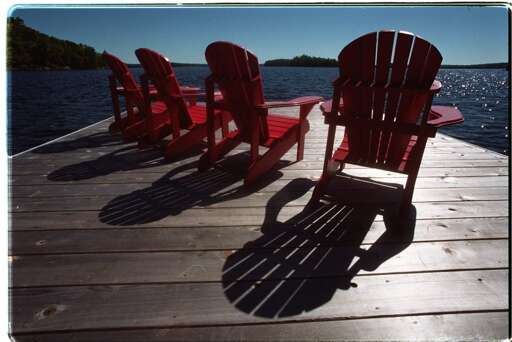
Right now, the area surrounding the site boasts a tree-lined shore spotted with cottages, ranging from quaint to luxurious. Docks surround the large, clear blue bay, with Muskoka chairs set up with views across the lake. Not far from the water on the site, the eerie, now-closed hospital building sits abandoned and overgrown.
Maintaining shorelines is critical to ecosystems and the wildlife they support; it’s where fish spawn, turtles lay eggs and birds nest. Healthy shoreline vegetation also filters rainwater and can even limit flooding, a risk that is increasing in the face of climate change.
In a response to questions from The Narwhal, the Cliff Bay developers said that upcoming changes to their plans will add more features for public use, like the beaches and public trails Soloviev mentioned during the public meetings, and address public comments they’ve received from people reaching out to them.

Phil Pothen, legal counsel and program manager of land use and Ontario environment at Environmental Defence, says MZOs allow development projects to “leapfrog and circumvent” the established planning laws of a municipality. Photo: Ramona Leitao / The Narwhal
In an email, they said no “significant or unusual environmental impacts are anticipated,” as sewage will be processed at an existing local treatment facility and because “there are no significant natural heritage features on the site.” The developers said they anticipate an updated draft of the Minister’s Zoning Order will be “available for further public review, Indigenous consultation and government processing in several months.”
Despite these efforts, Minister’s Zoning Orders do not come with any legally binding requirement to consult the public — a point project planner List repeated several times at the July 2025 Zoom meeting.
Pothen said the zoning orders provide a direct route for the minister to “leapfrog and circumvent the established planning laws of a municipality” and to approve a development even if it doesn’t conform with the official plan or with the government’s own provincial planning statement.
The Minister’s Zoning Order process does involve collecting comment from municipal governments. But, according to the auditor general’s report, there is no legislated requirement for the ministry to satisfy any municipal requests for specific conditions prior to the orders being issued.
The Cliff Bay development will have to go through several environmental checks before being built — including a posting on the environmental registry of Ontario for public comment if the proposal goes through.
There are cases where Minister’s Zoning Orders have been useful, Pothen told The Narwhal, such as during COVID-19 lockdowns, when they allowed for quick creation of emergency shelters.
“They are meant to be used, in our view, for very extreme and emergency circumstances,” Pothen said. “What’s being posed here, it’s really just a way to circumvent the rule, which raises the problem.”
The Narwhal’s reporters are telling environment stories you won’t read about anywhere else. Stay in the loop by signing up for our free weekly dose of independent journalism.
From The Narwhal | News on Climate Change, Environmental Issues in Canada via This RSS Feed.
Doug got rich off this.
