

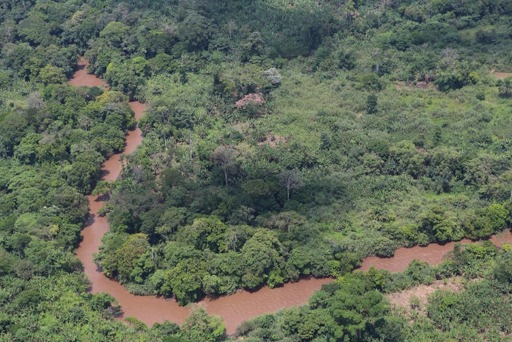
Descendants of families forcibly displaced during the creation of Maiko National Park in the eastern part of the Democratic Republic of Congo back in the 1970s are now leading a new wave of community-led conservation. Gangala Yafali Mangusa Jr., from one such displaced family, is the head of the Bamasobha Local Community Forest Concession (CFCL), covering roughly 29,000 hectares (71,700 acres), where he oversees patrols that monitor illegal hunting, logging and mining. His team also works to strengthen coexistence between communities and the forest, and to promote sustainable management of natural resources. Mongabay-Africa contributor Jérémie Kyaswekera reports that Mangusa Jr.’s commitment stems from a history of conflict between his community and the Congolese Institute for Nature Conservation (ICCN) following the creation of Maiko National Park, home to the eastern lowland gorilla, forest elephants and chimpanzees. “At one point, park rangers from the ICCN came and set up camp, and they began patrolling, forbidding people from entering the forest and eating meat, even though these Indigenous communities had been living off meat [and fruit] for generations,” Mangusa Jr. said. That led to long-standing disagreements, forcing communities to move elsewhere, he added. The Bamasobha CFCL represents a shift toward inclusive forest management. Supported by the Peasants’ Association for the Rehabilitation and Protection of Pygmies (PREPPYG), the communities of Bamasobha developed a management plan in 2023 that balances biodiversity protection with human needs through distinct production and conservation zones. The impact has been significant: Satellite data from Global Forest Watch shows forest loss…This article was originally published on Mongabay
From Conservation news via This RSS Feed.