

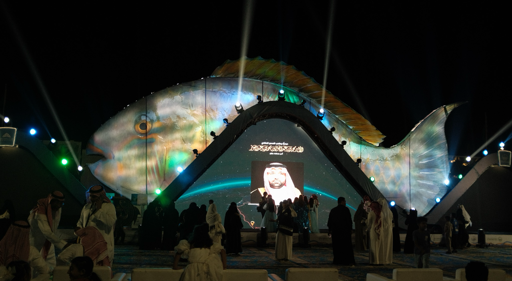
“Al Dhiwaini!” HRH the Prince of Jazan called in the traditional way that spurred hundreds of people to sprint toward the water, carrying around nets and shouting. Standing on the shores of the Farasan Islands, I watched participants in the annual parrotfish festival pull fish from the sea en masse, with catches reaching up to 78 kilograms (more than 170 pounds) of parrotfish per person. Known locally as hareed — or generally as longnose parrotfish (Hipposcarus harid) — the scale of extraction immediately triggered my instincts as a scientist, as the question asked itself: How is this sustainable? How do the fish keep coming back, year after year? But in that moment, there was nothing to do except run into the water, follow the fish, and give myself over to the thrill of it. From a time before living memory, the people of Farasan have followed the moon to this annual aggregation, a phenomenon so unique and described as the fish swimming willingly to their deaths; the fish seem almost to be waiting to be caught. As a Saudi marine biology Ph.D. student, I know how much of the Red Sea remains scientifically uncharted, and this festival is exactly why science and traditional ecological knowledge must be woven together to manage marine systems. Participant at the annual Hareed Festival in the Farasan Islands, an archipelago in the Red Sea off the coast of Saudi Arabia, with his catch of parrotfish. Image courtesy of Laila Shaaban. When I asked locals where…This article was originally published on Mongabay
From Conservation news via This RSS Feed.