

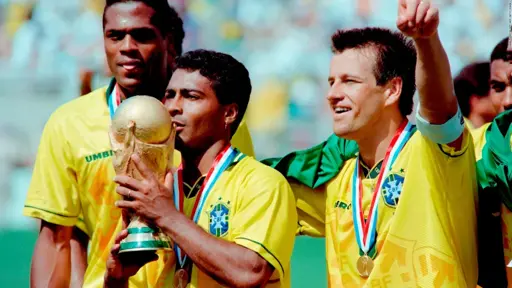
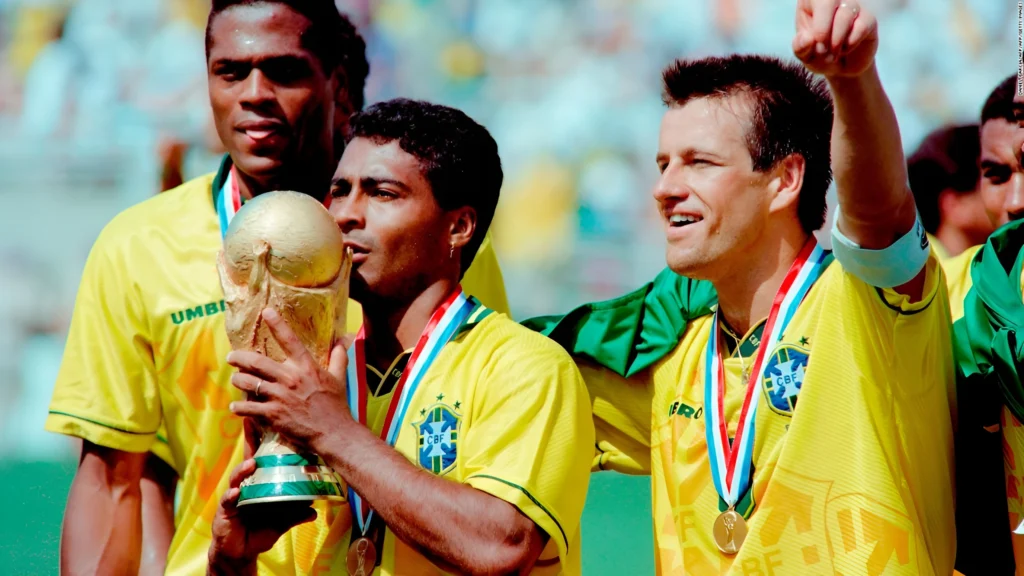
European institutional wealth contrasts with Brazil’s street-born creativity amid a corporate takeover of the people’s game
The FIFA World Cup is often presented as a politically neutral athletic celebration. However, a deeper analysis reveals that international football is closely tied to global power dynamics, class relations, and geopolitical struggles.
RELATED:
The World Cup Masks Imperial Double Standards
The pitch is often the setting where the socioeconomic tensions between the Global North and the Global South are played out, and where elite institutions seek to commercialize a sport originally developed by the working class. This dynamic is evident in the histories of the sport’s three most successful nations: Brazil, Germany, and Italy have collectively secured more than half of all World Cup titles since 1930.
For the European powerhouses of Germany and Italy, football has historically functioned as a mechanism for domestic social cohesion and state-sponsored nationalism.
Conversely, in Brazil, as a representative of the Global South, the game evolved into a means of cultural self-assertion and resistance against rigid Eurocentric systems, demonstrating that the true meaning of sport comes from the collective consciousness of the people rather than corporate models.
Did You Know: Only 8 countries have ever won the World Cup:
- Brazil
– 5 titles: 1958, 1962, 1970, 1994, 2002
- Germany
– 4 titles: 1954, 1974, 1990, 2014
- Italy
– 4 titles: 1934, 1938, 1982, 2006
- Argentina
– 3 titles: 1978, 1986, 2022
- France
– 2 titles:… pic.twitter.com/c7r3xrpF53
— YabaLeftOnline (@yabaleftonline) June 14, 2026
Brazil: Joga Bonito as De-Colonial Resistance
Brazil has the most successful World Cup record, having won titles in 1958, 1962, 1970, 1994, and 2002. For many years, the team experienced difficulties of a national inferiority complex rooted in historical exploitation.
However, the 1958 breakthrough in Sweden shattered this psychological dependency through joga bonito and ginga, a fluid, improvisational style derived from Capoeira.
Spearheaded by working-class Afro-Brazilian icons like Pelé and Garrincha, this creative approach dismantled rigid European tactical frameworks, a shift symbolized in the 1958 final when midfielder Didi calmly walked the ball back to the centre circle after Sweden scored first, leading Brazil to a historic 5–2 victory.
Despite this athletic liberation, the intersection of football and politics revealed deep societal contradictions during the 1970 World Cup in Mexico. The ruling U.S.-backed military dictatorship under General Emílio Garrastazu Médici systematically co-opted the legendary team’s success for state propaganda, using nationalistic slogans, even replacing left-wing coach João Saldanha for refusing regime interference.
While the 1970 victory brought immense joy to the working class, the authoritarian government used sporting triumph to obscure systemic censorship, torture, and human rights abuses, proving that the national team remained a complex cultural battleground between decolonial pride and elite political control.
Italy: From Fascist Propaganda to Working-Class Unity
Italy’s four World Cup titles in 1934, 1938, 1982, and 2006 span two distinct historical eras. Two of the fourth victories were explicitly used by Benito Mussolini’s fascist regime to project geopolitical strength and ideological supremacy.
For the 1934 tournament on Italian soil, the state utilized stadium architecture, propaganda posters, and mandatory fascist salutes to showcase a disciplined corporate state.
During the 1938 tournament in France, the pressure mounted when the Italian team, managed by Vittorio Pozzo, was instructed to wear black shirts emblazoned with the fascist symbol of ‘Vincere o morire!'(Win or die!), in their matches against the host nation.
Guiding the team was star forward Giuseppe Meazza, who successfully navigated the challenging political climate to secure back-to-back titles, with a 4–2 victory over Hungary.
By contrast, the triumphs in 1982 and 2006 played a vital role in fostering national cohesion within a highly fractured society. In 1982, as Italy emerged from a decade of political violence known as the “Years of Lead,” the national team faced immense cynicism due to the Totonero domestic match-fixing scandal.
Striker Paolo Rossi, returning from a two-year suspension, became an unexpected working-class hero by scoring six goals, including a hat-trick against Brazil and the opener in a 3–1 final victory over West Germany, igniting rare collective joy across class divides. A similar dynamic unfolded in 2006 when the Calciopoli referee-corruption scandal rocked Italian football.
Under the leadership of Captain Fabio Cannavaro and midfielder Andrea Pirlo, Gli Azzurri transformed the institutional crisis into a sense of defensive solidarity on the pitch, ultimately defeating France on penalties after a 1–1 draw. This victory provided the public with a sense of shared pride, standing in stark contrast to the corporate decline observed in the domestic league.
Brazil, known as the Kingdom of Football, holds an unparalleled legacy in the sport. In the history of football, no country has achieved as much success as Brazil, which has won the World Cup five times (1958, 1962, 1970, 1994, 2002), making it the nation with the most World Cup… pic.twitter.com/bzT8QtkcbB
— CGTN (@CGTNOfficial) November 15, 2024
Germany: From the Ashes of War to Multicultural Identity
Germany’s four World Cup victories in 1954, 1974, 1990, and 2014 are directly linked to the nation’s post-war reconstruction, industrial development, and demographic shifts. The 1954 triumph in Switzerland, known as the “Miracle of Bern,” was a foundational sociological moment for a traumatized and economically devastated West Germany.
In the final, the German team, made up of amateur and semi-professional players, overcame a two-goal deficit against Hungary’s renowned and undefeated “Magical Magyars” by utilizing innovative screw-in boot studs, ultimately securing a 3–2 victory.
Political scientist Arthur Heinrich observed that this sporting breakthrough enabled the working class to experience a positive sense of collective identity, devoid of the toxic militarism of the past. This coincided with the onset of the Wirtschaftswunder economic miracle.
During the Cold War era, the national team evolved into a symbol of disciplined West German industrial efficiency and corporate reliability. The West German team, under the tactical leadership of Franz Beckenbauer, playing in the libero position, secured the 1974 title on home soil by defeating the Netherlands 2–1. This was followed by a 1–0 victory over Argentina in 1990, just months after the fall of the Berlin Wall.
By 2014, a comprehensive restructuring of urban youth academies had resulted in a dynamic, cohesive team that secured a 1–0 victory over Argentina in extra time. This team reflected Germany’s changing demographic reality, transitioning from an ethnically homogeneous lineup to a multicultural collective featuring players of immigrant descent like Mesut Özil, Jérôme Boateng, and Sami Khedira.
The Corporate Capture of the People’s Game
A comparative evaluation of these three football empires reveals a structural divide between Brazil, a nation of the Global South, and the European powerhouses of Germany and Italy. This imbalance directly mirrors broader international dynamics of wealth accumulation and resource extraction.
Historically, Brazil has demonstrated athletic dominance underpinned by a unique, street-born culture of improvisation and subversion that thrives in working-class communities. This cultural resilience has enabled creative athletes to overcome rigid European formations, showcasing a distinctive competitive advantage.
However, over the late twentieth and early twenty-first centuries, international football governing bodies systematically shifted the sport towards a highly academic, standardized, and academy-driven model. This model prioritizes data tracking, physical optimization, and economic predictability over organic creativity.
This corporate restructuring has led to a significant athletic drain from the Global South to the Global North within the context of globalized market capitalism. The domestic leagues of Brazil have essentially become export markets for young talent, with wealthy European financial syndicates and multinational clubs regularly purchasing players before establishing their careers at home.
This concentration of football capital, state-of-the-art training technology, and corporate sponsorship is unparalleled in Western Europe, directly benefiting countries like Germany and Italy.
Consequently, while Brazil must continue to rely on the cultural resilience of its population to produce elite athletes, European nations are able to build their ongoing sporting success on heavily funded institutional frameworks and corporate infrastructures.
| HISTORY: Germany becomes the team with most goals scored in the world cup history with 239 goals overtaking Brazil.
pic.twitter.com/fVc2wQVamE
— Winna F.C. | Football Time (@WinnaFC) June 14, 2026
Reclaiming the Pitch for the Masses
The historical trajectories of Brazil, Germany, and Italy demonstrate that the FIFA World Cup functions as a vivid reflection of global political realities rather than a neutral display of athletic achievement.
The narratives behind their combined thirteen titles demonstrate the close interconnection between international football and national identity crises, political transitions, and state propaganda.
This is evident in the historical co-optation of the 1970 Brazilian squad by a military dictatorship, Mussolini’s strategic deployment of fascist imagery in the 1930s, and West Germany’s post-war psychological rebuilding in 1954, proving that elite sporting triumphs have consistently served broader geopolitical agendas.
In the modern era, elite institutions and corporate sponsors have increasingly transformed the World Cup into a highly commercialized product. Rising ticket prices, exclusive broadcasting rights, and widespread gentrification have alienated the live tournament from the ordinary working-class communities that originally built the sport’s global culture.
Despite extensive corporate restructuring, the cultural history and emotional power of the sport cannot be fully captured by corporate luxury suites and financial contracts.
The lasting impact of these victories is firmly anchored in the collective memory of the global working class, who continue to gather in public squares, neighborhoods, and local parks worldwide.
Sources: TeleSUR – Al Jazeera – Britannica – France 24 – FIFA page – TRT World – Xinhua – BBC – Resumen Latinoamericano – Página 12 – Brasil de Fato – La Base Latinoamérica
From teleSUR English via This RSS Feed.