

Bullets:
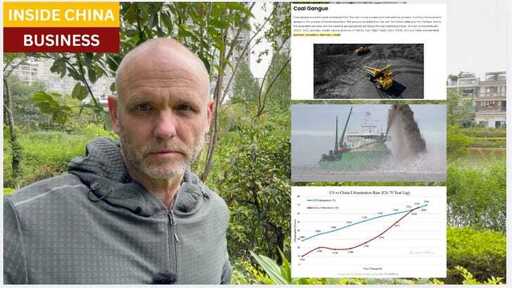
The world is critically short of the aggregate materials to build concrete.
Over a billion people in the developing world will move to cities in the next two decades, and dredging companies are ripping up river beds and seafloors to find concrete-quality sand.
China moved its construction industry to artificial aggregates, and will source future volumes from construction and demolition waste.
Chinese researchers also hope to turn their giant piles of coal gangue into usable building material, and thereby solve two major environmental problems at once.
Inside China / Business is a reader-supported publication. To receive new posts and support my work, consider becoming a free or paid subscriber.
Report:
Good morning.
China urbanized at one of the fastest rates in world history. In 1980, less than 20% of China’s population lived in cities; today over two thirds of Chinese are in urban areas. In the provinces along the Pacific coast over 70% of residents live in cities. In Southwest China, it’s 59%.
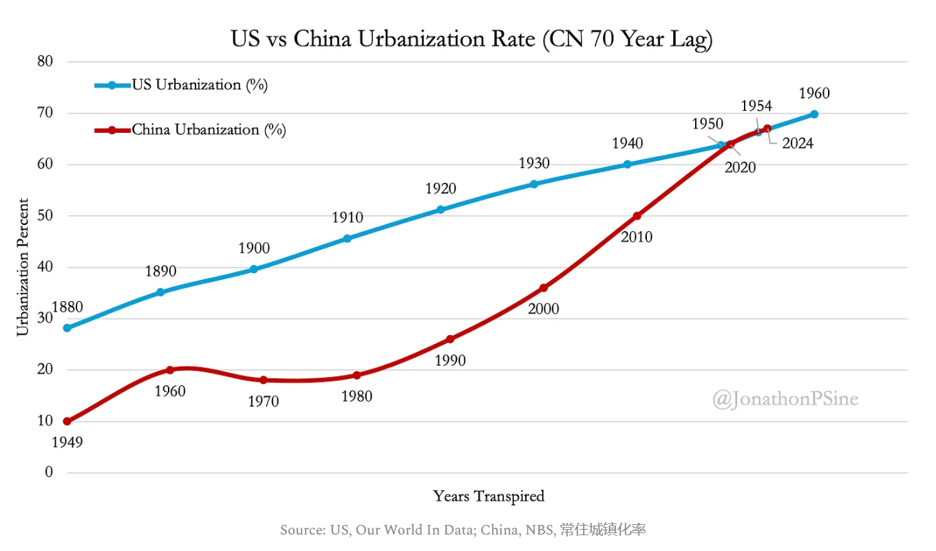
This is a comparison of the urbanization trends in the United States and in China, after moving China’s timeline up 70 years. So the begin date for the US is 1880, when 30% of Americans lived in cities, and 70% were rural. In 1949, China’s population was 90% rural and 10% urban. In both the US and in China, it took about another 70 years to build cities for two thirds of the population: in the US, that milestone was hit in 1950, while in China it was in 2020.
But China has a far larger population, and so in just one three-year period China poured 6.6 billion tons of concrete, while during the entire 20th century the United States poured 4.5 billion tons:
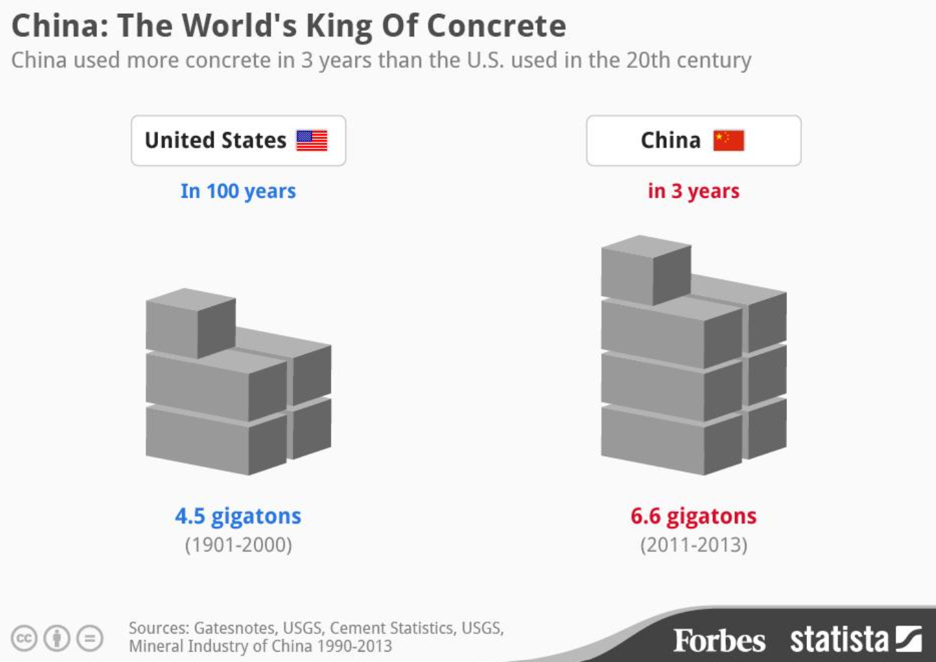
We want to consider those data from the Chinese perspective, instead of the US one. The United States and Europe urbanized before China did; again, 70 years before.
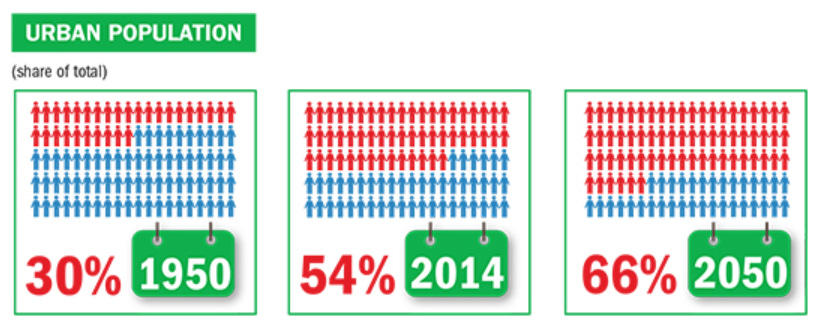
But today large populations here in Asia, South America, and Africa are urbanizing, and in the next 25 years, another billion people worldwide will move from the countryside to cities, which approximates what the Chinese did here.
That means the world will need a lot of concrete, and that means a lot of the special kind of sand that is used to make concrete. And the world doesn’t have nearly enough. Over the past few days we learned that the word “sand” is a lot more expansive that we imagined, and to people using concrete, only a certain kind of sand will do.
Aggregate is what makes concrete so valuable for building, and aggregate comes from gravel and sand. Most of the world’s sand, though, is too smooth, and the grains too small, to be used as aggregate, and in concrete. The best sources of concrete-grade sand are quarries and riverbeds.
Today the demand for sand is so high that dredgers are scraping beaches and the ocean floor. Sand from those sources also contains heavy traces of salt, which need to be completely removed to prevent the corrosion of other metals in the building. That’s expensive, but worth it. Cities tend to be near the ocean anyway, and the price of sand is high enough to cover the costs of ocean dredging and salt removal.
China is the world’s biggest consumer of sand, powered by that construction boom that urbanized a billion people here. But the rest of the world is catching up.
The extraction industry for sand and gravel is even greater than for fossil fuels.
85% of all mineral extraction is for sand mining, almost all of that is for the production of concrete. These materials all have specific chemical and physical properties, which we have linked to here, and below.
China plans to further urbanize and develop its Western provinces, and continues to invest heavily in new infrastructure, throughout the entire country. But China’s demand for aggregates peaked ten years ago, as the Chinese concrete materials industry shifted from natural aggregates, to man-made. And the percentage of natural is dropping, fast, and after 2030 recycled concrete will be a major source of base material.
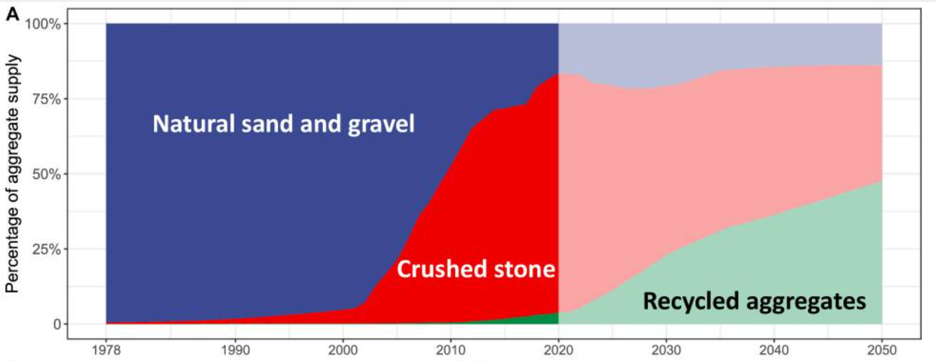
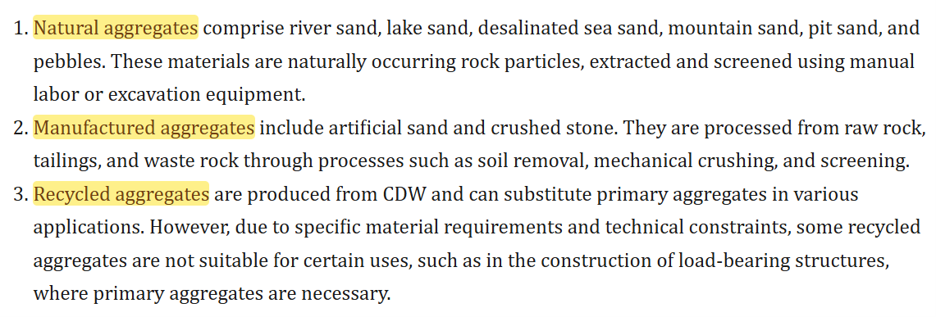
“Natural” are river and lake sand, pebbles, and “natural” also includes seafloor sand that has been desalinated.
“Manufactured aggregates” are from crushed stone. “Recycled” aggregates are sourced from Construction and Demolition Waste, or CDW. Not all CDW is suitable for all uses of concrete, used for heavy loads and bridges, for example.
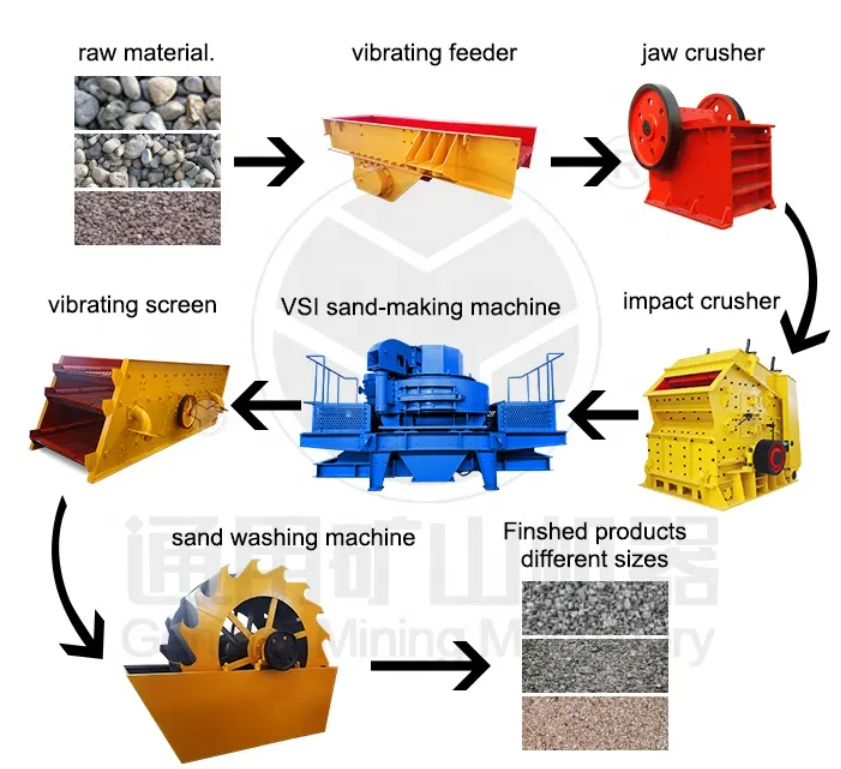
By 2020, Manufactured Aggregate was over 75% of the Chinese sand market. Stone crushing is a very capital-intensive process: from raw rocks, through the feeders and crushers, then the sand-making machine itself, then to be sorted and washed. It’s expensive. But the alternative is dragging sand out of riverbeds in massive volumes, which is an environmental problem.
The global demand for sand and gravel is 50 billion tons a year, and using manufactured sand allows building to go on, with a far smaller impact on the rivers and oceans. China’s demand for sand increased by five times over just 25 years, and almost all that new demand was met by production of artificial sand, and 25 years from now, recycled concrete will be about half the market, and the demand for natural sand will drop to about 10%, in China.
These changes were driven by top-down regulation and policy. Beginning in 2010, Beijing enacted new restrictions on riverbed dredging, and heavily promoted the industries for artificial sand. Again, CDW – recycled – will meet half of China’s demand for concrete by 2050:
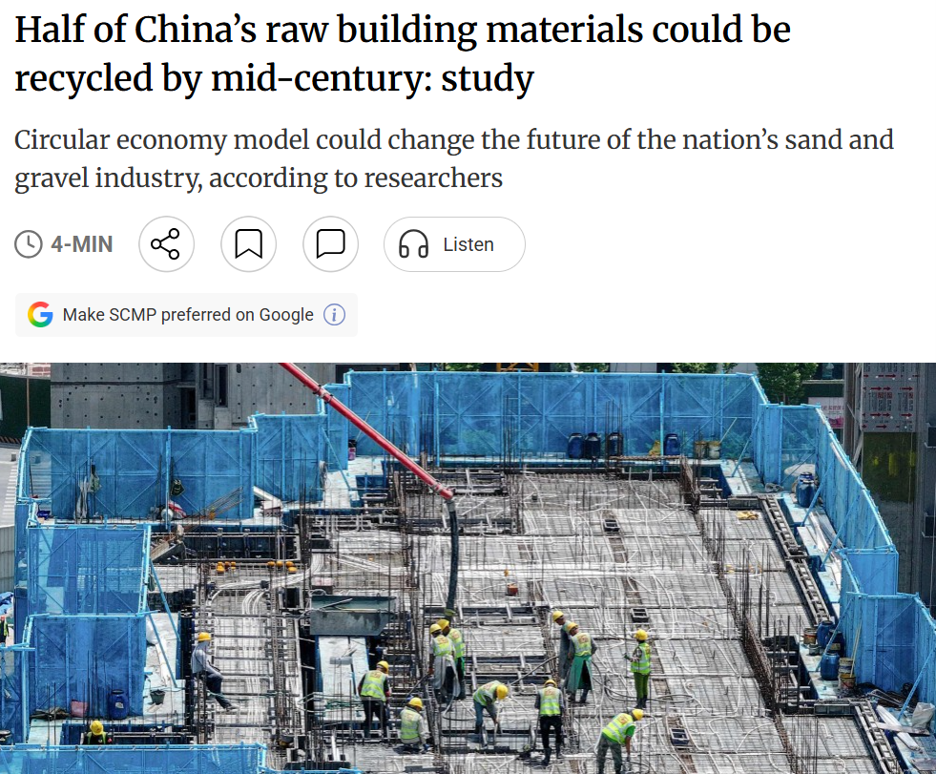
So this can all serve as a valuable lesson for other countries who are urbanizing at the same high rates that China has been over the past decades. And Chinese factories in Henan and Shandong manufacture most of that equipment used in artificial aggregates, so this is a major export opportunity for those companies, and for Chinese quarries who can just manufacture sand for export.
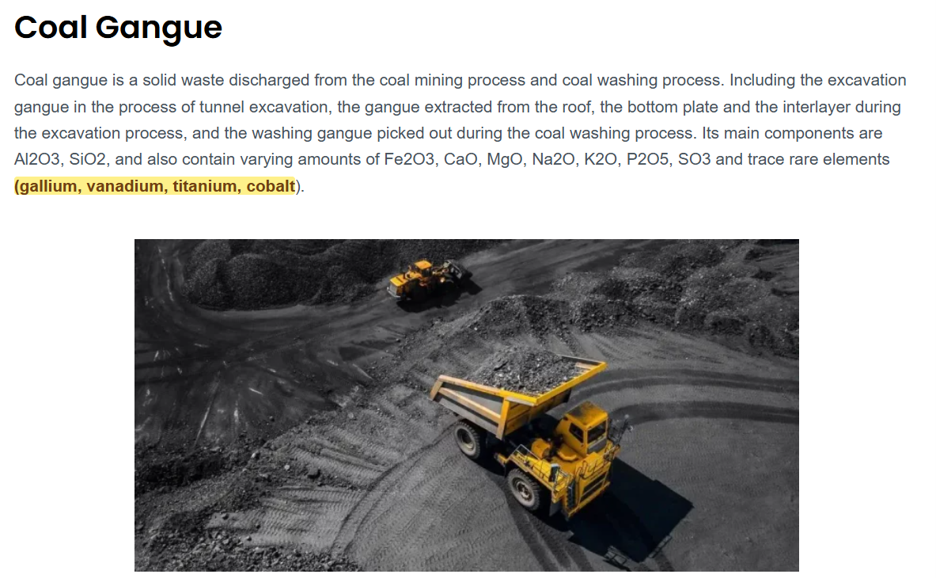
There may be more good news on another front. Chinese researchers developed a process that turns coal gangue into construction-grade aggregates, and recover rare-earth and heavy metals. China has a massive coal industry, and today has stockpiles of about 7 billion tons of coal gangue.
That, then, is also a massive environmental problem. Coal waste eventually makes its way into water tables, and particulates that are in the air. Were they to transform that gangue into commercially viable product, they would create a circular economy that would also help solve the gangue problem. Replacing natural sand with coal waste solves two major environmental problems at the same time, not just in China, but everywhere coal is burned, or ever was. Datong is in Shanxi, which is the base for China’s coal industry, and they’ve begun a 10-million-ton project.
It’s early, and they have a long way to go to make much of a dent on demand, and they need to be make certain first that they’re not just moving the heavy metals problem from old tailings piles in Shanxi to new apartment buildings in Sichuan.
We were reminded of this story. China had the world’s biggest trash problem, and built an industry to turn their waste dumps into electricity. Those processes and that technology are now in high demand across the world, anywhere people are producing garbage, and use electricity, which is everywhere.
If they get the Shanxi project to work, and turn their hazardous coal gangue into usable construction materials, the demand for that technology will be parabolic, immediately. Everyone will want it.
Be Good.
Resources and links:
We’re Running Out Of Sand… And Cities Are To Blame
https://www.lauriewinkless.com/journal/were-running-out-of-sand-cities
The Effect of Aggregate Properties on Concrete
https://www.engr.psu.edu/ce/courses/ce584/concrete/library/materials/aggregate/aggregatesmain.htm
The effect of coarse to fine aggregate ratio on the fresh and hardened properties of roller-compacted concrete pavement
https://www.sciencedirect.com/science/article/abs/pii/S095006181830477X
Declining demand and circular transition possibilities of sand, gravel and crushed stone in China
https://pmc.ncbi.nlm.nih.gov/articles/PMC12541054/
China builds with manufactured sand, easing worry about overmining and environmental cost
https://www.scmp.com/news/china/science/article/3273891/china-builds-manufactured-sand-easing-worry-about-overmining-and-environmental-cost
China Now Uses 80% Artificial Sand. Here’s Why That’s A Bigger Deal Than It Sounds
https://www.zmescience.com/science/news-science/china-80-percent-artificial-sand/
Half of China’s raw building materials could be recycled by mid-century: study
https://www.scmp.com/news/china/science/article/3331705/half-chinas-raw-building-materials-could-be-recycled-mid-century-study
The waste-to-sand plant that could pave the way for China’s zero waste coal goal
https://www.scmp.com/news/china/science/article/3357067/waste-sand-plant-could-pave-way-chinas-zero-waste-coal-goal
China turns to recycled coal waste to meet surging demand for construction sand
https://interestingengineering.com/innovation/china-turns-to-recycled-coal-waste-to-meet-surging-demand-for-construction-sand
Statista, Urbanization in China
https://www.statista.com/statistics/270162/urbanization-in-china
The Urban World
https://storymaps.arcgis.com/stories/ce3c9b908a8e458e8ce12b7da35dea04
The world moves to cities
https://www.voronoiapp.com/demographics/The-World-Moves-to-Cities-7493
IMF, Moving on up
https://www.imf.org/external/pubs/ft/fandd/2014/12/picture.htm
Industrial Colossus: China vs 1950s America
[ Cogitations
Industrial Colossus: China vs 1950s America
Chinese industrial maximalist Lu Feng argues that China today resembles the United States on the eve of World War I. But the analogy is faulty. China’s industrial strength—and its broader economic trajectory—is much closer to the United States of the 1950s…
Read more
a year ago · 69 likes · 6 comments · Jonathon P Sine](https://www.cogitations.co/p/industrial-colossus-china-vs-1950s)
China’s Factory Floor Is Moving—But Not to India or Mexico
https://www.wsj.com/world/china/chinas-factory-floor-is-movingbut-not-to-india-or-mexico-dbd9fd69
China Provincial Growth Map 2025: Central and Western Momentum, Coastal Underperformance
https://andamanpartners.com/2026/02/china-provincial-growth-map-2025-central-and-western-momentum-coastal-underperformance/
Sand dredging encroaches on marine protected areas, scientists find
https://oceansolutions.stanford.edu/news/sand-dredging-encroaches-marine-protected-areas-scientists-find
Inside China / Business is a reader-supported publication. To receive new posts and support my work, consider becoming a free or paid subscriber.
From Inside China / Business via This RSS Feed.