

Officials say they are aware the traditional guga hunt operates outside current food safety regulations. But they claim that enforcing the law is impractical.
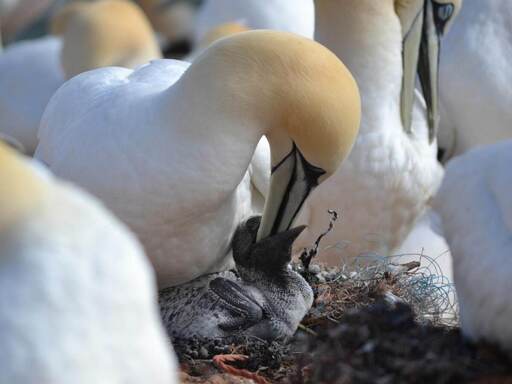
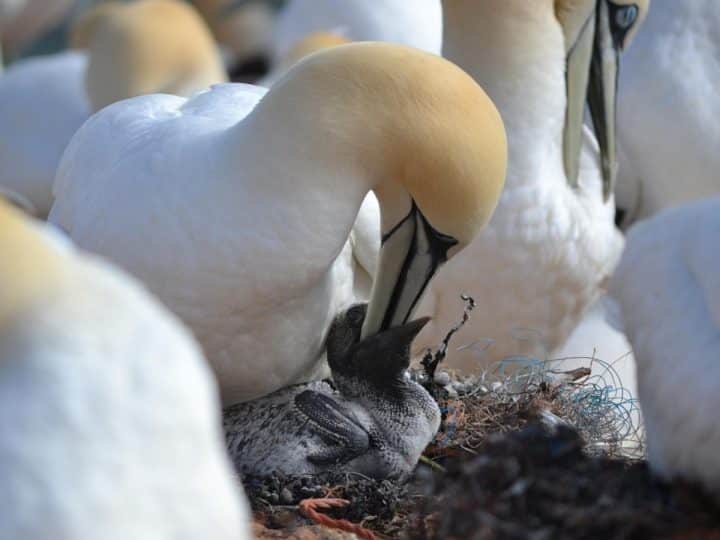
The guga hunt is the UK’s last legal seabird hunt. Every year, the “Men of Ness” travel to the remote island of Sula Sgeir to kill up to 2,000 flightless gannet chicks, which locals call guga. The birds are slaughtered and butchered on the island before being transported back to the Isle of Lewis where they are sold and consumed.
Historically, the hunt provided an important source of food for isolated island communities. Today, however, it continues primarily as a cultural tradition, with some in the Western Isles considering the birds’ flesh a delicacy. However, campaigners say the practice is cruel, unnecessary, and increasingly poses a threat to public health.
Freedom of Information disclosures obtained by campaign group Protect the Wild reveal that Comhairle nan Eilean Siar (Western Isles Council) had received food safety complaints about the guga hunt and acknowledged that the process is:
not in full compliance with current food regulations.
Despite this, officials stated that they did not intend to investigate further. They mentioned the practical difficulties involved in inspecting activities on the remote island of Sula Sgeir.
In an email chain, one council officer said:
It would require two officers making at least a 40 mile boat trip to try and access an island that has no safe landing spot at the right time to investigate potential concerns.
Protect the Wild said the failures exposed by the FOI documents only strengthened the case for ending the hunt altogether.
Devon Docherty, Scottish campaigns manager at Protect the Wild, said:
The consumption of guga is a completely unregulated food supply chain: birds are being killed, processed, and sold outside standard food safety systems, with no registration, inspection, or traceability in the event of contamination or disease outbreak.
The answer to a risky hunt that cannot be inspected is not weaker regulation. It’s ending the hunt.
Among the concerns campaigners are raising is the fact the slaughter happens in the middle of an active seabird colony. It’s on a remote island with no permanent facilities, no running water, no sanitation infrastructure and no refrigeration. The carcasses may remain unrefrigerated for weeks before reaching the consumer.
Guga hunt could be a health risk
Wild birds can be carriers of pathogens including salmonella and campylobacter. Both of these can cause serious gastrointestinal illness in humans. There are also concerns about the spread of avian influenza.
Gannets were among the species hardest hit by recent outbreaks of H5N1 Highly Pathogenic Avian Influenza, suffering severe population declines across the UK. In 2023, Sula Sgeir’s gannet colony reportedly declined by approximately 23%.
Although transmission of avian flu from birds to humans is rare, cases have occurred in the UK and internationally. Since 2003, there have been more than 950 reported cases of H5N1 globally, and 49% of patients have died.
In September 2025, a member of the public submitted a complaint to Food Standards Scotland regarding the potential avian influenza risks associated with the guga hunt. However, Food Standards Scotland stated that the practice falls outside its remit because it does not take place within an approved meat establishment. It echoed the council’s views that boiling guga for at least 45 minutes should negate any risks.
But questions have been raised about the regulator’s impartiality after a senior scientific advisor at Food Standards Scotland left opinionated comments on the social media page of anti-guga hunt group, Abolish the Guga hunt. The official called protests “pointless,” “misguided” and a “daft idea”, saying: “there are more worthy environmental issues to tackle”.
When approached, Food Standards Scotland said it would be conducting a thorough investigation into the comments.
Docherty said the controversy raised a more fundamental question about the future of the guga hunt:
The wider question here is why Scotland is still allowing the commercial distribution of wild seabirds at all.
Gannets are important native wildlife, not products, and they should not be entering the food chain in the twenty-first century.
Featured image via the Canary
By The Canary
From Canary via This RSS Feed.