

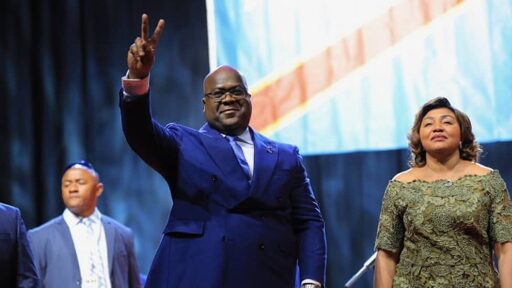
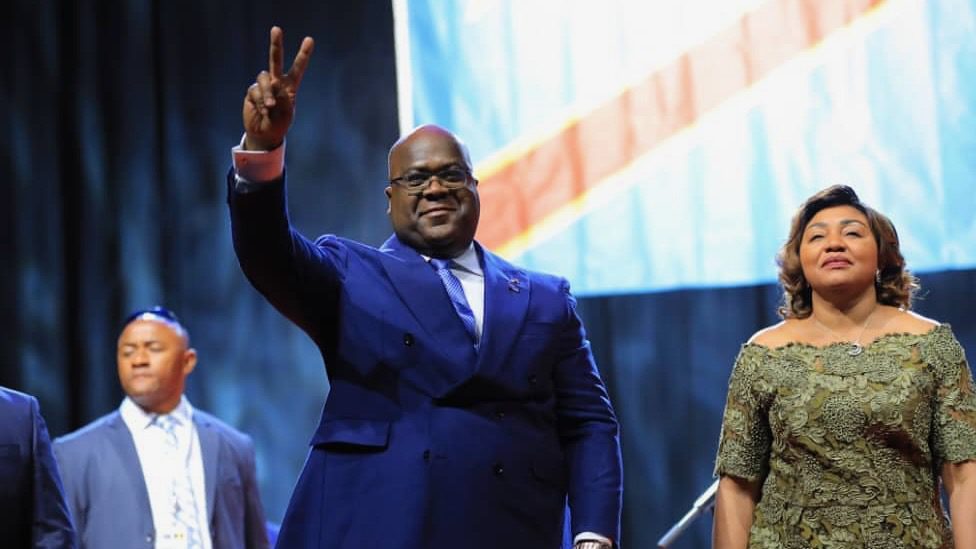
The Democratic Republic of Congo (DRC) parliament’s approval of a controversial referendum bill has sparked protests and widespread condemnation over proposed constitutional amendments that could affect presidential term limits. Activists, opposition parties, and civil society groups argue that the changes could allow President Félix Tshisekedi to extend his stay in office beyond the two-term limit set by the current constitution. They describe the proposal as a threat to constitutional governance and accountability.
The bill, recently approved by both the National Assembly and the Senate, would allow a referendum on constitutional amendments.
Under the current constitution, President Tshisekedi, first elected in 2018 and re-elected in 2023, is serving his second and final five-year term, which expires in 2028. However, concerns intensified last month when he publicly stated that he would be willing to run for a third term if the Congolese people wanted him to govern again.
Opposition and civil society mobilize
On June 13, opposition parties and civil society groups organized demonstrations in Kinshasa to reject the proposed constitutional changes. The protests were spearheaded by Coalition Article 64 (C64), an alliance bringing together some of the country’s opposition figures, including Martin Fayulu, Moïse Katumbi, and Delly Sesanga. The coalition takes its name from Article 64 of the Congolese Constitution, which obliges citizens to oppose any attempt to seize power in violation of constitutional principles.
The demonstrations were met with a heavy security response. It was reported police and security forces dispersed protesters using tear gas, while several demonstrators and opposition leaders sustained injuries during clashes. Opposition figures accused authorities of suppressing peaceful demonstrations and violating citizens’ constitutional rights.
Steward Muhindo, a member of the Congolese social movement and citizens’ organization LUCHA, told BreakThrough News that the proposed constitutional overhaul risks undermining democratic gains made since the adoption of the current constitution.
“They are proposing to change the entire constitution. This means the president can run again, which we do not want. The current constitution already limits him, and that is what should be respected,” Muhindo said.
He argues that the timing of the proposed referendum is particularly problematic given the ongoing security crisis in eastern Congo.
“A significant part of the country remains under the control of armed groups. Congolese citizens living in those areas must have a voice in any constitutional process and be able to participate in deciding the country’s future. Even if constitutional reforms are necessary, they should come after the country is secure and not be used as a mechanism to extend presidential rule.”
The constitutional debate comes as the DRC continues to struggle with insecurity in its eastern provinces, where the M23 rebellion and other armed groups have displaced millions and challenged state authority. Critics of the referendum initiative argue that the government should prioritize restoring territorial integrity and addressing the humanitarian crisis rather than pursuing constitutional reforms.
“The main demand is simple,” Muhindo added. “We do not need a constitutional review at this moment. The priority should be regaining control of territories occupied by M23 and other armed groups. Any constitutional changes should emerge from a broad national dialogue and must respect the existing two-term presidential limit.”
Fears of constitutional backsliding
Tshisekedi’s recent comments regarding a potential third term have reinforced suspicions that the constitutional initiative is aimed at resetting presidential term limits before the 2028 elections and not any other narrative or justification given that the 2006 constitution needs changes.
As the bill awaits the president’s signature and discussions about a referendum continue, political tensions are expected to intensify. Opposition groups have vowed to maintain pressure through public mobilization and civic action, while civil society organizations continue to call for accountability for the violence witnessed during the recent demonstrations.
“The government’s response to peaceful demonstrators is setting a dangerous precedent,” Muhindo said. “Those responsible for repressing citizens exercising their constitutional rights must be held accountable.”
The unfolding constitutional standoff is rapidly becoming a major political issue facing the DRC since Tshisekedi came to power in 2019, with potentially far-reaching consequences for the country’s future.
elevation , June 17, 2026
From BT News via This RSS Feed.