


By David Swanson, World BEYOND War, June 17, 2026
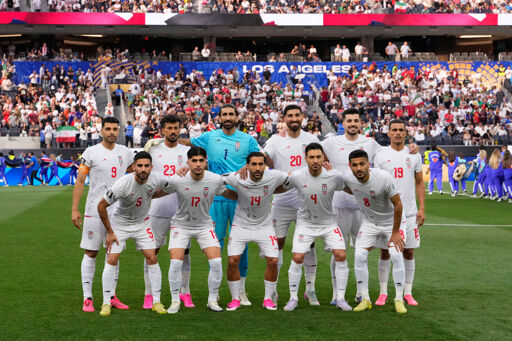
When Iran moved toward a decent democratic government, the UK, U.S., and oil barons destroyed it and put in place a horrendously brutal dictatorship. When Iranians overthrew that dictatorship, religious lunatics seized power and treated the people of Iran so cruelly for so long that many of them longed for that dictatorship — or the CIA-owned son thereof — and still do. When Iraq attacked Iran, the U.S. provided targeting assistance and chemical weapons. Then the U.S. labeled Iran an evil nation, attacked and destroyed the other non-nuclear nation on the list of evil nations, designated part of Iran’s military a terrorist organization, falsely accused Iran of crimes including the attacks of 9-11, murdered Iranian scientists, funded opposition groups in Iran (including some the U.S. also designates as terrorist), flew drones over Iran, openly and illegally threatened to attack Iran, and built up military forces all around Iran’s borders, while imposing cruel sanctions on the country. The roots of a Washington push for a new war on Iran can be found in the 1992 Defense Planning Guidance, the 1996 paper called A Clean Break: A New Strategy for Securing the Realm, the 2000 Rebuilding America’s Defenses, and in a 2001 Pentagon memo described by Wesley Clark as listing these nations for attack: Iraq, Libya, Somalia, Sudan, Lebanon, Syria, and Iran. When the U.S. government came to believe its own propaganda about Iranian nuclear weapons, it was compelled to either launch a war or impose an inspections “deal” on Iran. It chose the latter, leaving traumatized U.S. residents these many years later to long for those good old days of drone-murdering people in seven nations at a time but no war on Iran and no cage fights at the White House (not unlike Iranians longing for an old-time U.S.-puppet torturer). The idiot in chief who tore up that deal has now murdered many thousands of people in Iran, but claims he’s ceasing and that he should be given credit for ceasing, even as he goes on arming Israel which can sabotage any peace deal at its whim with its U.S. weapons. And, yes, the Iranian soccer team is being used and abused by U.S. immigration goons. Iran deserves better.
Trump’s quick war that he’s declared over pretty constantly since he started it has been dragging on so long that I just read a book written during it in Tehran called Tehran Diaries. The book is oddly written chronologically backwards and the later parts of it go back to Israel’s attacks on Iran a year ago this week. But much of the book is from January 2026, including:
“For eighteen days now, I have been cut off from the virtual world – not by choice, not as a form of digital detox, but by force. I’ve been living in a kind of solitary confinement whose walls are invisible but whose population numbers 90 million people. It is a prison where no sound goes out and no image gets through. Every attempt to send a message, a video, or even a simple sentence has failed.”
The government of Iran (or “The Regime” as the author would have it) is so intent on suppressing activism and media from the people of Iran that it seems to have learned nothing from Gaza. It highlights the one elementary school slaughter at every opportunity, but it shuts down the internet, and forbids photography, rather than allowing ordinary people to share the horror of living under bombs with the world. And perhaps the Iranian government knows what it’s doing. Perhaps the people of Iran, even with bombs falling on schools and everywhere else, would — if handed cameras and microphones — focus primarily on denouncing the Iranian government (at least if they could do so anonymously).
The author of the book is named with a pseudonym. He takes a job as a Snapp! (something like Uber) driver. His passengers and many other people he speaks with denounce the Iranian government at every opportunity, but not publicly without fear and masks or other precautions. It’s remarkable the extent to which, even while being attacked by the United States and Israel, and having long been brutally and illegally sanctioned by the United States, people blame the economic suffering, brought on by the war, on the Iranian government and take risks to protest it. Perhaps after decades of propaganda against Israel, the United States, and the UK, protesting those foreign governments has become equated with supporting the Iranian government, just as protesting the Iranian government has become equated with supporting the Shah-dauphin. If there’s anything humans excel at, it’s limiting our choices.
“When we arrived, I couldn’t believe the crowds,” we can read in the Diaries. “These neighborhoods have always been thought to be wealthy – people never usually protested. But economic pressure had erased the distinction between upper and lower classes. Discontent had become universal.”
There are also glimpses of why that discontent is so overwhelming: “By the side of the road, a plainclothes agent was sitting on top of the body of a very young boy. The agent’s arm seemed to be moving up and down, yet he held no baton. I moved a little closer. He was stabbing the boy with a knife.”
Those killed by foreign militaries do not go unnoticed. The same debate over the casualty count goes on in Tehran as thousands of miles away, with the same sources, claims, rumors, and doubts. In Gaza, of course, the official count is a drastically minimal one, and Hamas’ failure to prevent people livestreaming the genocide has probably been due to inability, not strategy. Governments, almost by definition, choose machismo over victimhood even when that victimhood would move mountains. There are many exceptions to this rule, but the biggest seems to be false victimhood used to justify atrocities.
“Tehran is in mourning,” we read. “You do not hear music or laughter. Every person who was killed had a family, and all families are connected. In a way, all of Iran has suffered a death. The grief is collective, heavy and unspoken.”
But when the Supreme Leader is killed, there are general festivities.
Yet, as the bombs fall, their horror comes to at least rival the rantings of the religious nuts as something unwanted:
“Now that my windows are smashed, I have no escape from the sounds of the Basiji in the mosque. To be honest, I don’t know what is worse, the sounds of the bombing or the Basijis’ pleas for God’s mercy. While they are blasting prayers, all I can think about is the blood of ordinary people on the streets after every aerial attack.”
The war impacts every aspect of life in Iran as outside it:
“Before, you might have been able to buy items at the supermarket. Now you have to check prices and not be surprised by a triple price increase. The challenge is trying to find the lowest-quality food, which is at the cheapest price. Still, there are plenty of fruit and vegetables in the supermarket that no one can afford. This is another kind of famine.”
Some of the blame for this does make it to the distant imperial clown in the White House:
“When, after forty days of continual bombing, he threatened to send Iran back to the Stone Age, I saw fear in people’s eyes. You can’t imagine the effect of knowing that someone wants to kill you, and that everyone is waiting to die.”
And reality reaches people directly even when journalism is forbidden:
“I had gone to the bank to get cash when a sudden explosion shook the building. Windows shattered and people fell to the ground. Officials shouted for everyone to leave. Outside, the streets were shrouded in thick black smoke. The bomb had landed two hundred metres away, destroying a police station, which collapsed on a bus filled with passengers. Pedestrians on the pavement were killed instantly. Among the abandoned cars, broken glass and concrete, I could see dead bodies. There must have been fifty of them. Blood was everywhere. The soldiers at the scene ordered me to leave. Most of the time we don’t see the civilians killed by the US and Israeli bombs.”
And, as in Venezuela recently and other cases, “[s]ome of those who wanted the Americans and the Israelis to bomb Iran have changed their minds since the war started.”
The protests of the Iranian government at least temporarily paused in Iran, not because people changed the object of their anger, but because it became simply too dangerous to go out and protest. It turns out that bombing a nation doesn’t fail to motivate an overthrow — not always because people rally around the devil they know against the foreign bombers, but sometimes because when bombs are falling people try to stay indoors.
A key to stopping the bombing, it would seem, would be for the United States to stop arming Israel with U.S. weapons with which to sabotage any supposed efforts for peace.
The post Iran Deserves Better appeared first on World BEYOND War.
From World BEYOND War via This RSS Feed.
Removed by mod
Removed by mod
Removed by mod