

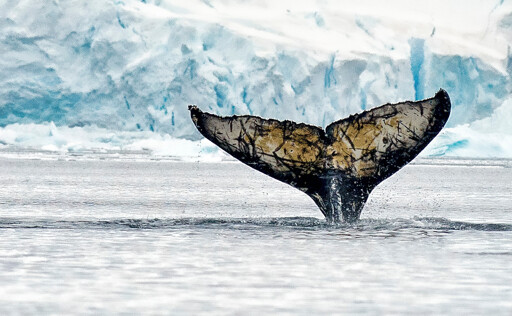
This week, as governments of various coastal states gather in Mombasa, Kenya, for the Our Ocean Conference, Africa must demand an end to industrial krill fishing in the Southern Ocean before irreversible damage is done to Antarctica and the ocean systems upon which our continent depends. A clear call from Africa would bolster international calls for a ban on industrial krill fishing and support positive leadership developments like the European Parliament’s recent call for a moratorium on krill fishing. The Southern Ocean regulates global ocean circulation, absorbs enormous quantities of heat and carbon dioxide, and sustains marine life across the planet. At the center of this system is Antarctic krill (Euphausia superba), the tiny crustacean that feeds whales, penguins, seals and seabirds while helping lock carbon into the deep ocean. Industrial krill fishing has expanded rapidly over the last few years, with the largest share of this extraction controlled by fleets linked to certain European and Asian countries. Most concerningly, fishing is intensifying precisely where Antarctic wildlife is most vulnerable: critical feeding grounds for whales, penguins and seals are actively targeted by the industry. A single adult Antarctic krill (Euphausia superba) is usually just five centimeters long, but the importance of its massive populations to marine food chains, and the millions of people who depend on ocean protein as part of their daily diet, is major. Image courtesy of Uwe Kils via Wikimedia Commons. The damage is already visible. In April, the International Union for Conservation of Nature (IUCN) classified…This article was originally published on Mongabay
From Conservation news via This RSS Feed.