

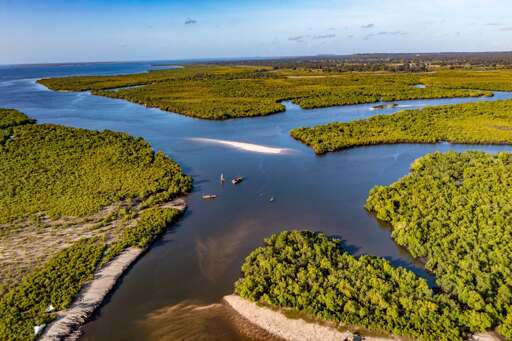
This week, thousands of delegates are gathered in Mombasa, Kenya, for the first Our Ocean Conference to be hosted on African soil. As expected, much of the conversation will focus on the global “30×30” target — protecting 30% of the world’s land, freshwater and oceans by 2030. Yet, far from the conference halls, the big pledges and state commitments, many of the people doing the daily work of marine conservation are community organizations operating on modest budgets along Africa’s coastlines. They often do so far from the spotlight, but their contribution is vital for the global ambition to conserve ocean spaces. The Convention on Biological Diversity (CBD), under whose Kunming-Montreal Global Biodiversity Framework the 2030 targets were adopted, highlights that success hinges heavily on community involvement. Across Kenya, Tanzania and Namibia, four such groups — Coastal and Marine Resource Development (COMRED), Action for Ocean, Mwambao Coastal Community Network and the Namibia Nature Foundation (NNF) — offer a window into what community-led marine conservation looks like in practice. Their work might be underfunded, uneven and sometimes slow, but are increasingly central to how marine protection is imagined on the continent. Marine ecosystems in Africa support fisheries, tourism, transport, carbon storage and coastal protection while sustaining millions of livelihoods from the Western Indian Ocean to Africa’s Atlantic and Mediterranean coasts. In East Africa in particular, mangroves, coral reefs, seagrass meadows and nearshore fisheries underpin food systems and local economies even as they face pressure from overfishing, habitat degradation, climate change and pollution.…This article was originally published on Mongabay
From Conservation news via This RSS Feed.