

Half of young people under 34 in the UK say they would be more likely to vote for a government that upholds the UK’s climate commitments. This is a finding of new research by Kantar for the Fairtrade Foundation.
Fairtrade is warning that climate change is putting everyday staples under growing pressure and threatening the livelihoods of the next generation of farmers. Ahead of London Climate Action Week, the charity is launching Fair on the Planet, the second moment in its 2026 Do It Fair campaign.
It’ll highlight how farmers growing products such as coffee, tea, cocoa and bananas are already facing extreme heat, erratic rainfall, flooding and crop disease. This comes as an El Niño year is expected to impact weather conditions and temperatures further.
Fairtrade is urging the UK government to introduce Human Rights and Environmental Due Diligence (HREDD) legislation. This requires businesses to address human rights and environmental harm in their supply chains. And the government should ensure the costs are not pushed onto farmers and workers.
Ahead of the outcome of the government’s Responsible Business Conduct Review, Fairtrade’s petition is nearing 100,000 signatures. And this is adding pressure on ministers to bring forward responsible business laws.
The new research from Kantar suggests there is strong public backing for tougher climate and human rights action. 76% of overall respondents said businesses should have to show evidence they protect human rights and reduce environmental harm.
Marie Rumsby, advocacy director at the Fairtrade Foundation, said:
The people feeding and powering the global economy are already experiencing the worst impacts of the climate crisis, even though they did the least to cause it. It should not be on farmers to fix a crisis they did not create.
The food and drink we rely on every day depends on healthy soil, water and stable temperatures. Without urgent action, climate change will increasingly threaten products people in the UK love, from their morning tea or coffee to chocolate and bananas.
This latest research suggests climate action is becoming a defining issue for younger voters, who are increasingly looking for leaders willing to protect the environment and the future of the foods they rely on.
With public support for tougher corporate accountability growing, the government must act on this opportunity to match climate ambition with fairer rules for global supply chains through a new responsible business law.
Voluntary action from business is no longer enough. We need urgent action from the government and clear rules that hold companies to account, protect people and the planet, and ensure the cost of climate change does not fall on those least able to pay.
Climate crisis hitting food production hard
Other research studies highlight the scale of the threat across everyday staples:
- In Kenya, half of young tea workers say climate change is now their biggest challenge (FairVoice, 2025). Kenya supplies around 40% of the UK’s tea. But suitable conditions for tea production there are expected to fall by a quarter by 2050 (Agronomy, 2020).
- Coffee-growing countries are projected to lose 30 – 60% of the land suitable for cultivation by mid-century (Fairtrade Risk Map).
- Banana-growing areas in Latin America and the Caribbean could shrink by 60% by 2080 (Christian Aid, 2025).
- Cocoa is already suffering from extreme weather, disease and supply strain that are driving volatile prices and reshaping the market. Cocoa prices soared to historic highs of around $12,000 per metric tonne in late 2024. But they’ve since fallen sharply to around $4,000 per metric tonne today.
Fairtrade will also take ‘unfair games’ and workshops to nine festivals across the UK. This will give festivalgoers new ways to engage with the campaign and its partners. And it will be hosting an event about the challenges coffee farmers face to coincide with London Climate Action Week.
The All Party Parliamentary Group on Fairtrade will be hosting a drop-in iced mochaccino reception on 23 June in parliament. This will highlight the growing climate risks hitting farmers and set out clear recommendations for how the UK government can support a just and equitable transition to sustainable farming.
Farmers themselves are echoing this warning. Silvia Herrera, a coffee farmer from Chiapas, Mexico, told the UK International Development Committee earlier this month:
We have the impact of climate change every year. Last year, we lost half of our harvest because the year before it didn’t rain enough and the ripening did not happen at the time it was supposed to, so our cherries were not ready to be cropped.
Right now, we are investing in adaptation programmes so that our farms can be better adapted… This implies a lot of investment, not just in time, but in resources.
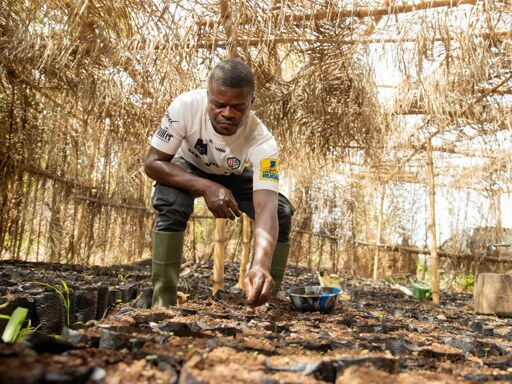
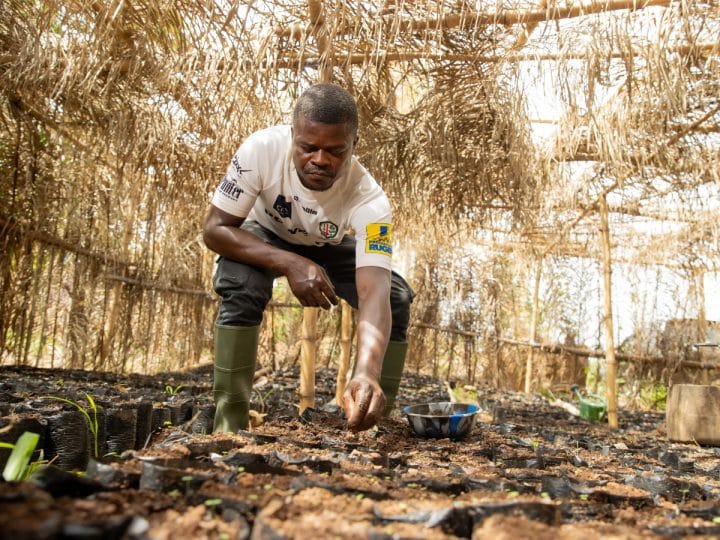
Featured image via Mohamed Aly Diabaté / Fairtrade Foundation
By The Canary
From Canary via This RSS Feed.