

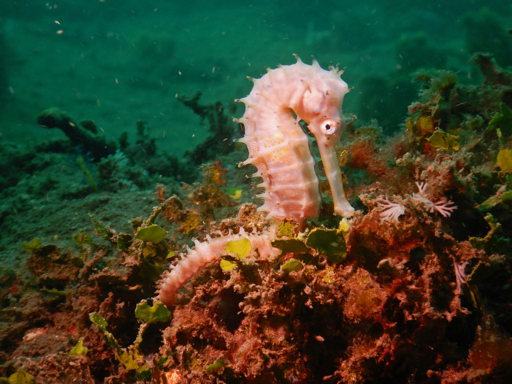
On Sunday, April 26, Argentine officials stopped an unusual shipment arriving at an airport near Buenos Aires. Inside, they found so many dead and dying fish, octopuses and crabs that a national rescue center had to install 10 new emergency tanks to support the survivors. It was the third time in a year authorities had seized an illegal shipment of sea life at the same airport, the Associated Press reported. Marine wildlife trafficking is a growing global business, driven by demand for ornamental fish, luxury foods and traditional medicines. Much of that trade is routed through airplane luggage or airmail, where the vast majority of animals, dead or alive, go undetected. The combined use of artificial intelligence (AI) and 3D X-ray machines could change that, according to an international team of researchers. Training an algorithm on samples of seahorses, shark fins and sea cucumbers, the scientists achieved successful detection rates between 86% and 96%, according to a research paper published last week. “As it stands, our methods of detecting something that shouldn’t be in our bags on the front line is reliant on human inspection and biosecurity dogs,” Vanessa Pirotta, a marine biologist at Macquarie University in Australia and the paper’s lead author, told Mongabay. “AI could be used to complement that. It’s not a silver bullet, but an assistant and a tool.” Image from the study showing (from top to bottom) shark fin, seahorse and sea cucumber samples next to a security X-ray of each item. Image courtesy of…This article was originally published on Mongabay
From Conservation news via This RSS Feed.