

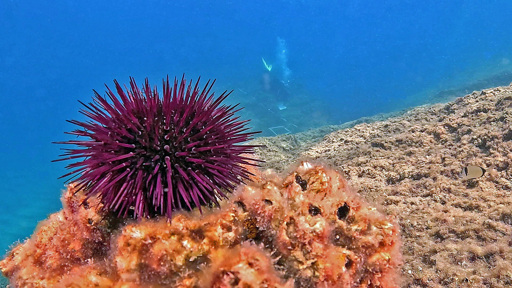
NAPLES — On a warm, moonlit night in May, Maurizio Simeone sat in an ambush at his desk about 10 kilometers (6 miles) south of Naples, Italy. The marine scientist and director of the Marine Protected Area (MPA) Gaiola Underwater Park was watching the grainy live feed from cameras surveilling the MPA as poachers descended on the seafloor. “It was midnight. Here they were again,” Simeone told Mongabay. The poachers had come a few nights before to scout the area. Then a second time. This time, Simeone was waiting for them. He rushed to alert the Port Authority. The poachers operated with ruthless efficiency, using a dangerous illegal method known as the hookah system. A compressor on a small boat pumps air through a hose to a diver, allowing them to stay underwater for hours and systematically strip the seabed. Every 20 minutes, the diver resurfaced to hand over a net full of purple sea urchins (Paracentrotus lividus), grab an empty net and then dive back down. When the authorities moved in, the two men on the boat began dumping hundreds of sea urchins and their gear into the sea, as the diver quickly resurfaced. The three men were old acquaintances of Simeone’s. “They are repeat offenders. It’s not the first time we’ve caught them,” Simeone said. Illegally harvested sea urchins seized in July 2024. Image courtesy of Maurizio Simeone. During a previous bust a year earlier, the vessel was apprehended with a staggering haul: 976 sea urchins pulled from…This article was originally published on Mongabay
From Conservation news via This RSS Feed.