

The War on Terror claimed countless Iraqi lives and left social systems irreparably fractured.
The lasting injury is the subject of anthropologist Kali Rubaii’s debut book, Resurgency: Outlasting the War on Terror.
Few studies have captured in such depth the ways Anbaris react, respond and heal from “war-induced social and ecological collapse”.
Rubaii’s journey began in Fallujah a decade prior, supporting local hospitals through transnational solidarity work. She returned in subsequent years. Moreover, she came to form close relations with displaced Anbari farmers.
War on Terror: After the guns go, there is silence
The portrait of Fallujah isn’t the city caricatured as the launchpad of Al-Qaeda, or where the corpses of Blackwater contractors were paraded. If anything, Anbar is the black sheep of Iraqi society — a closed world exoticised and vilified — facing distrust even from countrymen who have internalised these views.
Rubaii’s study is therefore a corrective to the view of Anbar as contumacious. She centres Anbari farmers as they navigate life, war and death, and explores the changing face of imperialist violence after guns and warplanes have fallen silent.
This is what Rubaii terms resurgency, “political potential for recovery from shock”. It is a way of strategising, innovating and outlasting these conditions.
The inverse — counter-resurgency — is the invisible hand of the War on Terror as it rummages through people’s lives. From governance, employment and food practices to homemaking, reproductive health and general livability, it punitively “warps one’s dreams, aspirations, and sense of possibility,” Rubaii says.
Furthermore, it adopts a “let-live-less-than-lethal” approach that leaves its mark on existing and unborn generations. This extends into reproductive life itself.
Worse than death
What might that look like? You have land dispossession, privatisation of Iraq’s once highly localised seed market, excessive agrochemicals use, uranium contamination, birth defects, wartime displacement, corporate capture, and a military–cement industrial complex (the list goes on). The takeaway is that even after the War on Terror juggernaut retreats, its tremors are still felt far and wide.
Resistance in this context (if we can describe it as such) is neither romanticised nor a single-dimension strategy. The author admits it may be imperfect as she explains to the Canary:
For me, the argument that life goes on after war, and that people are resilient and resurgent, is so deeply discounting of how life is made to go on.
She adds:
It is often the work of depoliticised or even made subaltern actors who are doing the ongoingness, the outlasting of Empire.
This is backed up by years of fieldwork. The book’s colourful cast of Iraqi interlocutors demonstrate how Anbaris have consistently risen up even when forced back to zero.
“People do what they have to do to survive, and they do it with intention. It is not special, but it is political,” she notes in the conclusion.
The book shows how many Anbaris have come to accept, “There are so many things worse than death”. For a province denied justice, it is a painful truth to swallow. This is set against the evidence of damage readers are confronted by.
This land is ours
The discomfort is important for Rubaii, who reminds us that Anbar is more than “a place one returns to die”.
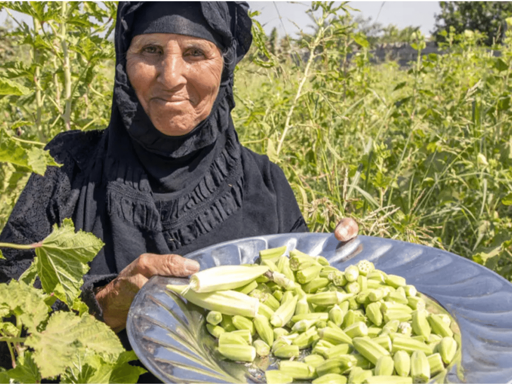
The displaced farmers we meet throughout the book risked everything to return to their orchards and farms during heightened periods of conflict. They defied sectarian militias and deathly checkpoints to tend to their plants, trees and harvest.
This act of “subversive return” is “as politically agentive as a protest,” Rubaii argues. Indeed, such actions “lay the groundwork for future grassroots resistance”. The benefits aren’t necessarily apparent and may take decades to materialise.
Rubaii pens stories that bear witness to the weight of complex trauma Anbaris carry. Despite that, they have been actively forging:
…a politics of social and ecological resurgency that embraces undesirable outcomes as a core feature of outlasting the War on Terror.
How does it look? In some instances, farmers experimented with alternative methods for fertilising date trees in chemically saturated farmlands. Meanwhile, others risked procreating.
In Fallujah, the capacity to give birth has been fatally undermined by uranium-induced birth defects — a silent tragedy, particularly for “a community where having children is highly valued,” Rubaii reminds us.
It is a silent scream the world has yet to heed. We find ourselves breaking into tears as we discuss the unspeakable horrors would-be mothers continue to face.
Flipping the script
Rubaii’s pictorial writing style distinguishes her scholarship. I relished every sensory detail she carefully tracks: the taste of metal, sulphurous air, dirty water, parched rivers and the mustard haze of sandstorms are all palpable. As is the sensation of sticky soot and dust coating lungs and the sight of treacherous highways, cratered, rerouted, and militarised.
While the book’s chain of events is neither tightly connected nor linear, the scattered order is intentional. This is no cookie-cutter story about Iraq. Instead, the book mirrors the constant shuttling between “home” and precarious places of refuge.
There is an almost Orwellian quality to her writing, particularly in the way she turns militaristic “weapons-grade” terminology, such as “the wolf, the sheep, and the sheepdog” on its head.
She explains:
Metaphors have been used to typecast places like Anbar and the people in it as a sort of enemy of others. One of them is this idea that counterinsurgency is understanding that the insurgent is a wolf in sheep’s clothing.
This justifies, her words “killing innocent people in the name of presuming that they might be combatants”.
“That’s kind of the frame,” she says.
But I actually was understanding this beyond the scope of a combat framework and thinking, if you’re really thinking about occupying indigenous land and what the relationships are between wolves and sheep and sheep dogs, you know, of course the wolf is in fact the indigenous animal, the noble creature.
Rubaii’s engaging storytelling — animated by the book’s dramatis personae — gives it an edge not always found in academia. The book owes its depth to the diverse cast of Anbari farmers and families, many of whom serve as gatekeepers.
Acknowledging the privilege of access, Rubaii inhabits every aspect of their lives. She writes about drinking dirty water, contracting cholera, eating radioactive dates and milk kinship. She is clear-eyed that her personal health and safety cannot be considered “exceptional” in the context of this radical approach.
Commenting on the motivations behind these choices, Rubaii writes:
I want a critique of empire that approaches Iraq as more than simply a case study. For many ethnographers, we do not choose places or topics as such. They choose us. Being both American and part of the extensive, multigenerational Iraqi diaspora compounded these complexities.
Featured image via Rasheed Hussein/ UNHCR
By Nazli Tarzi
From Canary via This RSS Feed.