

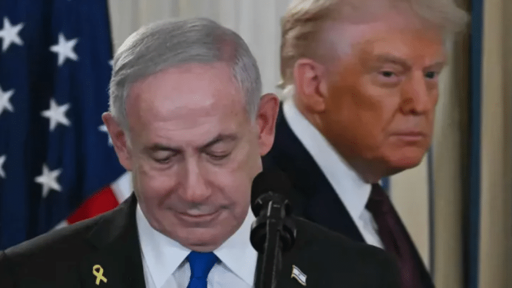
The United States and Iran have just signed a ceasefire agreement. Although not all the details are known yet, the agreement reveals a reality that is difficult for the White House to conceal. Despite Donald Trump’s triumphalist rhetoric, the strategic outcome of this crisis is far from an American victory.
What began as a show of force intended to subdue Iran ended up producing the exact opposite effect. Far from collapsing or destabilizing the Iranian regime, the campaign spearheaded by Israel with U.S. backing has concluded, at least for now, with Tehran strengthened politically, diplomatically, and strategically.
For years, the joint strategy of Washington and Jerusalem rested on a central premise: compel Iran to abandon its regional and nuclear ambitions through economic pressure, international isolation, and, if necessary, the use of military force. But the results paint a very different picture.
Iran has kept its key strategic assets. It has not abandoned its uranium-enrichment program, nor has it relinquished its network of regional allies or accepted significant limitations on its missile capabilities. Instead, it has gained the prospect of considerable economic relief and the implicit acknowledgment that the United States prefers a settlement to another war.
For Washington, the outcome represents a major strategic failure. For the first time in decades, the world’s leading power appears incapable or unwilling to impose its conditions on one of the planet’s most sensitive geopolitical arenas. A considerable blow has been dealt to the United States’ image of a superpower capable of shaping the regional order according to its interests.
But the most profound defeat is probably that of Benjamin Netanyahu.
The Israeli prime minister staked much of his political capital on the confrontation with Iran. He presented the Iranian regime as an existential threat and for years defended the need to maintain constant pressure on Tehran. In the end, however, Israel was virtually excluded from the crucial negotiations between Washington and Tehran.
Worse, Netanyahu is discovering that he no longer has the influence that once allowed him to challenge a U.S. administration. This contrasts with his experience during Barack Obama’s presidency, when he could mobilize the support of Congress and broad sectors of American public opinion. Today, his room for maneuver is much more limited. Trump wields political power within the Republican Party, making any open challenge from Jerusalem difficult.
The Consequences for Israel Could Be Profound
Israel now faces three consequences of its failure. First, the credibility of U.S.-Israeli strategy — based on military pressure as a mechanism for changing the behavior of the Iranian regime — has been undermined. Second, Israel has become more internationally isolated on the Iranian issue, while the Gulf Arab states have maintained and even deepened their ties with Tehran. Third, the expectation of expanding the Abraham Accords by taking advantage of a supposed Iranian defeat now seems much more distant, as demonstrated by United Arab Emirates’ accommodation with Iran — the UAE being the Gulf Arab state that has moved closest to Israel in recent years and that has maintained one of the hardest stances toward the Islamic Republic.
The new agreement also sends a troubling message to the region: Iran has demonstrated that it can withstand military pressure and negotiate from a position of strength. Many regional actors will conclude that Tehran conceded little and gained much.
Therefore, more than the end of a military operation, this episode could mark a historic turning point. It exposes the limits of American power, reveals the growing constraints on Israeli influence in Washington, and forces a reconsideration of two decades of Western strategy toward Iran.
In short, a campaign designed to weaken the Islamic Republic has ended up strengthening its regional position while leaving the United States and Israel facing a far less favorable strategic reality than they had hoped to create. For Washington, the episode has eroded the image of a power capable of dictating the rules of the game in a key region of the international system. For Israel, it represents an acknowledgment of limits on its ability to shape the decisions of its main ally. Beyond the Middle East, the outcome will be closely watched by both U.S. allies and adversaries. Many will draw an uncomfortable conclusion for Washington: even the combined military power of the United States and Israel may not be enough to impose their political objectives on an adversary willing to absorb high costs and sustain a long-term strategy.
This article was first published in Spanish at La Izquierda Diario on June 15, 2026.
The post The Defeat of the United States and Netanyahu’s Failure on Iran appeared first on Left Voice.
From Left Voice via This RSS Feed.
"the world’s leading power appears incapable or unwilling to impose its conditions on one of the planet’s most sensitive geopolitical arenas. "
It seems the paper has forgotten Obama’s red line in Syria. The Syrian people that was gazed by El-Hafaz surely remember.
Also, “For Israel, it represents an acknowledgment of limits on its ability to shape the decisions of its main ally.”
Isn’t there a plan fo Tsahal to be integrated within the US forces, or something?
