

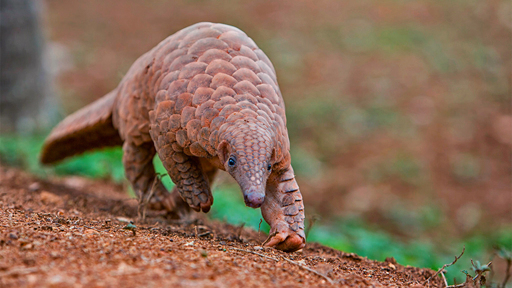
Tariq Mahmood was alarmed when he found 19 sacks tucked away in a railway tunnel in the Chakwal district of northern Pakistan. Their contents were extremely disturbing: 45 rotting pangolin carcasses, all devoid of their distinct, orange-and-light-brown scales. That was in 2012. “It was very difficult to see these innocent, dead bodies,” said Mahmood, a wildlife biologist at Pir Mehr Ali Shah Arid Agriculture University in Pakistan, who began studying pangolins in 2009. Finding so many slain Indian pangolins (Manis crassicaudata) alerted Mahmood to a dark truth. Poachers were paying local citizens to capture them, so the overlapping scales that cover their bodies — the pangolin’s first line of defense — could be sold into the illegal wildlife trade. “It was terrible to know that.” At the time, global conservationists were realizing that demand for pangolin was driving trade, mostly to China. “We first saw the emergence of this intercontinental trafficking around 2010, and it’s continued to take place since then,” said Dan Challender, a pangolin expert at the University of Oxford who has studied international wildlife trade for 15 years. This shy, toothless, nocturnal animal has become the world’s most-trafficked mammal. When Asia’s four species were nearly poached to extinction, traders turned to the four African species and their numbers soon plummeted. All pangolins are on the IUCN Red list: Four of them, including the Indian pangolin, are endangered, and three hang on the brink, critically endangered. Pangolin scales command substantial prices on the black market. The demand is…This article was originally published on Mongabay
From Conservation news via This RSS Feed.