

The oceanic phenomenon known as El Niño, which increases temperatures worldwide, has officially begun, according to U.S. weather forecasters at the National Oceanic and Atmospheric Administration, or NOAA.
Meteorologists have warned that this could be the strongest El Niño this century. It is expected to drive extreme weather events around the world, including both severe droughts and heavy rainfall, likely leading to major disruptions in agricultural production and food security.
El Niño is part of a cyclical, naturally-occurring weather pattern that redistributes warm air, surface water temperatures, and moisture across the tropical Pacific Ocean. During El Niño, trade winds that typically blow east-to-west from the Americas to southeast Asia slow down or sometimes reverse. Normally, these winds push warm water along the Equator — but during El Niño conditions, that warm water shifts back east. Although El Niño does not follow a specific timeline, it typically occurs every two to seven years.
Beginning in the summer, El Niño typically peaks around December or the following January. (The pattern was named El Niño — Spanish for little boy — by fishermen in South America who noticed warmer waters around Christmas time, and associated it with the birth of Jesus Christ.) That means the most significant impacts of the cyclical weather phenomenon may not be felt until months from now. NOAA’s most recent calculations show a high likelihood of a “very strong” El Niño, meaning average surface temperatures in the Pacific jump by more than 2 degrees Celsius. (Some experts are calling this year’s a “super” El Niño, although some agencies, like the World Meteorological Organization, reject this language.)
Because it impacts a “diverse set of geographies,” said Weston Anderson, a climate scientist at the University of Maryland, so “there is no one set of impacts.” El Niño can contribute to severe droughts in one part of the world and heavy rainfall in others — both of which can disrupt growing seasons in key breadbaskets of the world.
But the ways in which this year’s El Niño will interact the effects of global warming — and what that means for food security — is something scientists are still actively observing and untangling.
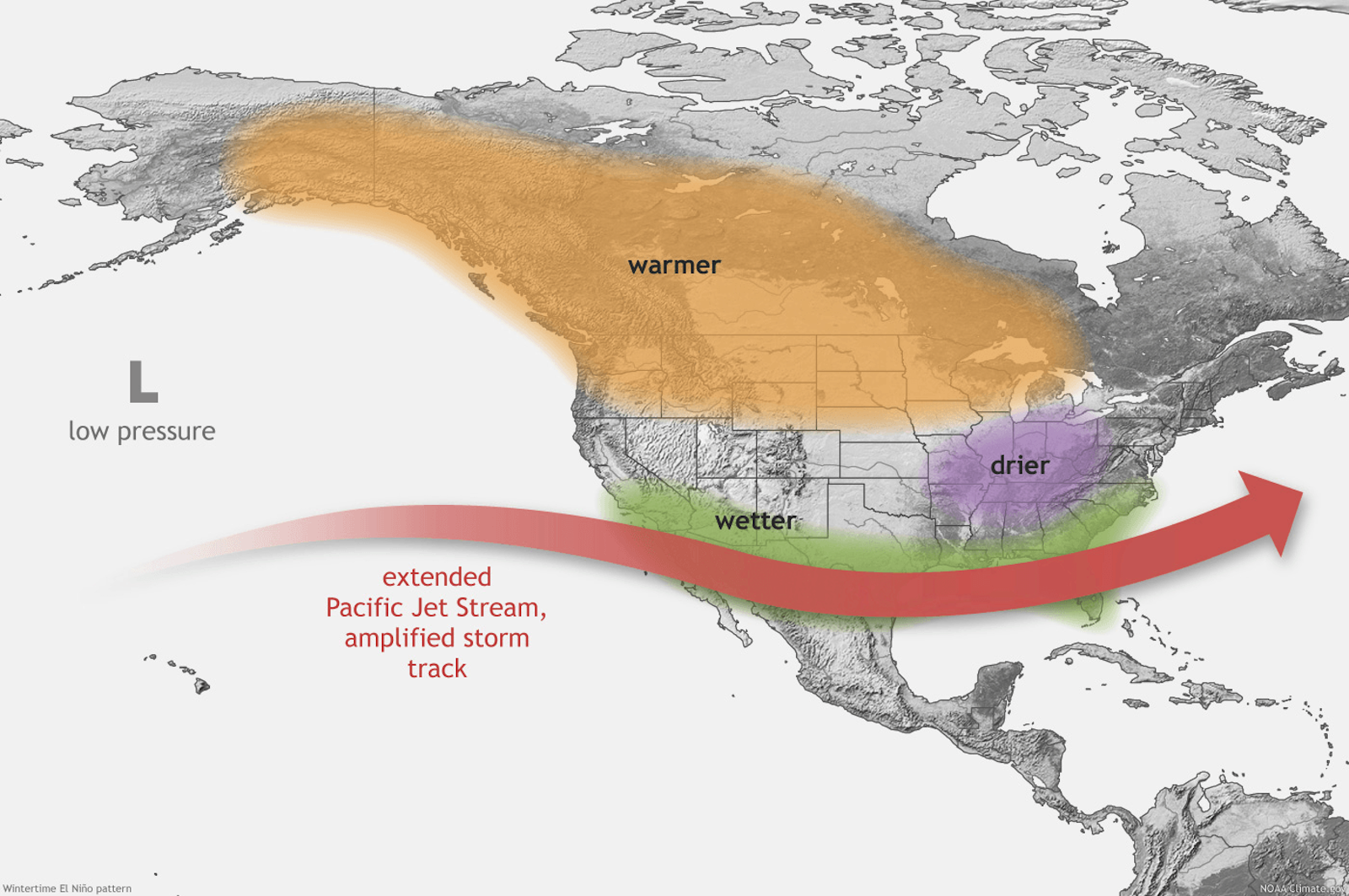
The typical impacts of El Niño to the continental U.S. and Canada during Northern Hemisphere winter. NOAA
“That question is still really important open science,” said Jennifer Burney, a professor at Stanford’s Doerr School of Sustainability whose work focuses on climate and food security.
History can give us some examples. In 1877, one of the strongest El Niños ever recorded was associated with historic droughts across Asia, as well as in parts of Brazil and northern Africa. These droughts, “along with colonial policies contributed to famines in many regions which were really devastating,” said Deepti Singh, an associate professor at Washington State University who co-authored a study on this period of global famine.
The fatalities associated with these famines, upwards of 50 million people, said Singh, “are humbling to think about.”
The last El Niño occurred in 2023 and 2024. It was one of the five strongest El Niños ever recorded, according to the World Meteorological Organization, or WMO, and is considered to have contributed to the historic temperatures in 2024, making it the hottest year on record.
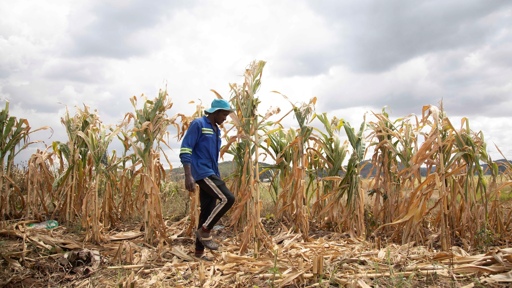
That year came with devastating consequences for growers, especially in arid regions where agricultural producers primarily rely on rainfall to irrigate their crops. Droughts driven by El Niño across southern Africa contributed to increased food insecurity and malnutrition in several countries.
Burney noted that in some vulnerable regions, local governments may have adaptive strategies in place to grow key crops earlier in the growing season or to increase imports during El Niño years, which can help offset food insecurity. But even in those cases, local farmers who depend on growing and selling crops to support themselves and their families may still experience economic setbacks. In other words, certain policies may ensure there’s “enough food,” but “that’s not going to take care of the people whose livelihoods depend on” agriculture, Burney said.
This year, El Niño conditions are expected to impact a number of growing areas — another setback for agricultural producers who have faced higher input costs stemming from the Iran War. Although the United States and Iran are potentially set to unveil an agreement to reopen the all-important Strait of Hormuz, through which much of the world’s oil flows, farmers worldwide have already been impacted by fertilizer shortages and price hikes since the passage closed this spring.
Weather variability fueled by El Niño will add to growers’ woes. India, where the majority of the world’s rice comes from, is projected to have a weaker monsoon season, which could reduce yields. Drier, hotter conditions could lead to diminished maize production in southern Africa. The southern U.S. states, from California all the way to the eastern seaboard, will experience a wetter year than normal, which could lead to flooding and upend crop production.
But the exact way that this El Niño will unfurl is yet unknown. As El Niño interacts with the additional warming and moisture currently in our atmosphere caused by climate change, “there is likely to be a change in which regions are likely to be affected” by extreme weather, said Singh. Still, she added, we can expect “the severity, extent, and likelihood” of extreme weather events like droughts “to be higher” in today’s warmer climate.
This story was originally published by Grist with the headline The ‘super El Niño’ is here. What happens next could upend food systems worldwide. on Jun 16, 2026.
From Grist via This RSS Feed.