

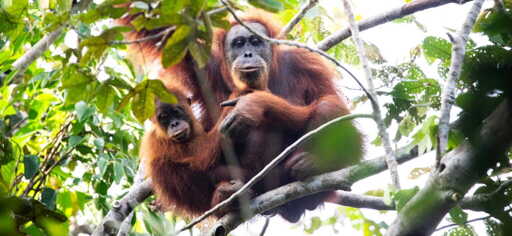
JAKARTA — Climate change has become a direct threat to the survival of the world’s rarest great ape, according to scientists, after landslides triggered by an unusually intense storm killed an estimated 58 critically endangered Tapanuli orangutans (Pongo tapanuliensis) in Indonesia’s Batang Toru ecosystem. The estimate comes from a new study published in Current Biology, whose authors say the findings may represent one of the first examples of climate change immediately threatening the survival of an entire species. The researchers found that landslides triggered by extreme rainfall associated with Cyclone Senyar in November 2025 likely killed about 7% of the estimated global population of Tapanuli orangutans, which number fewer than 800 individuals and are concentrated in the Batang Toru landscape in North Sumatra. After analyzing satellite imagery, the researchers identified more than 50,000 individual landslide scars and estimated that about 8,300 hectares (20,500 acres) of forest in the western block of Batang Toru were affected by the disaster. The western block is considered the species’ most important stronghold, hosting more than 500 orangutans and one of the three known population clusters within the Batang Toru landscape. The researchers believe most orangutans caught in the landslides died rather than being displaced because of the violence and speed of the event. While the landslides were relatively shallow, they moved extremely rapidly and transformed into channelized debris flows. With little or no warning, orangutans and other wildlife likely had little chance of escaping and may have been buried, drowned or fatally injured by…This article was originally published on Mongabay
From Conservation news via This RSS Feed.