


By Elvis NDIHOKUBWAYO, Chapter coordinator, Burundi for a World BEYOND War, June 15, 2026
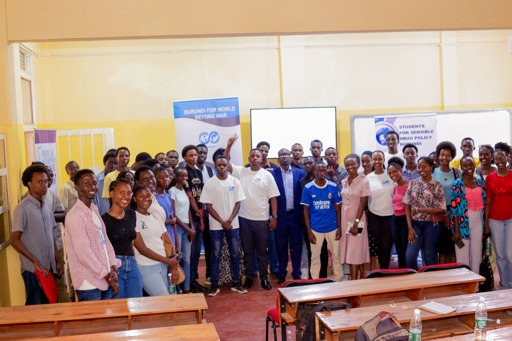
As Burundi is moving toward the 2027 presidential elections, it is becoming more important to strengthen dialogue, social cohesion, and peaceful civic engagement in the country. In this context, young people, particularly university students, have a critical role to play in fostering a culture of peace and preventing tensions before they escalate into violence. To contribute to these efforts, Burundi for a World BEYOND War organized a training and awareness session on Nonviolent Communication, peaceful conflict resolution, and social cohesion, on June 12, 2026, at the University of Ngozi. This activity was supported through the World BEYOND War African Chapters Support Program, which helps strengthen the capacity of African chapters to implement locally rooted peacebuilding initiatives.
The workshop brought together students from different backgrounds and provided a space for reflection on the importance of responsible communication during politically sensitive periods. Participants were introduced to the principles of Nonviolent Communication developed by Marshall Rosenberg. Facilitators presented the four essential components of NVC: Observing facts without judgment, expressing feelings honestly, identifying underlying needs, and making clear and respectful requests.
The training also explored the contrast between communication based on criticism, confrontation, and blame (the so-called “jackal language”) and communication based on empathy, listening, and cooperation, often symbolized by the “giraffe language.” Through role plays, group discussions, and practical exercises, students reflected on common conflicts experienced within their communities, especially those related to political differences, social media interactions, and electoral periods.
Youth as Actors of Peace

Discussions highlighted the importance of maintaining mutual respect despite differences of opinion, rejecting hate speech, and promoting dialogue as a tool for preventing violence. Participants emphasized that young people have a responsibility to contribute to peace and stability by communicating responsibly and resisting manipulation during politically sensitive periods. One participating student said:
“This workshop helped me understand that disagreement does not have to lead to conflict. I learned practical ways to communicate with respect and to listen to others even when we do not share the same views”. Another participant added:
“Social media often amplifies tensions among young people. The training showed us that we can choose dialogue over insults and become ambassadors of peace within our communities”. According to the Coordinator of Burundi for a World BEYOND War chapter, investing in youth peace education is essential for the country: “
Peace is not built only during times of crisis. It is built every day through education, dialogue, and the promotion of nonviolent values. Young people are not merely observers of the future of Burundi, they are active actors in shaping it.”

At the end of the session, participants demonstrated a stronger understanding of nonviolent communication principles, recognized their role as peacebuilders, and expressed interest in further training on mediation, peaceful leadership, and civic engagement. Participants also recommended expanding similar initiatives to other universities across Burundi, creating regular spaces for youth dialogue and strengthening youth-led initiatives promoting peace, tolerance, and social cohesion.
The post Burundi for a World BEYOND War Equips Students With Nonviolent Communication Skills appeared first on World BEYOND War.
From World BEYOND War via This RSS Feed.