

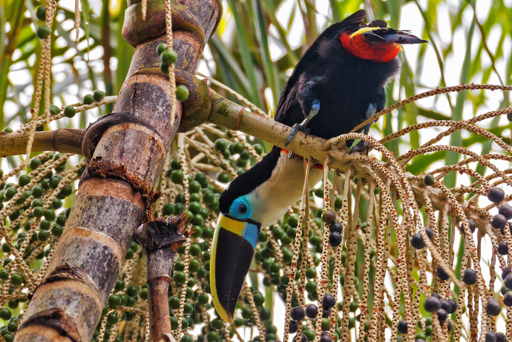
“Ah-sigh-ee.” Perhaps you don’t yet know the correct pronunciation of this Amazonian fruit, but chances are high that you’ve already seen its name – açaí – on some menu, especially in cafes and small shops specializing in healthy eating, sold mainly as the primary ingredient in bowls, smoothies, ice creams or juices. In Brazil, about 95% of the production of this small, round and very dark-purple fruit is concentrated in the Amazonian state of Pará. It’s a staple of the local diet, where it’s consumed, blended, with fish, cassava flour and other Amazonian ingredients. But because of its nutritional benefits, being rich in antioxidants and fibers, and having high energy value, açaí’s fame as a “superfood” quickly reached other Brazilian regions and, eventually, other countries. But the increase in fruit production to meet both national and international demand is reducing bird diversity in the floodplain forests of the Amazon. According to a study recently published in the journal Biological Conservation, areas with a higher density of açaí palm trees show a 28% decline in the number of bird species. “Our goal was to understand the consequences of the expansion of açaí cultivation and its various forms of management on birds, with a primary focus on frugivores, those that feed on fruits,” study co-author Raphael de Vasconcelos Nunes, a biologist at the Federal University of Pará, told Mongabay. According to Nunes, floodplain forests are already among the most impacted forest environments in the Amazon. They’re located on riverbanks and undergo constant…This article was originally published on Mongabay
From Conservation news via This RSS Feed.