

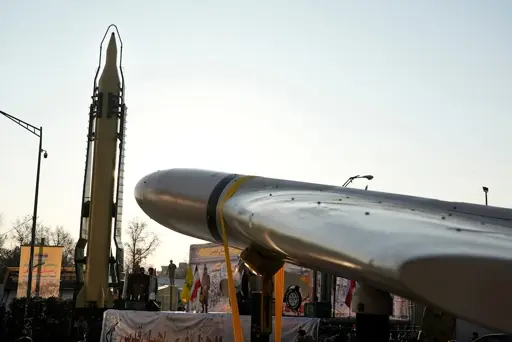
Iran says military deterrence and regional resistance helped finalize the US agreement, as Tehran stresses Washington was forced to accept an end to the war.
Iran’s Supreme National Security Council said it finalized a memorandum of understanding with the United States on June 14 regarding the end-of-war negotiations, referred to as the Islamabad talks.
Key points are that military operations on all fronts, including Lebanon, are to cease immediately and permanently from tonight, according to the statement.
Additionally, the naval blockade imposed on Iran will be lifted immediately. The memorandum is scheduled to be formally signed on Friday, June 19. Talks on a final comprehensive agreement will be postponed until the other side fulfills its commitments under the memorandum.
Resistance forced agreementIranian officials, military agencies, and media have commented on the latest Iran-US agreement, describing it as a direct outcome of months of regional resistance against US and Israeli military actions. Announced early Monday by Pakistani Prime Minister Shehbaz Sharif, the deal establishes an immediate cessation of all military operations across all regional fronts, including Lebanon.
Iranian Deputy Foreign Minister Kazem Gharibabadi said recent military developments and Iranian deterrence measures played a significant role in advancing negotiations with the United States and accelerating the completion of the agreement text.
Speaking after the announcement of an Iran-US deal, Gharibabadi stated that “tonight’s threats by Iran were effective in advancing certain issues in the negotiation text,” adding that several amendments sought by Tehran were facilitated by developments in Lebanon, statements issued by Iran’s armed forces, and the readiness of military units to deliver a decisive response.
He noted that US President Donald Trump had also adopted positions critical of the Israeli regime, while Hezbollah’s strong response to what he described as an Israeli terrorist act contributed to shifting the negotiating environment.
According to Gharibabadi, Iran’s military power and the threat of further escalation helped finalize outstanding issues in the agreement, saying that “military power and the threats made helped in the process of finalizing the text and advancing some issues we had to resolve.”
Trump, Pakistan announce Iran deal, Hormuz reopening, end to blockadeHis remarks came after Trump announced that a deal between the United States and the Islamic Republic of Iran has been finalized, declaring the reopening of the Strait of Hormuz and the immediate lifting of the US naval blockade.
Iranian state broadcaster IRIBportrayed the outcome as a strategic victory for Tehran, stating that “with the power, steadfastness, and brave resistance of the armed forces and the people against the criminal enemy, America was forced to accept the end of the war.”
IRIB also highlighted what it called “Trump’s humiliating retreat,” referring to the US president’s statement that he had never sought regime change in Iran, framing it as evidence that Washington had been compelled to abandon its previous objectives under pressure from Iran’s military and political response.
Iran’s Top Diplomat Says MoU With US ‘Has Never Been Closer’
Military pressure helped secure deal as talks enter phase twoGharibabadi said the next phase of negotiations is expected to last up to 60 days, expressing hope that the talks will conclude within that timeframe and lead to a final agreement between Tehran and Washington.
Gharibabadi stated that the lifting of all sanctions imposed on the Islamic Republic will be a central issue during the negotiations, including both primary and secondary US sanctions, as well as resolutions issued by the UN Security Council and the IAEA Board of Governors.
According to the deputy foreign minister, all sanctions would be removed if a final agreement is reached.
He added that the nuclear file will constitute the second major track of the negotiations, while discussions will also focus on reconstruction and economic development, with both sides expected to finalize mechanisms related to economic recovery during the 60-day period.
Gharibabadi further noted that negotiators will work on establishing an executive mechanism to monitor and verify the implementation of commitments by all parties, aiming to ensure compliance with any future agreement
Khatam al-Anbiyya HQ stresses steel Iranian willThe Khatam al-Anbiyya Central Headquarters stated that the Iranian people and armed forces have proven that the enemy has no option but to accept defeat.
It said the resilient people of Iran, alongside the armed forces and the Resistance Front, demonstrated unity under the leadership of Iran’s Leader, Sayyed Mojtaba Khamenei. The statement added that this strength enabled the imposition of a “divine and steel will” on US and Israeli adversaries.
The headquarters underlined that the developments have left the opposing side with no path except acceptance of defeat and surrender before the Iranian nation and its forces. The headquarters emphasized that the armed forces acted with courage and determination in confronting external pressures. It framed the outcome as a strategic victory reflecting national resilience and coordinated military readiness.
From Orinoco Tribune via This RSS Feed.