

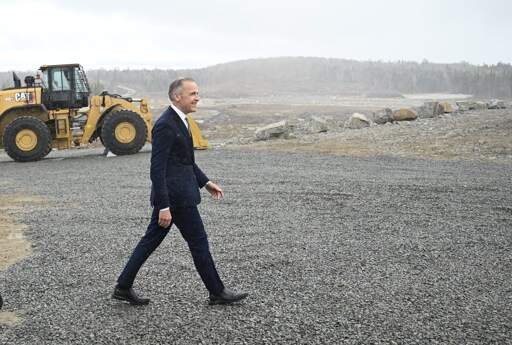
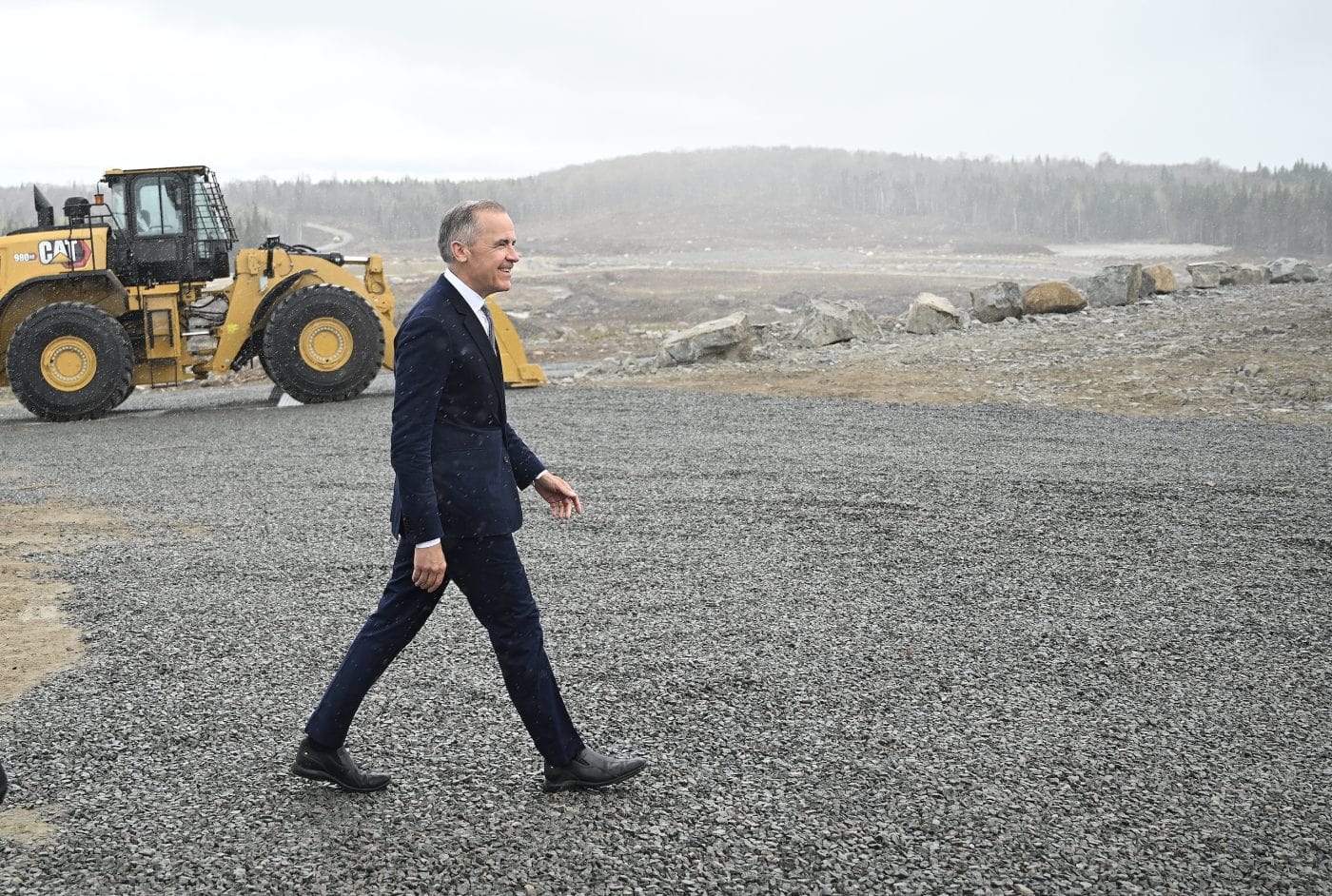
Photo: Graham Hughes / The Canadian Press
Summary
- The government under Prime Minister Mark Carney has “repealed or weakened virtually every climate policy and regulation that Canada had developed in the last decade,” a former member of Canada’s Net-Zero Advisory Body told MPs.
- Two former members of the body said last week they were left uninformed of new policy directions on fossil fuel development and emissions reductions while their previous advice was ignored.
- Canada’s goal of reaching net-zero emissions — and helping to slow the effects of climate change — by 2050 is now “out of reach,” they said.
The consequences of Prime Minister Mark Carney’s methodical cuts to Canada’s environmental rules are not being communicated honestly to the public, two former government advisors say.
Climate scientist Simon Donner and environmental advocate Catherine Abreu are both former members of a legislated advisory body of climate scientists and policy experts. Last week, they shared their experience on that body with MPs, saying Carney’s government repeatedly kept them in the dark while it gutted one rule after another — from scrapping the consumer carbon price to setting aside clean electricity rules, ditching the oil and gas emissions cap, pausing electric vehicle mandates and signing a deal with Alberta that delayed rules for methane gas leakage and weakened requirements for industry to pay for its carbon emissions.
The government refused offers to hear their advice and cancelled a high-level meeting at the last minute, Donner, the former co-chair of the Net-Zero Advisory Body and a University of British Columbia professor who runs a Climate and Coastal Ecosystem Laboratory, told the House of Commons environment committee on June 9.
Donner and Abreu, the former executive director of Climate Action Network Canada and now the executive director of the International Climate Politics Hub, were there to brief MPs from multiple parties on the state of the advisory body.
“We were not informed of policy decisions underway, nor asked to provide advice on those decisions,” Donner said about the government’s myriad changes while he was co-chair.
That included their assessment that the Carney government’s actions were trashing any chance of Canada reaching its goal of negating its planet-heating carbon pollution, which would slow its contribution to the climate crisis that is wreaking havoc on Canadians’ health. That judgment has since been echoed by the Canadian Climate Institute.
Abreu also felt Carney’s enthusiastic support for the oil and gas industry is being downplayed. The industry is the economic sector with the highest amount of emissions and despite Canada’s climate commitments, those emissions are climbing ever higher, offsetting declines in other economic sectors.
“The shredding of environmental policy that this government has undertaken means that Canada is now on track to violate its own law and to fail to attain net-zero emissions by 2050,” Abreu said.
Carbon pollution worsens climate change, which is fuelling floods and wildfires that can lead to evacuations, toxic smoke and heat waves that smother cities and trigger asthma and mental health issues. Fumes and exhaust from fossil fuel-powered vehicles, power plants and gas appliances are connected with heart disease, strokes, chronic lung diseases, cancer and tens of thousands of premature deaths a year.
Abreu said the government didn’t consult the advisory body before releasing its Climate Competitiveness Strategy, which focused on protecting the global competitiveness of Canada’s oil and gas sector. That strategy “unwound much of the policies that we had advised on in previous years,” Abreu said.
And, she said, because the government designed that document to be a “strategy” and not a formal “plan,” it sidestepped a legal requirement to consider submissions from the advisory body on the plan’s merits.
Canadian oil producers are expected to make as much as $100 billion in profits this year as a result of the Iran war, according to the Canadian Centre for Policy Alternatives. The government is not contemplating a windfall tax on those profits, Abreu noted, which would require companies to hand over a portion of that excess profit to public coffers. Instead, the government is moving to further subsidize the industry.
This spring, Carney formalized a tax credit for companies that use technology to capture carbon dioxide for the purposes of pumping more oil out of the ground. Former environment minister Steven Guilbeault, who announced he would resign his seat last month over the government’s policies, initially quit cabinet in part over the government’s plan to offer this new subsidy.
“Transparently communicating to Canadians, ‘This is a decision we’re making, here’s why and here are the protections that you’re going to lose as a result,’ is critical, and we’re not having that kind of open conversation,” Abreu told the MPs.
“Instead, things are being obfuscated with misleading language, including claims that we will continue to meet our net-zero goal, when clearly that has been put out of reach with recent decisions, and with misleading language like ‘decarbonized’ oil and gas, which is something that I hear this government say regularly, and is actually just a complete contradiction in terms.”
Environment and Climate Change Minister Julie Dabrusin’s spokesperson Keean Nembhard said the Climate Competitiveness Strategy contained measures to drive down emissions, including methane rules, carbon pricing, tax credits, critical minerals support and efforts to mobilize capital for the low-carbon transition. He said the government’s nature, electricity, and auto strategies are also meant to help cut carbon pollution.
“Our government has been clear that fighting climate change, protecting communities and building Canada are top priorities. Climate change is one of the defining challenges of our time and Canadians expect us to meet this challenge head-on,” he said.
The Narwhal also reached out to the prime minister’s office for comment but did not receive a response before publication.
Government ignored research, cancelled meetings with experts
The Net-Zero Advisory Body is authorized to include up to 15 people, but dropped to just six members last summer following Carney’s election, Donner said.
“It became very difficult for us to produce any work of value,” he said.
The advisory body’s website currently lists five members. In April, Minister Dabrusin issued a statement that the government would be “implementing a series of updates” to the advisory body, as a result of “last year’s departures” as well as a “shift in focus” to “investment and growth in a low-carbon economy.”
The June briefing on the Net-Zero Advisory Body was the first that the House of Commons Standing Committee on Environment and Sustainable Development has held. The committee’s job is to study and report on matters relating to a range of different environmental departments, agencies and laws, and has recently examined things like single-use plastics, carbon pricing and fresh water.
It’s one of several parliamentary committees in the House of Commons and Senate and is made up of MPs from parties with official status, which is based on the number of seats they hold. Although the Green Party and NDP aren’t committee members, Conservative MPs offered time for those parties’ questions.
The former advisory body members gave opening statements and then answered questions for roughly an hour. Their testimony focused on the Canadian Net-Zero Emissions Accountability Act, a federal law passed in 2021, which mandates that Canada reach net-zero greenhouse gas emissions by 2050. The law requires the government to set increasingly stringent targets for lowering emissions and publish its plans to achieve them.
The law also establishes the Net-Zero Advisory Body of which Donner and Abreu were formerly members. It’s a kind of government climate council that provides independent advice to the environment minister on how to achieve net-zero emissions. The United Kingdom, South Korea and Australia have similar legislated climate councils.
Under Canada’s law, the government is required to take into account “submissions provided by the advisory body” when coming up with an emissions reduction plan.
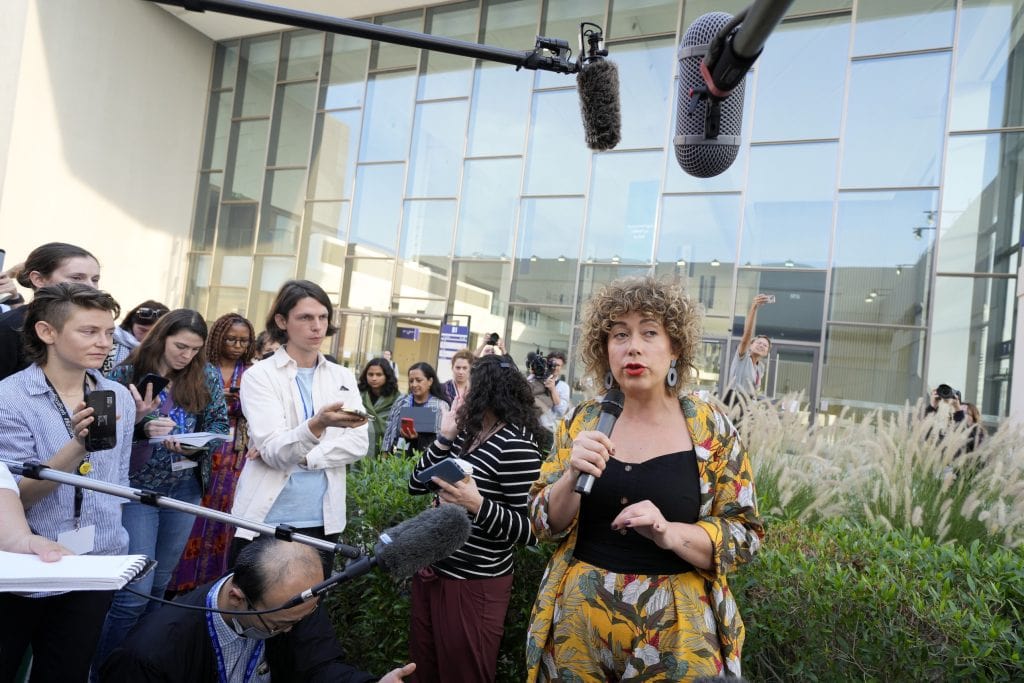
Climate advocate Catherine Abreu resigned from Canada’s Net-Zero Advisory Body in December, and says the federal government under Mark Carney has “unwound” many of the climate policies the body recommended. Photo: Kamran Jebreili / The Associated Press
Abreu and Donner both joined the advisory body in 2021, but resigned last December after becoming frustrated with the cold shoulder they said they were receiving from Carney’s government.
Last summer, the advisory board volunteered to brief the government on industrial carbon pricing and equivalency agreements with the provinces, Donner said, but he received “no response” from Carney’s office, and an acknowledgement but no appointment from Energy and Natural Resources Minister Tim Hodgson’s office.
The last straw was when the government proposed a deal with Alberta that weakens industrial carbon pricing, delays restrictions on industrial methane gas and significantly lowers the ambition of a carbon capture proposal from industry, while paving the way for a million-barrel-per-day oil pipeline to the west coast.
Donner said the environment minister’s office cancelled a briefing with the advisory body scheduled for the day after the Canada-Alberta Memorandum of Understanding was released in November.
After that, he said, he concluded the group’s work “had become performative.”
“You can’t be saying these deals are still compatible with net-zero by 2050. They’re not. The [Alberta] deal is not compatible with it,” he said.
“Just be honest with Canadians about this. If you’re going to pass deals like this, be honest about the implications.”
‘The oldest, most boring conversation I can possibly imagine’ about pipelines
Abreu told MPs the government has “repealed or weakened virtually every climate policy and regulation that Canada had developed in the last decade,” but with “no alternative policies or pathways being put in place.”
She argued Carney’s killing of the consumer carbon tax on his first day in office was a decision based on “irresponsible and inaccurate rhetorical politics.”
The prime minister’s decision to ditch the proposed oil and gas emissions cap opens the door for the government to help build projects, she argued, which will grow the sector’s emissions.
And delaying the zero-emissions vehicle mandates has coincided with a drop in sales of new electric vehicles, she pointed out, “right at the moment when soaring gas prices are hurting Canadians who are struggling to fuel their gas guzzlers.”
The government’s proposal this spring to overhaul fossil fuel and nuclear project oversight, habitat preservation and species at risk protection and create “federal economic zones” where certain developments can be “pre-approved,” also undermines some of Canada’s longest-standing environmental protections, Abreu said.
She also called out Carney’s “national electricity strategy,” which sets aside clean electricity regulations and allows for new gas-fuelled power plants — which “makes a mockery of the abundant clean energy resources that should be a very celebrated economic advantage in this country.”
Instead, the country is stuck once again “having the oldest, most boring conversation I can possibly imagine, about how we’re going to build another pipeline,” she said.
“We’ve been having the same conversation the entire time that I’ve been in my professional career. It’s sad.”
The Narwhal’s reporters are telling environment stories you won’t read about anywhere else. Stay in the loop by signing up for our free weekly dose of independent journalism.
From The Narwhal | News on Climate Change, Environmental Issues in Canada via This RSS Feed.