

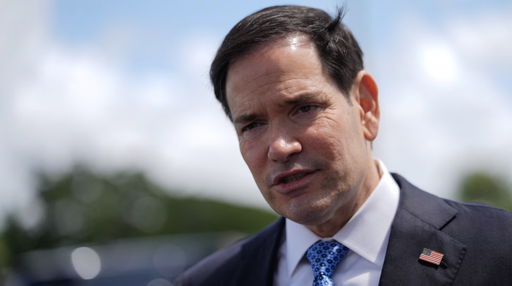
Secretary of State Marco Rubio has imposed sanctions on Unión Cuba-Petróleo (Cupet), the state-owned company that controls fuel production and distribution in Cuba. Rubio justified the measures by claiming that the Cuban government is, “reselling countless barrels of scarce energy on the secondary market, hoarding energy supplies for its military, intelligence and repressive forces, and rationing energy as a tool of social control.”
The measure broadens the scope of sanctioned Cuban companies. The sanctions against GAESA, the largest business conglomerate managed by the Cuban military leadership, have already led to the withdrawal of the island’s main foreign partners, including the Canadian mining company Sherritt, the Spanish hotel groups Iberostar and Meliá, and the Canadian group Blue Diamond, among others.
The new sanctions reinforce the energy blockade against the island, as any company that trades in any way with the Cuban state-owned entity is subject to the sanctions outlined in Donald Trump’s Executive Order issued on January 1, including freezing bank accounts and assets in the United States.
The Cuban people are facing an increasingly critical situation after more than five months of the blockade, with prolonged power outages across the country, virtually no public transportation or garbage collection, and deficiencies in water supply, among other daily hardships. Hospitals are postponing surgeries, and the government recently announced the early end of the school year.
What is happening in Cuba has reached the level of a humanitarian crisis, deliberately provoked by the White House to impose its interests on the island.
Blocking a Deal for Fuel Shipments to the Private Sector
It is striking that Rubio’s decision comes just one day after an agreement between the Miami-based U.S. company, Vanguard Energy, and an unnamed Cuban import agency to export some 250,000 barrels of fuel to the island every 30 to 40 days.
The agreement would include the lease of Cupet facilities (through the import agency) to store and sell the fuel, since no other entity has the necessary infrastructure (ports, storage tanks, trucks, etc.) to handle such quantities.
Since late February, following a measure that very partially eased the energy blockade for the Cuban private sector and non-governmental organizations, Vanguard Energy has been authorized to export small quantities of fuel in isotanks holding up to 25,000 liters of gasoline and diesel. The sale of this fuel to private individuals takes place through Cupet gas stations that are leased to Cuban owners of small and medium-sized businesses.
Since then, it is estimated that an average of about 60 isotanks per month have entered Cuba, amounting to around 1.2 million liters. With the agreement announced on Wednesday, Vanguard Energy’s operations would have jumped to nearly 40 million liters, leading many to describe the agreement as “historic” since it would represent the largest volume of fuel sales from the U.S. since the 1959 revolution.
According to reports, the agreement with Vanguard guaranteed that the fuel would not fall into the hands of the Cuban state — a condition imposed by the Trump administration — and that the product’s entire supply chain would be inspected. However, it is assumed that a portion of the fuel leaks to state institutions, either through resale by private entities to the state or through other mechanisms. In the case of large volumes, as in this agreement blocked by Rubio, many point out that it would be difficult to maintain effective private control given that the entire chain of reception, distribution, and points of sale is state-owned. And except for the latter, which are leased to private entities, the entire chain is managed by the state.
In that context, the inclusion of Cupet in Executive Order 14404, announced by Rubio, made the agreement unfeasible — unless special authorization were granted — since any company that engages in commercial relations with Cupet by, for example, leasing storage and sales facilities, would risk being sanctioned. And the Secretary of State quickly confirmed that Vanguard Energy hadn’t received any U.S. licenses for the transaction, and that the Trump administration’s sanctions would remain in place.
Pressure for Capitalist Restoration, Echoed by the Cuban Government
The decision is part of a policy of extreme pressure on the Cuban government to move forward with some form of privatization of the sector that would allow direct trade between Vanguard or other companies and the Cuban private sector. A similar pressure comes from the Díaz-Canel government, which calls for “unity” and “defending the homeland” while rapidly implementing pro-capitalist reforms.
Let us remember that the ruling bureaucracy’s policy has for years been oriented toward capitalist restoration, strengthening the private sector and market mechanisms while dismantling what remains of the social gains achieved through the revolution. The bureaucracy has also shifted the burden of the economic crisis — largely caused by the historic U.S. blockade that has lasted more than 60 years — onto the working class through austerity.
Of course, even if it had been finalized, the agreement would not have solved Cuba’s dire problems, given that the fuel would only be allocated to the private sector, authorized NGOs, and the U.S. embassy.
No agreement between imperialism and the restorationist bureaucracy will be favorable to the working people, even if it might provide partial relief in some respects, because it will be based on the destruction of social gains and a return to capitalism and economic dependence on U.S. imperialism.
That is why we must launch strong anti-imperialist campaigns, independent of the bureaucracy, for an end to the blockade and sanctions, and which rely on the mobilization and self-organization of the Cuban working masses. They are the only ones capable of offering a progressive way out of the current catastrophe.
We demand the immediate lifting of the energy blockade and the sanctions stipulated in Trump’s Executive Order 14404. We call for the broadest international mobilization to halt the imperialist offensive and make solidarity with the Cuban people a reality through the urgent shipment of oil and fuel.
Originally published in Spanish on June 13 in La Izquierda Diario
The post Marco Rubio Tightens Cuba Energy Blockade, Imposes Sanctions on Cupet appeared first on Left Voice.
From Left Voice via This RSS Feed.