

The far-right government of Daniel Noboa is facing a serious challenge to its image of an administration that is tough on crime and effective in securing the safety of the Ecuadorian people. The government has attempted to promote the idea that those killed belong to criminal gangs, suggesting that there is a sort of “bubble of violence” within which most crimes occur.
However, the recent deaths of an activist, a student, and a high-ranking official at an Ecuadorian university have shaken public opinion to such an extent that many former defenders of the government’s thesis regarding the limited nature of the issue are now feeling overwhelmed by violence that, on the contrary, is spiraling out of control.
In fact, 2025 was the most violent year in Ecuador in recent history. 9,216 people were killed in violent deaths, an increase of 32% from the previous year. 10 years prior, the number of violent deaths was 1,050. Meaning that from 2015 to 2025, the number of homicides in what once was considered the safest country in Latin America, increased by 777.7%.
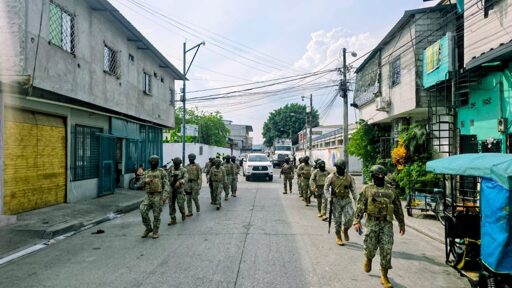
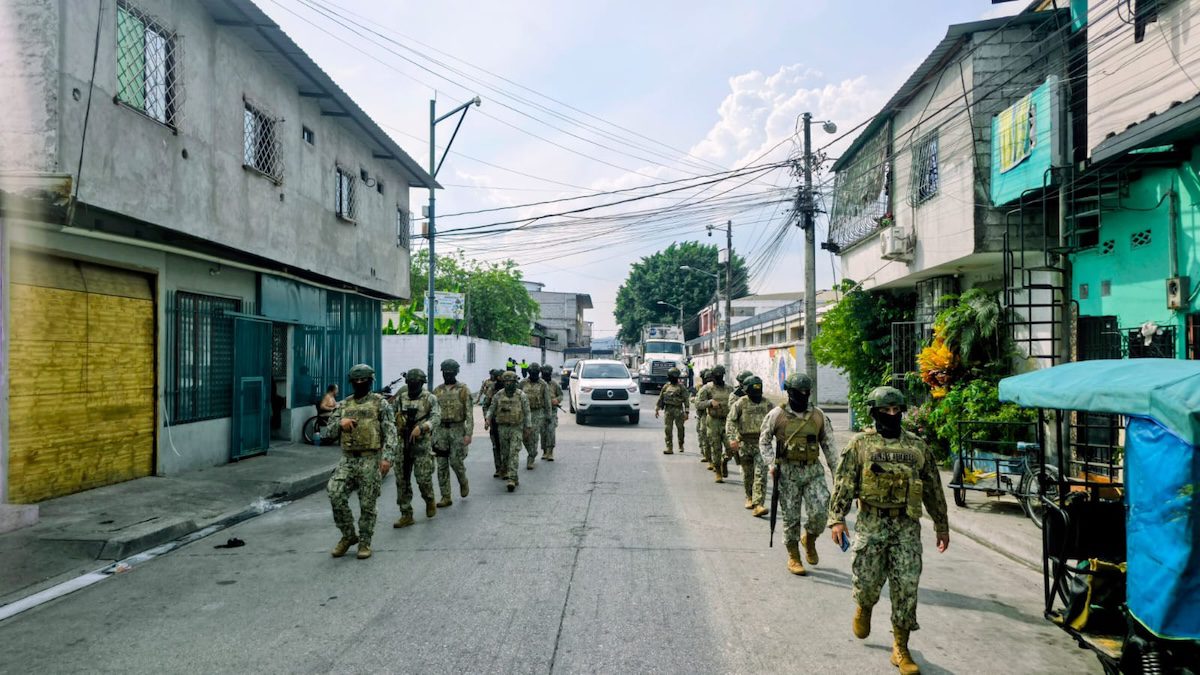
Meanwhile, Daniel Noboa’s government has continually insisted that the only solution for combatting the spiking levels of violence is to militarize the country through “Plan Fénix” launched in 2023, maintain the declaration of internal armed conflict and a state of emergency, and engage in joint military operations with the United States, against the expressed will of the Ecuadorian people. These strategies have appeared to be ineffective in stopping the violence and have, unsurprisingly, contributed to its growth.
The tragic and mysterious death of Mónika Silva
A few days ago, authorities reported that anti-corruption activist Mónika Silva Koniuszek was found dead in her home in the province of Santa Elena. The Prosecutor’s Office has requested international cooperation to solve a case that has shed light on the silencing of those who denounce acts of corruption and drug trafficking in the country.
Most concerning is that days before her death, Silva had spoken about death threats against her and stated that her life was in danger. Several human rights organizations, such as the Ecumenical Commission, argued that the state bears responsibility for her death due to its inaction and passivity in response to reports regarding her safety.
Despite this, Interior Minister John Reimberg issued statements a few hours after the murder claiming that the activist’s death could be a suspected suicide, which provoked anger and rejection from Silva’s loved ones and civil society in general. Many questioned why Reimberg rushed to make these statements when a thorough investigation of the case had not yet been conducted.
A few days later, the Minister of the Interior himself appeared to backtrack on his initial statements when he called for the investigations to be conducted with the greatest possible “speed, thoroughness, and transparency … so that the facts may be fully clarified.”
Following the death of Silva, who was Polish by birth, the European Union issued a formal public call for the government to ensure a transparent investigation in accordance with international protocols.
Silva had dedicated the last years of her life to leading the La Integridad Foundation, which is committed to promoting transparency, social oversight, and citizen participation. The organization had become prominent in the public debate for exposing cases of corruption, land ownership disputes, administrative irregularities, and environmental issues.
As a result, authorities and several journalists continue to investigate who is behind Silva’s death, and whether it was some form of retaliation for her work exposing powerful groups that control corruption networks in the country (and whose ties to various institutions remain unclear).
The disappearance and death of Nathaly Mafla
For several days, the media and social media were flooded with images of Nathaly Mafla, a 20-year-old systems engineering student who disappeared in Quito. Her family and friends led a media campaign that reached millions of people, wondering where the young woman – who had come to the capital from Tulcán to study – had gone.
Several videos were shown on major television channels showing Mafla wandering disoriented through the streets of Quito. A few hours later, after several days of searching, it was confirmed that a body found in a ravine near her university was that of Nathaly.
Students and faculty at the university where she was studying, the National Polytechnic School, were shocked by the tragic news of her death. Furthermore, they and her family members reported that she was a responsible and dedicated student, with no ties to any criminal organization. Her mother said on social media: “My dearest daughter: I never thought you would leave me so soon.”
The brutal death of Santiago Ávalos
A few hours ago, several passersby posted images on social media showing a car riddled with bullet holes. Authorities later reported that the body of Santiago Ávalos, the financial manager of the University of the Americas (UDLA), a private university in Quito, was found inside the car.
According to the police report, Ávalos told his wife over the phone that a motorcycle was following him. Shortly afterward, the motorcyclist allegedly fired at least six shots at Ávalos’s car, causing him to lose control of the vehicle and crash into a pole, where he died at the scene of the attack.
For its part, the UDLA said in an official statement: “His absence leaves a profound void among those of us who shared our daily work with him, but also the legacy of integrity, generosity, and dedication that set him apart.”
Growing unease in society
The notion that violence in Ecuador is limited to criminal gangs and certain socioeconomic sectors appears to be fading in light of these and other similar incidents. Furthermore, in recent months there has been a concerning rise in criminal activity in the capital Quito, that had previously been concentrated mainly in cities along the Ecuadorian coast, such as Guayaquil, Manta, Portoviejo, and Machala.
Despite this, President Noboa insists that his security plan is on the right track and yielding clear results. In this regard, he has made the United States his primary partner in tackling the crime that has made 2025 the most violent year in the country’s history.
Indeed, Noboa announced that he will travel to the United States again to meet at the White House with Stephen Miller, Deputy Chief of Staff for Policy and National Security Advisor to the Trump administration.
Noboa is the president who has traveled abroad the most while in office, and the United States (his country of birth) is his favorite destination, where he has traveled more than 14 times – a remarkable record.
However, while Noboa travels to the United States in the midst of the World Cup, fear and insecurity are growing among the Ecuadorian population. The government has promised on several occasions that it will succeed in overcoming the violence in the country, but little by little, these promises seem to be fading in the face of a reality that terrifies citizens who are unsure whether they will make it home safe and sound.
BreakThrough News , June 13, 2026
From BT News via This RSS Feed.