

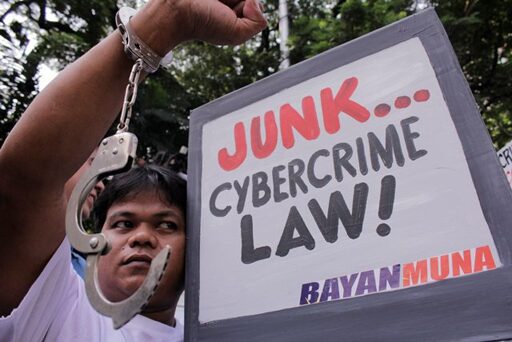
Modernizing our legal framework requires recognizing that in a digital age, the protection of free expression is the primary safeguard against the consolidation of power.
By Ralph Louisse G. Fernandez
In the Philippines, the public square has moved from the physical plaza to the digital timeline. But while the 1987 Constitution guarantees that “no law shall be passed abridging the freedom of speech, of expression, or of the press,” the reality for many Filipinos — journalists, activists, and ordinary citizens; is an encroaching shadow of litigation. The weapon of choice is the Republic Act No. 10175, specifically its provisions on cyber-libel.
The fundamental issue lies in the disparity between the protection of reputation and the protection of free speech. Under Article 353 of the Revised Penal Code, libel is defined as a public and malicious imputation of a crime, vice, or defect. However, Section 4©(4) of Republic Act No. 10175 effectively increased the penalty for libel committed through a computer system by one degree. This “one-degree” hike is not just a technicality; it is an escalation of state power. By elevating the penalty to prisión mayor in its minimum period, the law effectively triples the potential prison sentence compared to traditional print libel. For years, this led to significant legal incoherence regarding the statute of limitations. Because the penalty became “afflictive,” it was argued that the window to file a case jumped from one year to fifteen years. While the Supreme Court clarified in the 2023 case of Causing v. People that the prescriptive period for cyber-libel remains one year, the existence of a harsher prison sentence for the same act simply because it was performed online remains a disproportionate use of the law. This imbalance targets the most accessible medium for public discourse, making the digital space a minefield for those who dare to criticize.
Through the lenses of a human rights advocate requires looking at the International Covenant on Civil and Political Rights (ICCPR), to which the Philippines is a state party. Article 19 of the ICCPR explicitly protects the right to hold opinions and the freedom to impart information through any media. In 2011, the United Nations Human Rights Committee (UNHRC) issued its landmark view in Adonis v. Philippines, stating that the criminalization of libel in the country was “incompatible” with Article 19. The Committee emphasized that imprisonment is an inherently disproportionate penalty for defamation. International human rights standards dictate that libel should be a civil matter; a dispute over reputation between private parties rather than a criminal offense where the state exercises its power to deprive a person of liberty. When the state uses criminal law to silence speech, it violates the principle of Proportionality. A person’s reputation is a protected interest, but it cannot supersede the fundamental right to physical liberty. By failing to distinguish between malicious defamation and protected criticism, the current legal framework functions as a mechanism of suppression rather than a search for justice.
The impact of these laws is not felt equally across society. While political and economic elites possess the resources to initiate litigation as a form of “lawfare,” community journalists, activists, and ordinary citizens are often silenced by the mere threat of a complaint. We see this weaponization in the frequent filing of cyber-libel cases against those who report on local corruption, environmental issues, or human rights abuses in the provinces. When a journalist is arrested on a Friday, making bail impossible until the following week, the law is being used as a tool of state-sanctioned harassment. Furthermore, the broad judicial interpretation of “malice” often fails to account for the public interest. When a citizen posts about the lack of medical supplies in a provincial hospital or the delay in social services, they are engaging in a necessary democratic exercise. If they fear that a technical error in their post could lead to years in prison, they will choose silence. A society that cannot hold its institutions to account is a society that cannot reform.
As law students, we are often taught to prioritize the letter of the law over its social impact. However, this workshop underscores that law does not exist in a vacuum. It is a tool that must serve the collective good. Training in human rights journalism requires us to look past the statutory elements of a crime to the real-world impact on civil liberties. We must connect the dots between a Supreme Court ruling on speech and the ability of a community leader in a remote municipality to demand accountability without being sued into silence.
The Philippines must move toward the decriminalization of libel. Modernizing our legal framework requires recognizing that in a digital age, the protection of free expression is the primary safeguard against the consolidation of power. We must advocate for a system where reputation is addressed through civil remedies that do not necessitate the deprivation of liberty. Law students are not merely future litigators; we are stakeholders in the democratic process. By embracing human rights journalism and accessible legal analysis, we ensure that the law acts as a shield for the marginalized rather than a weapon for the powerful. The digital square must remain a place of robust, uninhibited debate; not a place of fear.
*The article is an output from a training conducted by Bulatlat among the law students of the Far Eastern University Institute of Law under the class of Professor Josiah David Quising.
The post Lawfare in the Digital Age: How Cyber-Libel Strips Away Our Rights* appeared first on Bulatlat.
From Bulatlat via This RSS Feed.