

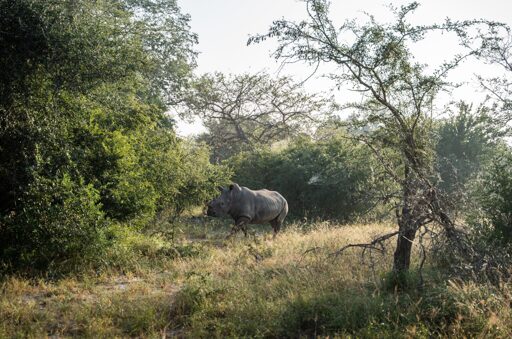
On June 6, nine female white rhinos arrived in Mozambique’s Zinave National Park following a two-day translocation. Their arrival marks the culmination of nearly 10 years of rhino reintroduction efforts in the park, aimed at rebuilding a viable breeding population of the mammals in Zinave after decades of local extinction. The white rhinos (Ceratotherium simum) were transferred from the Manketti Game Reserve in South Africa and join another 30 white rhinos and 22 black rhinos (Diceros bicornis) introduced to Zinave since 2022. “[The translocation] went fantastically well,” Antony Alexander, a regional manager for the conservation nonprofit Peace Parks Foundation, which manages Zinave and organized the translocation, told Mongabay by phone. “I’m sure they’re happy to be in the wild again.” Zinave, which covers around 4,090 square kilometers (1,580 square miles) in the southern province of Inhambane, has previously been called a “silent park” after decades of civil war wiped out much of its wildlife. “You could almost sense the very low levels of life with insects and birds and smells and sounds,” said Alexander, describing Zinave before wildlife restoration efforts began. “That’s changed dramatically over the last 10 years.” Among the species reintroduced since 2016 are the critically endangered black rhino and Selous’ zebra (Equus quagga selousi), as well as the endangered African savanna elephant (Loxodonta africana), vulnerable leopard (Panthera pardus) and spotted hyenas (Crocuta crocuta). The rhinos help maintain Zinave’s ecosystem as they are bulk grazers, eating a high volume of grass. This helps prevent fire risk, as overgrown…This article was originally published on Mongabay
From Conservation news via This RSS Feed.