

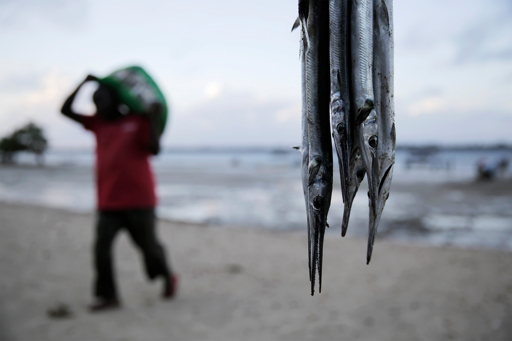
MTWAPA, Kenya — On a mid-morning in March, Mohamed Mwazigona, 58, had just landed a measly catch on the town beach in Mtwapa on Kenya’s north coast. His crew was preparing the boat for a second trip into the sea with hopes of better luck. As traders started trickling in to buy fish, Mwazigona sat on a broken upturned boat staring at the horizon beyond the sea. His morning trip had netted only 2 kilograms (4.4 pounds) of fish. He worried that his catches had decreased a lot in recent years. “The number of fishermen has gone up; we have become too many,” he said. That’s the reason he left his village of Shariani, 40 kilometers (25 miles) to the north, to base his fishing in Mtwapa, which he felt had fewer fishers and better access to markets. In Kenya, local beach management units (BMUs), like the Mtwapa BMU that Mwazigona belongs to, have a legal mandate to support collection of fisheries data for submission to the government: mainly the type of fish its members catch and the weight. These data are meant to inform government decision-making about small-scale fisheries so it can help reverse the competition for dwindling fish stocks that Mwazigona and his colleagues are experiencing. They are also meant to help fishers themselves make decisions on where and when to fish. However, the BMUs’ small-scale fisheries data have been inaccurate and inaccessible to stakeholders. To address this problem and improve the sustainability of Kenya’s small-scale fisheries, WorldFish,…This article was originally published on Mongabay
From Conservation news via This RSS Feed.