

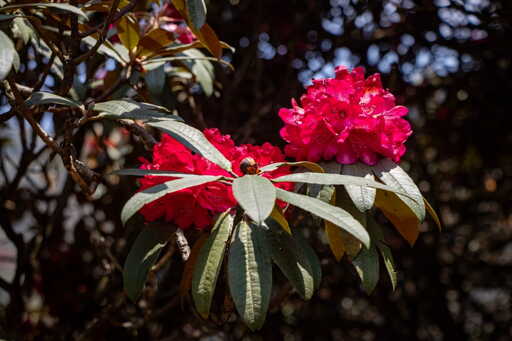
Every April, eastern Nepal’s Tinjure-Milke-Jaljale region sees a rush of tourists, arriving for the vibrant spring bloom of rhododendrons, the country’s national flower. The flowers have now become more than a photo backdrop; they’re part of a new, unregulated market for a “souvenir:” Unlicensed rhododendron liquor. Sold openly in reused bottles with handwritten labels, the rhododendron alcohol market operates without health testing, official tracking or sustainability monitoring, Mongabay contributor Mukesh Pokhrel reports. The Tinjure-Milke-Jaljale (TMJ) region is home to at least 26 species of rhododendron (Rhododendron spp.). It has seen a massive post-pandemic tourism surge, with local officials estimating 500,000 visitors arrived from April 1-15 this year. For some families, the seasonal sale of flower-based alcohol provides supplemental income. “Tourists want something unique from here,” said Denga Lama, a resident who produces the liquor at their home. “People buy the alcohol because it reminds them of the flowers and mountains.” Forests within the TMJ region, where rhododendron plants occur, are largely managed as community forests. Nepal’s conservation laws prohibit commercial harvesting from community forests without approval. However, legal ambiguity regarding rhododendrons grown in private gardens has left officials uncertain about enforcement. When asked about bottled rhododendron liquor, Division Forest Officer Megh Raj Rai told Mongabay it was the first time he had heard about it. Rai said that if the liquor is being produced at large scales, the lack of oversight poses potential public health risks. Certain rhododendron species contain grayanotoxins, neurotoxins that can potentially be fatal; although, the risks…This article was originally published on Mongabay
From Conservation news via This RSS Feed.