

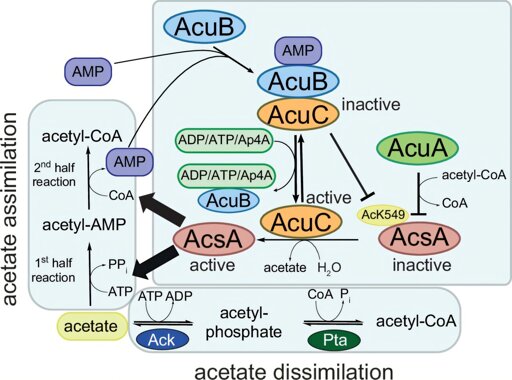
Researchers at the University of Greifswald have discovered a new mechanism by which bacteria such as Bacillus subtilis can regulate the production of the central metabolic molecule acetyl coenzyme A (Acetyl-CoA). Acetyl-CoA, also known as activated acetic acid, is crucial in the production of nutrients, i.e., proteins, carbohydrates and lipids, and thus plays a key role in the metabolism of all cells.
From Biology News - Evolution, Cell theory, Gene theory, Microbiology, Biotechnology via This RSS Feed.
You must log in or # to comment.