

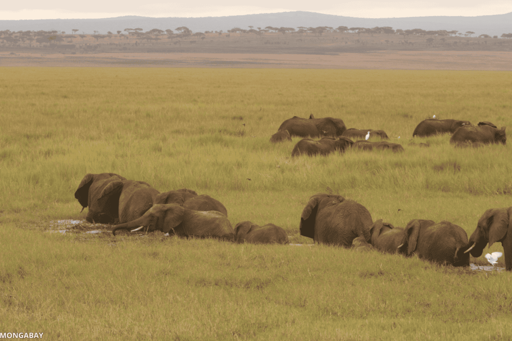
A field experiment in Kenya shows that dung beetles disappear when the African elephants they depend on for their fecal food and shelter also vanish locally. This is the first time that coextinction, the disappearance of one species leading directly to the extinction of another species, has been demonstrated in a large-scale field experiment, according to a recent study. In 2008, the researchers built a set of 10,000-square-meter (2.4 acres) exclosures in Mpala, Kenya. The exclosures were a fenced area of natural savanna habitat that kept out certain animals. Some exclosures kept out elephants, simulating what would happen if elephants went extinct from the landscape. The research focused on the connection between elephants and dung beetles, which bury and consume the feces of larger animals. Dung beetles provide an essential ecosystem service of ensuring feces doesn’t pile up to contaminate the land and water, which reduces the density of biting flies. The beetles also help with nutrient cycling, which keeps the soil and ecosystems thriving. The researchers set out to see if removing elephant dung would affect the dung beetle community, and if it could lead to coextinction of some dung beetle species. The scientists, led by researcher Finote Gijsman, measured the dung preferences of 179 Kenyan dung beetle species and found that dung beetles love elephant dung. The team used modeling to predict that when elephants became locally extinct within the enclosures, 28% of dung beetle species would go extinct along with them. Their prediction was very close: 23%…This article was originally published on Mongabay
From Conservation news via This RSS Feed.