

Photo: Darryl Dyck / The Canadian Press
Summary
- Temperatures in Vancouver could climb as high as 29 C this weekend, the first heat wave of the year.
- Water restrictions are in effect, only three of the city’s five outdoor pools are open and outdoor water sampling at many popular beaches has been suspended due to strikes.
- This summer is projected to be one of the hottest on record, raising questions about the readiness of Vancouver to protect its citizens from extreme heat.
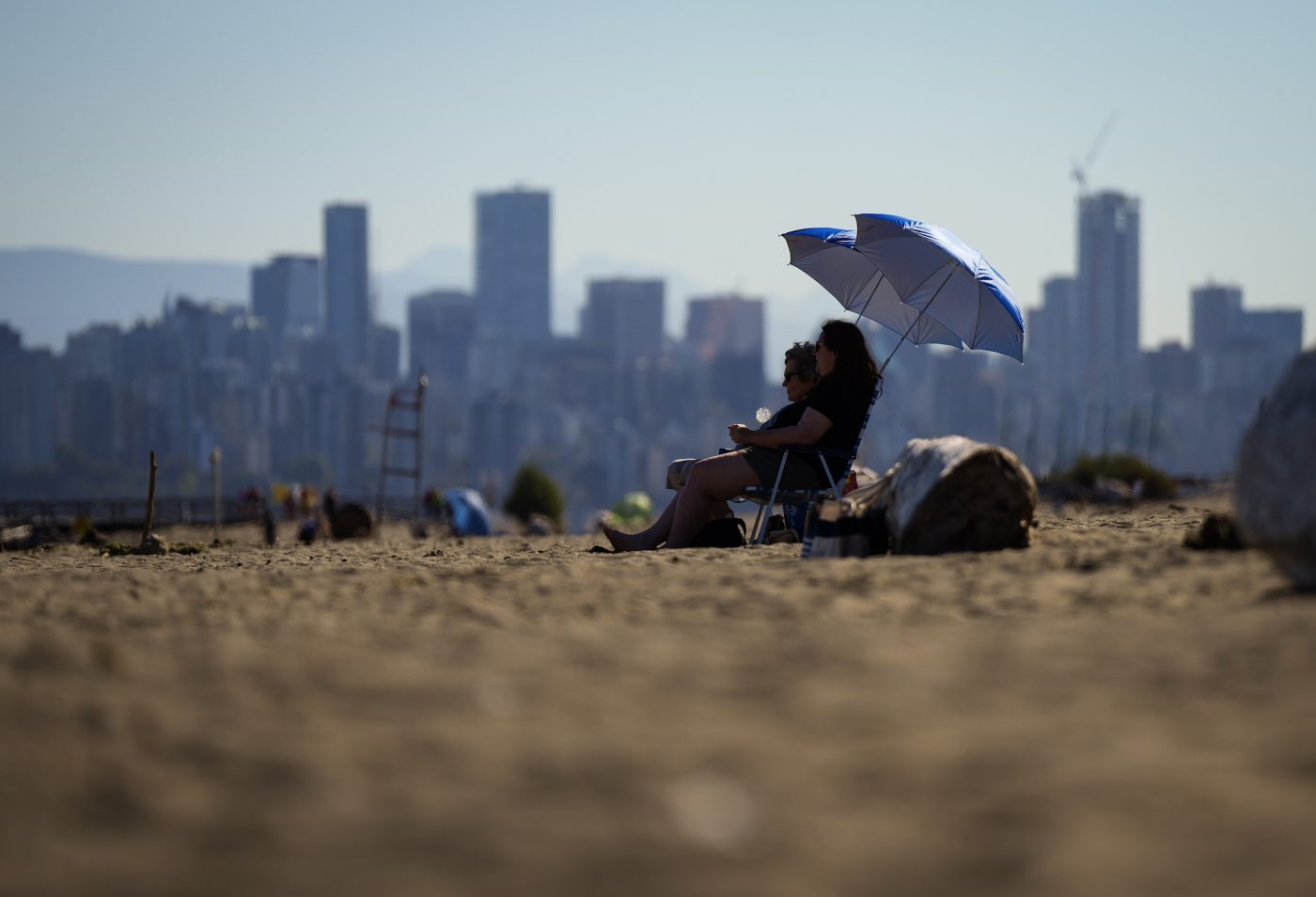
This weekend, Vancouverites will swelter under the first heat wave of the year, with a sunny forecast of up to 29 C on Saturday and Sunday. (Listen up, the rest of Canada: it’s not a dry heat!) It’s ideal weather for swimming outdoors or taking your kids to a wading pool — or it would be, if that were an option.
Only three of the city’s five outdoor pools — Second Beach, Hillcrest and New Brighton — will be open. The city’s 11 wading pools, meanwhile, are suspended all summer due to Stage 3 water restrictions across the city, which are expected to last until October. Perhaps you think this is no big deal — after all, the Pacific is right there. But those looking to cool down in the ocean will be taking their chances, as water quality tests at many of the city’s most popular beaches have been suspended due to job action, and those that have been tested lately are showing higher-than-expected E. coli counts.
It’s a bleak start to the summer, which is expected to be one of the hottest on record, according to Environment Canada.
Complaints about Vancouver’s lack of outdoor pools aren’t new: a decade ago, the Vancouver Sun pointed out the city has fewer pools than any other major city in Canada. (On their city websites, Montreal lists 62; Toronto has 58.) We’re on par with Saskatoon — which operates far more wading pools and splash pads, despite being a much smaller city. But most people frame this as a recreation problem, not a public health issue.

There aren’t enough places in Vancouver to escape the heat. Illustration: Carol Linnitt / The Narwhal
A recent study in the Journal of Environmental Economics and Management found in New York City, more people visit outdoor pools on hot days. No surprise. But the association was strongest in low-income neighbourhoods where many residents have few other options for cooling down. What’s more, the authors found, public pool availability during extreme summer temperatures can reduce heat-related emergency calls by 15 to 29 per cent.
Five years ago, a heat dome caused 619 deaths in B.C., the deadliest weather event in Canadian history. June 2021 was a wake-up call about the risks posed by climate change, and the urgent need for cities to adapt to extreme heat events. But looking for a place to get wet in Vancouver reveals an alarming reality: we’re not ready for the summer ahead — and we’re definitely not prepared for the future.
How to cope with heat
Outdoor water recreation is not the only way to cope with heat waves, but it is an important one, especially for people who don’t live in spaces that can be easily cooled. The BC Coroners Service reported 98 per cent of deaths during the 2021 heat dome happened indoors, and most of those who died lacked air conditioning or fans.
A 2023 report from the federal government noted that B.C. has the fewest number of households with air conditioning — just 32 per cent, compared to 61 per cent nationally. Among low-income households, that figure drops to 17 per cent. Until just a few days ago, landlords could still prohibit renters from installing portable air conditioners without penalty.
“The number of people vulnerable to an extreme heat event is expected to grow as census predictions show a steadily rising elderly population and an increasing share of one-person households,” the report noted.
But earlier this year, the City of Vancouver discontinued its four-year-old cool kit program, which distributed water bottles, spray bottles, cooling gel packs and other useful things for those that needed them. Instead, the city has seemingly replaced this program with a list of tips for cooling down in the heat. Among the places they advise going to are the still-closed swimming and wading pools.
As temperatures have risen in recent decades, Vancouver has lost pools: since 1993, four outdoor swimming pools have been decommissioned while adding just one, at Hillcrest Aquatic Centre. Kitsilano Pool, the city’s most popular outdoor pool, is nearing the end of its life and had its season shortened the last two summers due to repairs.
And last October, the city passed a budget cutting $120 million from various departments to spare homeowners a property tax increase. The Vancouver Park Board noted this would mean a $15 million cut to parks. It’s a cut that doesn’t bode well for the ability to improve water amenities in the summer.
Tightened budgets mean we also can’t extend pool operating hours or seasons, which also speak to an antiquated definition of summer that has yet to catch up with our new reality. Wading pools weren’t set to open for another few weeks — even before water restrictions put them on hold altogether. Three of the city’s five outdoor pools close on Labour Day. But high temperatures often persist well beyond that; last September was the hottest on record in Vancouver history.
A representative for the city told The Narwhal that spray parks — which operate on demand — are more aligned with the city’s water conservation goals than wading pools, which must be filled and drained each day to comply with public health guidelines. A representative from the city told The Narwhal that one new spray park is being designed, while the renewal of another is scheduled to begin this fall. In addition, they wrote “funding is being sought for one or two new spray parks” in the forthcoming capital plan. Increases in spending on wading pools and spray parks since 2019, the city wrote, “reflects a shift toward more extensive repairs and renewals driven by the age and condition of existing infrastructure, as well as available funding.”
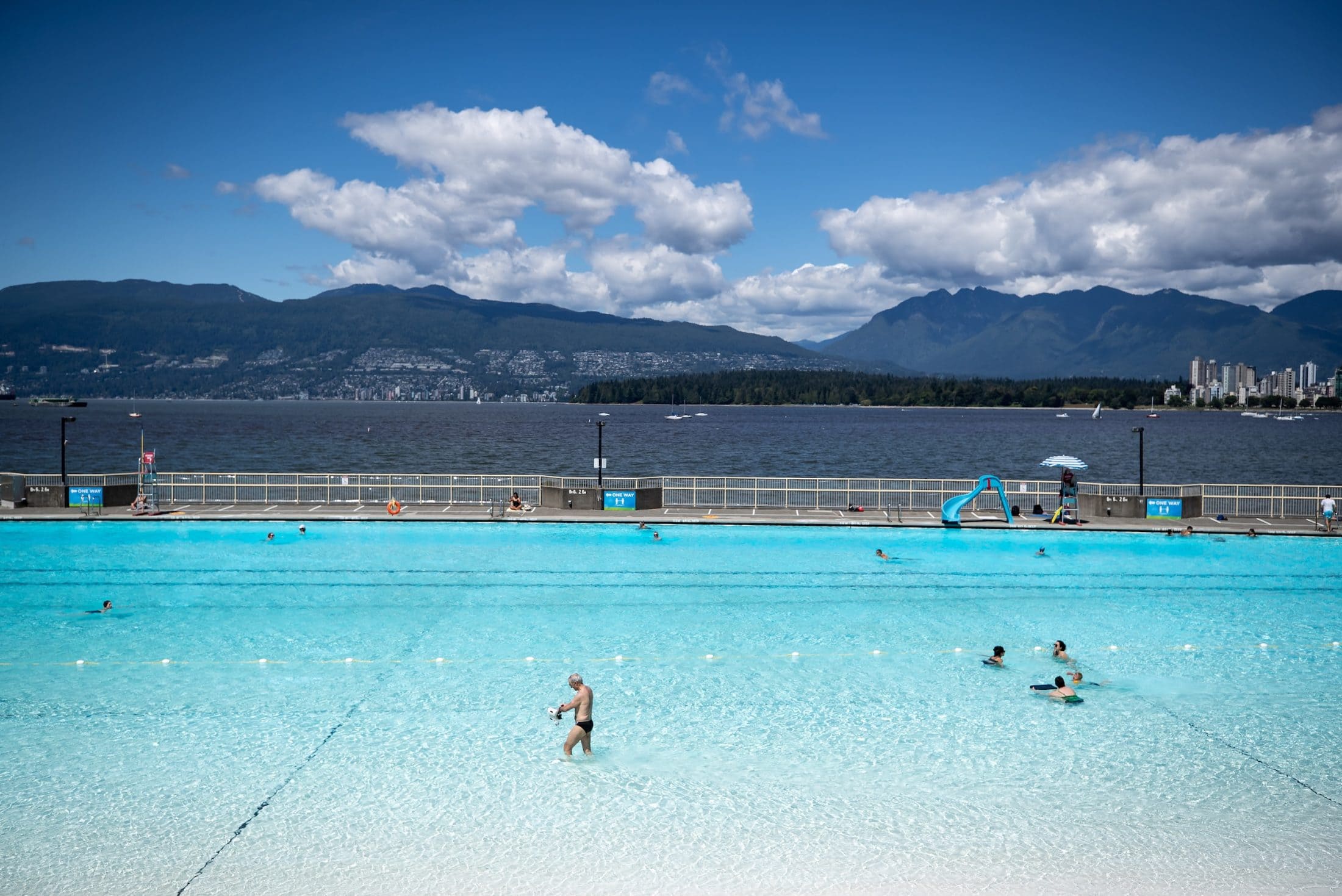
The Kitsilano Pool won’t be open in time to offer people a chance to cool off in Vancouver this weekend. Photo: Darryl Dyck / The Canadian Press
Of course, there are Vancouver’s many beaches. They’re free, numerous and open all year — but not always safe to enjoy. Last July, eight beaches were deemed unsafe due to E. coli levels. Even when they are open, they’re not accessible for everyone — like young children, those with mobility issues or anyone else who lives too far to drop by on a hot day — and a climate-resilient city should have cooling infrastructure in every neighbourhood, rather than expecting all its citizens to trek to the beach.
Pools and outdoor water infrastructure aren’t things that are nice to have. They’re climate adaptations, even if “thermal respite,” or relief from extreme temperatures, is mentioned last among the reasons for pool use in Vancouver’s 2019 aquatic strategy.
As in 2021, those most at risk from extreme heat this summer are the city’s most vulnerable: low-income and unhoused citizens, as well as the youngest and oldest among us. If only there were more places for them to escape the heat.
The Narwhal’s reporters are telling environment stories you won’t read about anywhere else. Stay in the loop by signing up for our free weekly dose of independent journalism.
From The Narwhal | News on Climate Change, Environmental Issues in Canada via This RSS Feed.