

Podcast Episode: No Abandonment, No Bunkers: Preparing for Disaster Together
0:00
/4407.693
1×
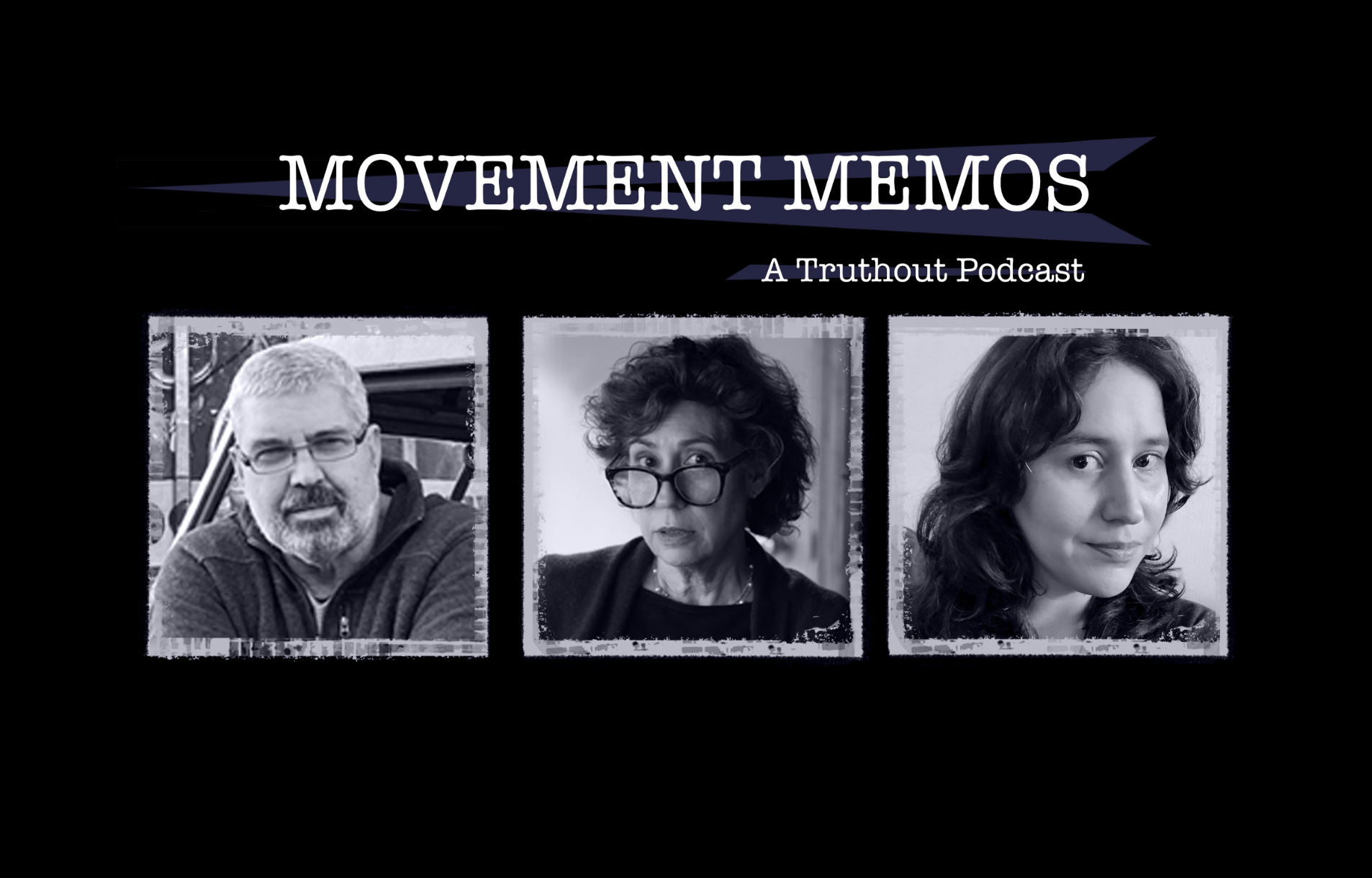
As climate disasters intensify and authoritarian threats escalate, most of us are underprepared for moments when systems fail or are weaponized against us. In this episode of Movement Memos, I talk with Chris Begley and Amy Edelman, authors of The Emergency Playbook: A Bunker-Free Guide to Disaster Preparation, about how preparedness can move us away from fear, isolation and bunker fantasies, and toward community, care and collective survival. We discuss how practical planning, community relationships and collective care can help us face climate disasters, political unrest and everyday crises with more courage and less panic.
Music: Son Monarcas and Mizl
Note: This transcript was originally published in Truthout. It is reprinted here with permission.
Kelly Hayes: Welcome to Movement Memos, a Truthout podcast about organizing, solidarity, and the work of making change. I’m your host, writer and organizer Kelly Hayes.
This week, we are talking about disaster preparedness. As climate catastrophes intensify, most of us are unprepared, as individuals and as movement groups, to mobilize strategically when the lights go out or floodwaters rise. While impressive mutual aid efforts often spring up in the wake of catastrophe, many of those efforts are built under extreme pressure, by people who are exhausted, afraid, and trying to invent systems of care in real time. What if we had existing plans for those moments? What if we had roles, communication strategies, and relationships that would allow us to respond more effectively?
Today, I’ll be in conversation with Chris Begley and Amy Edelman, authors of the forthcoming book The Emergency Playbook: A Bunker-Free Guide to Disaster Preparation. This book is not a liberation text. It’s a practical resource. And I am very interested in how the checklists, how-tos, and insights that Chris and Amy offer can be adapted toward collective ends.
Many people actively avoid thinking about climate change, preparing for climate disasters, or fighting for the natural world, because all of that can feel overwhelming. I believe that talking about how we can prepare together, and how we can take care of each other when disaster strikes, can make difficult subjects more approachable. I also think that being more prepared to show up for each other can reorient us, emotionally and politically, in relation to one another. It can help us build the relationships, trust, skills, and collective courage we’ll need to survive what’s coming — and to defeat fascism.
If you appreciate this podcast, and you would like to support Movement Memos, you can subscribe to Truthout’s newsletter or make a donation at truthout.org. You can also support the show by subscribing to Movement Memoson Apple or Spotify, or wherever you get your podcasts, or by leaving a positive review on those platforms. Sharing episodes on social media is also a huge help.
Truthout is an independent news organization, publishing stories that the craven corporate press won’t touch. We are a union shop with the best family and sick leave policies in the industry, and we could not do this work without the support of readers and listeners like you. So thank you for believing in us and for all that you do. And with that, I hope you enjoy the show.
[musical interlude]
**Kelly Hayes:**Chris, Amy, welcome to Movement Memos.
Amy Edelman: Thank you for having us.
**Chris Begley:**Yeah, thank you.
Kelly Hayes: So, how are each of you doing today?
Amy Edelman: Well, it’s a lovely, sunny day in New Jersey, and so for the moment I’m doing well. Thank you.
**Chris Begley:**Yeah, I’m doing fine too. I’m in Tennessee at the moment and considering everything, doing okay.
**Kelly Hayes:**Considering everything, oof, I feel that. So, what would you all like our listeners to know about who you are and what you do?
**Chris Begley:**Well, I’m Chris Begley. I’m an archeologist, I’m a wilderness survival instructor and a college professor, and I’m the author of a previous book called The Next Apocalypse where I talked about how things fall apart and how we think about them falling apart, and why that may not be what has ever actually happened in the past.
**Amy Edelman:**Hi, my name is Amy Edelman and I’m an entrepreneur and have spent most of my working career in public relations. About 10 or so years ago, I started reading things about the impending climate crisis that made me a little concerned, and I found that when I brought the conversation up with friends or family, they weren’t that interested and I really felt like I wanted to do something about it, so I started putting together this book. Around that time too I read Chris’s book, and he came at the issue of collapse from a historical standpoint, which I found both interesting and at the same time very hopeful, so I reached out to Chris to see if he would be interested in working on The Emergency Playbook with me and he said yes.
**Chris Begley:**And one thing that I think’s really important that Amy is part of this and as an author of this book is that she really is the audience that she envisioned, and I think that that’s really important. And I know in the course of writing it there were lots of things that I never would’ve thought to include or to present in a certain way, and so that really brought a lot to this project.
**Kelly Hayes:**A lot of people hear “preparedness” and picture right-wing bunker fantasies, hoarding, guns, or individualistic escape. What were you trying to rescue from that culture when you wrote this book?
**Chris Begley:**One of the problems with the sort of doomsday prepper presentation of these things is that it really does turn a lot of people off because the sorts of things that are being advocated are really just not part of a lot of people’s lives. And when we look historically and we see that the focus needs to be on community and that what really gets you through these problems include things like empathy and understanding and a sense of justice and generosity. And first of all, not only is that not the kinds of things that we typically celebrate in anything from the disaster narratives that we create for ourselves, but it’s also not something that’s commercial. What are you going to… You can’t sell empathy, you can’t sell generosity, you can’t market these things. I think that when so much is driven by that, those are the sorts of things that get lost. And that’s really what I would like to rescue from the more typical conversation about how to prepare for the future.
**Kelly Hayes:**Thanks for that. I feel like a lot of people know we are living in unstable times, but still don’t spend much time thinking about disaster planning, either because it feels overwhelming or because they assume that in a worst-case scenario, they would already be kind of screwed. So maybe it’s better not to think about it, but you argue that preparation can actually reduce fear and help people think more clearly. How do you approach preparedness in a way that is honest about danger without leaving people overwhelmed? And how do you hope people engage with this book?
**Amy Edelman:**So we basically outline the scenarios which are very scary in the back of the book, but we also tell people that just taking the first steps to preparedness will make them feel less stressed and more in control. We’re very real about the danger and we don’t suggest anywhere that it’s not going to be bad, but we do, Chris specifically cites how things have happened historically, which we hope will make people feel a little more confident about moving forward.
**Chris Begley:**I think one of the ways that we sort of deal realistically with the dangers is to actually deal realistically with the dangers, because that’s not what you’re getting often in these discussions. You’re getting these fantasies that relate to all sorts of other things, but don’t really represent the dangers. There’s many examples, for instance, electromagnetic pulse. That’s a real phenomenon and it would really cause problems, but there are very limited settings in which that’s going to be something to worry about. However, if you look at the doomsday prepper type of, well, everything, their suggestions, the narratives they create, this is a major player in how things go wrong. So what we do is really look at what is likely to happen, what has happened in the past, and how does that look for the average person? And, of course, preparing for something, and we all have experience with this, preparing for something really creates this sense that you have some control, some mastery, some plan, and that you’re in a better shape to get through this.
Kelly Hayes: Can you say a bit more about how you’re hoping people will engage with this material?
**Chris Begley:**Well, there’s a couple of things in terms of how people will engage with the book, it is written as sort of a handbook where it’s not necessarily the kind of narrative you might read all the way through. It’s divided up into sections that apply to certain situations, but there is a part of the book, the first part of the book, that talks about things that are much more general and widely applicable. And the sorts of situations that we described, these disasters are particular ones that we thought of or that might be common, but there’s really an infinite number of situations where preparing for the unexpected is important, and where it’s important, we both really felt to challenge these narratives that are out there. I mean, one of the things that I’ve discussed a lot with Amy is how, think about in childhood, you’re a kid, you’re out with your parents, you need something, a Kleenex, a bandaid. Who has it?
Well, it’s likely to be your mom in her purse. And if you look at the prepper literature that’s been co-opted and turned into this sort of masculine thing that is heroic and makes you tough to know about it. I mean, it’s the same with the wilderness survival literature. My wife, who is from Honduras and grew up in a rural area there, often would comment on the kinds of stuff I was teaching in my wilderness survival courses, that it was really everyday activities for her as a kid growing up in these communities. And that is the kind of thing that you see when you really start to look into this. A lot of things have been purposefully mystified so that you can claim some expertise or that you can perhaps market that. For instance, camping and hiking, that’s really sleeping and walking. And those sorts of things are, or the way in which that has been twisted into a specialized activity is indicative of what you see in a lot of the conversation around disaster preparation and dealing with emergencies.
**Kelly Hayes:**One thing I appreciate about the framing of this book is that preparedness isn’t approached as a consumer identity, or baked into fantasies about leaving other people behind. It’s a process that begins with some very ordinary questions that we should ask ourselves now, instead of grappling with them later, after a crisis has begun. Like, when the power goes out, who needs to be checked on first? If our phones stop working, where do people gather? If someone’s medication has to stay cold, who has a generator or access to refrigeration? If people have to leave quickly, do they know where they’re going, or what they’re bringing with them?
I know a lot of us have a mental block around this stuff, because it can be overwhelming. But as activists and organizers, this kind of planning is part of the work we need to be doing anyway. It’s about knowing our neighbors, assessing our capacities, looking for gaps, and lining up resources. It’s also part of mapping lines of care and defense, which is essential in this era, no matter what kind of threat we’re addressing. We don’t have to terrorize ourselves or others with visions of total collapse. We just have to be honest, with ourselves and others, about the disruptions people are already experiencing — extreme heat, bad air, power outages, floods, targeted repression — and prepare in ways that make us more useful to each other, rather than more isolated from each other.
And some of these practices can be really simple. One small thing I learned from you, Chris, was to carry cotton balls with me if I might need to start a fire. In The Next Apocalypse, which is a book I absolutely cherish, you talked about stretching cotton balls across wood when you’re trying to start a fire, and smearing a little petroleum jelly on them. Since then, I’ve never been in the woods without a mini Ziploc of cotton balls and some petroleum lip balm, and those things have come in handy.
The Emergency Playbook is packed with practical guidance and useful considerations, but the book is largely geared toward individuals and families. This podcast, on the other hand, is geared toward activists and organizers. So I’m interested in how people might put the information in the book to collective use. Let’s say a few people in a neighborhood, a friend group, or an organizing community are convinced they should be more prepared, but they’re starting from scratch. What are some practical first steps they could take together?
**Chris Begley:**One of the things we concentrate on in this book is community, and really, any group, whether it’s a group of activists that are planning some action or a friend group. All of these are microcosms of a larger community. And so in some ways the sorts of things we talk about work wherever you’re going, identifying your community, identifying the needs, figuring out what it is you need to do to prepare, whether that’s acquiring knowledge or skills or actual stuff. And so when I think about who might use this book, it could be truly in my mind, any group. I suppose it could also be an individual, although ultimately we’re all going to be working together to create something.
Now what we talk about in this book are dealing with and creating or recreating, rehabilitating these larger systems that might collapse for some reason, the power grid or an agricultural system, but it equally applies to the sorts of things that you need to do together to get something to work. So I’m hoping that there’ll be stuff here that would be applicable at a variety of scales.
I think one of the first steps that we all need to take is to understand and get to know your community. And some of us have already done that, and some of us really are not the type of people for whom that is very easy. And I think maybe I fall into that category. I have groups of friends, but they tend to be specialized and not geographically located in one area. Whereas people that live in my neighborhood, I know them to say hi, but I haven’t really in some cases established maybe that kind of community that you might need, knowing who lives in your building, knowing who your neighbors are, knowing who people are that you’re likely to be with when you need to utilize this. That would be part of that.
I think understanding the likely scenarios that you’re going to face, and some of these will be global and might apply almost to everybody, but in other cases it’s going to be dependent on where you are geographically. In Kentucky, for instance, we have tornadoes a lot. That’s less of a concern in other areas. We don’t have really any earthquakes to speak of. So that would be part of what you might do, look at who your community is and what you need to prepare for.
**Kelly Hayes:**That makes so much sense. In the same way that an individual or a family can sit down and ask what kinds of disasters are most likely in their area, a group of friends, a tenant association, or a Food Not Bombs group can do the same thing. What emergencies are most likely where we live? What skills do we already have that could be useful, and what could some of us learn? What supplies do people have or need, and where should they be kept?
People could choose an emergency — a tornado, a power outage, an intense heat wave — and talk through what they could actually do to support each other. What would people need in the first hour, or on the first day? What might get harder after the first week? Who has relationships with people who might otherwise be isolated? Who has transportation, medical knowledge, tools, batteries, or extra food and water? And what parts of the plan would people need to practice before they’re under pressure?
The book also has a really useful section on crisis communication: how people will reach each other, where they’ll meet if communication breaks down, what backup channels they’ll use, and why important numbers need to exist somewhere other than our phones. I think that gives groups a helpful place to start. How will people communicate if Signal or social media aren’t reliable options? Who is responsible for reaching whom? Where do people meet if their phones aren’t working? Where should people look for updates? Who is empowered to distribute verified information on behalf of the group? Does everyone have a printed list of the people they’ve agreed to contact? And does each person have their own emergency contacts written down somewhere other than their phone?
I think a lot of this gets less intimidating when we think about it step by step. So, thinking across the scenarios you cover in the book, what are some of the preparedness basics that matter most across multiple scenarios?
Amy Edelman: In the book we have something called “the rule of three,” which is basically what you need in the order that you’re going to need it. In most cases, we say that it’s best to shelter where you are, but if you’re unable to do that, then again, the rule of three pretty much provides the order in which you’re going to need supplies.
**Chris Begley:**Yeah. I’ll expand on that a little bit there. Yeah, this rule of three is something that’s very commonly used in survival literature. It’s often criticized too, because it’s not very exact, but what it really does is order the things in order of importance. In other words, exposure will get you before thirst, which will get you before hunger, et cetera. And so I think just that sort of knowledge is important.
When I think about what might be applicable broadly, it really does relate to that. It’s having, first of all, the knowledge that enables you to make reasonable decisions. But secondly, one we haven’t talked about yet, which I think is more and more really important, is to know where to get good information and who to listen to and who’s going to give you the right kind of information and not some sort of misinformation or disinformation that might be put out there for some other reason.
And that can be a challenge. I mean, it’s always been a challenge, but it seems like now it’s more and more of a challenge. And unfortunately, there’s really no shortcut to that except to look for multiple sources, look for what fact checkers are saying and not just one fact checker, and see how it resonates with your own experience and make those sorts of decisions.
And then probably the last thing that is important is to have on hand some of the things that you’re likely to need in these first days after some sort of emergency happens, which might include some clean water that you can drink, food that you can prepare without electricity or without a stove, something that you can eat just like it is, clothing or something to create the sorts of shelter that you’re going to need as well. So that’s what comes to mind for me, the information, the understanding, the sources of information, and then finally some real basic materials.
**Amy Edelman:**Of course, I will add here that it’s going to be especially challenging to know who to trust because more and more of the media is being snapped up by a couple of families and you don’t know. And then of course, if you go to Google something, you’re going to get an AI response and you don’t know whether you can trust the AI response. So it’s kind of scary that the window, just since we wrote the book, the window is quickly closing to really know an authoritative voice, somebody who knows what’s going on, versus just a fantasy. So it is going to be very challenging, I think, but I agree with Chris that it’s very important to know what you’re dealing with. It’s just unfortunate that they make that so hard these days.
Kelly Hayes: I think what you’re highlighting, Amy, is so important. You all talk about this in The Emergency Playbook, and Chris also writes about it really memorably in The Next Apocalypse: the importance of discernment, and how the ability to distinguish good information from bad information can be a matter of life and death. We saw that early in the pandemic, when people who latched onto bad information were at greater risk of dying. And now we’re all up against an increasingly enshittified information environment, where even well-meaning people can share inaccurate, outdated, or made-up information without meaning to.
I think a good principle for organizers is to move quickly when we’re offering care, and to slow down when we’re circulating claims. Sometimes people repeat bad information because they’re afraid not to — because if it is true, people could get hurt. We saw that a lot during Operation Midway Blitz in Chicago, when ICE was attacking our neighborhoods. There were false alarms, and we needed teams of verifiers across our communities who could assess, as safely as possible, whether an ICE sighting was real. So part of preparedness is knowing how we will confirm what we can, how we will communicate what we know, and how we’ll avoid amplifying claims that could mislead people or intensify panic.
And while the media ecosystem is being burned to the ground by billionaires and fascists, we also need people to read, listen to, support, uplift, and invest in the outlets they trust. I talk a lot about the Truthout Center for Grassroots Journalism because I think it’s so important to support, not just one publication, but an ecosystem of publications and outlets that are telling the truth, and treating the truth as a front of struggle — because that’s what it is.
I also think it’s really important to know what news you trust locally. If the power went out, and you were relying on a hand-crank or battery-powered radio, what station would you depend on? If you learned something really important by listening, how would you spread the word?
Now, you’ve both mentioned the rule of three: that you can survive about three minutes without air, three hours without shelter in extreme conditions, a few days without water, and a few weeks without food. As you note in the book, these are approximations, but none of us are going to be at our best when our breathing is compromised, or we’re too cold or hot, or we’re hungry or thirsty, even if the situation isn’t deadly yet. Under those conditions, we are less able to help ourselves or help others.
Which makes me think of something Margaret Killjoy said on the show a while back, about how individual preparedness can better position us to help others in a crisis. Because if I’ve got a bucket of dried food in my closet that can last me a month, I won’t be so obsessed with finding food that I can’t help my neighbors.
If I have masks around, which I do, as someone who still masks in a lot of public settings to avoid COVID, I am going to have more freedom of movement the next time there’s an air quality emergency. Wildfire smoke is affecting Chicago more often and more intensely than it used to, especially in the last few years. We all need to be prepared for those kinds of disasters. And being more prepared at a personal level can put us in a position to share what we have, and to make ourselves more available to others.
Amy Edelman: I will say that when I started poking around, it was prior to COVID, and one of the things on the list (I kept a running list of what might be good to have) were masks. And so when COVID hit … And toilet paper. So when COVID hit, I wasn’t one of those people lined up outside of Costco or CVS needing hand sanitizer and masks and toilet paper because we had them already.
And again, even though it was very scary, my daughter got it early on before there was a vaccine, but we were prepared and that gave us a certain sense of control over the situation. But absolutely bad air, in addition to heat and drought, which will increase wildfires, you can’t see it all the time, but yeah, you definitely should be prepared for it.
**Chris Begley:**And Kelly, I think that’s a good point too, about how you’re compromised as soon as you start lacking in some of these things. And one of the experiences that I have a lot or see a lot at least when I’m scuba diving, which I do in my life as a maritime archeologist, is that panic is one of the things that you really worry about. And of course, if you’re underwater and you suddenly have some issue with breathing, you can imagine how that could induce this panic.
And so one of the things you really watch for in students and your dive buddies are the beginnings of this panic, which quickly gets out of control. And in general, when you’re in these situations where suddenly this thing that you’ve taken for granted perhaps is now a struggle, it becomes harder to do everything, to think clearly, to remember things, to behave in the way you would like to behave because suddenly you have a new urgency to these very basic things. So that’s something to think about too.
**Kelly Hayes:**I really appreciate that point about panic, because one of the things I found useful in the book is the reminder that preparedness isn’t just about having stuff. It’s also about reducing the number of decisions you have to make while you’re scared, disoriented, or under pressure. So part of preparedness is asking: What can we decide now, while we’re calm, so that people have fewer decisions to make when they are not calm?
And when it comes to navigating or avoiding panic, rehearsal is also really important — which is something I’ve learned from activism. When we’re learning how to canvass and talk to our neighbors about an issue, we practice first. When we’re preparing for a risky direct action, we rehearse it, sometimes for weeks, until the steps we have to take become muscle memory. Our bodies remember what it feels like to go through those motions, and that familiarity can help a lot when the stakes are higher. So, we shouldn’t just be asking, “what’s the plan?” but also, “what parts of the plan can we practice?”
I also want to talk about extreme heat, because that’s a major threat communities will face more and more in the coming years, and it’s a threat that can quickly affect people’s judgment, mobility, and ability to help each other. How can people be better prepared for disasters involving extreme heat, and what common mistakes can we avoid?
**Amy Edelman:**We do address extreme heat, there’s a whole chapter in The Emergency Playbook about extreme heat. That is something that people need to be concerned about in addition to the events that ripple out from extreme heat, which is possible grid failure, which then makes everything even worse because then you don’t even have electricity.
It’s important to know what heat stroke looks like, what heat exhaustion looks like, what to do in those circumstances. It’s important to have enough water on hand because you’re going to sweat more and your body’s going to need more H2O. We talk about if you do lose power, where to go in your home, what to do with the space to maximize the cool air. So we do address extreme heat quite a bit in the book, basically how to keep cool both inside your home and outside as well.
**Chris Begley:**And I think talking about heat is important because there are sort of limited things you can do about that. Now, if we’re talking about long-term, you can think about how to construct buildings, how to construct communities that maximize the ability to keep cool. For instance, houses that have good airflow, buildings where their windows open and they’re not dependent on air conditioning or shaded areas, et cetera.
But if you’re talking about what to do just in an emergency given what we’ve got now, I think it’s important to understand, first of all, that this is a real danger. I think a lot of us might think of being hot as kind of an annoyance, but it is deadly and there’s certain parameters in which your body can function. If you get beyond that, you won’t. And I think one of the first things to understand is how your body responds, what it can withstand, and what it takes to cool you down, whether that’s having water to evaporate and take away some of that heat or airflow, et cetera.
But it’s also critically important to understand when this is an actual danger. And this can be, of course, when you’re outside doing some sort of activity, but it can also just be somebody that is, I don’t know, has limited mobility and is stuck in an apartment in Chicago where it can get so hot that they’re just unable to cool down sufficiently.
So it might involve checking on your neighbors, going to one of these cooling centers. And if things like that don’t exist, then it would involve coming up with some other way. I mean, I remember when I lived in Chicago during grad school, going out to the lake around, and it was after midnight because it was so hot, and the lakeshore was full of people and so was the lake. Everyone had come out from their apartments that didn’t have air conditioning and was just sitting in the water. Probably can’t do that all the time, but in that sort of emergency, those are the responses that you might have to take.
Kelly Hayes: As someone who lives near the lake in Chicago, I can vouch for that solution. Sometimes, you just need to jump in the lake. But I also want to caution people, as the two of you do in the book, against thinking of the beach itself as a refuge during extreme heat. While being in the water may be helpful, simply hanging around near the water can actually make things worse, because intense heat causes water to evaporate, making the air more humid. And that humidity can make it harder for our bodies to release heat through the evaporation of our own perspiration.
So, as you all outline in The Emergency Playbook, the best thing most of us can do during an extreme heat event is stay inside with the air conditioner running. And if you don’t have an air conditioner, remember to keep windows open, but the shades or blinds lowered, because shade really does make a difference, whether we’re indoors or outdoors. And as Chris says, know where the cooling shelters are in your area, or where else you might go to cool down.
One fact I learned from the book that I found really interesting was that, according to OSHA, almost half of heat-related deaths among outdoor workers happen on the first day on the job, and more than 70 percent happen within the first week. So I think that’s important to remember if we need to be outside on really hot days, for whatever reason. OSHA recommends that people start with 20 percent of their normal shift when adjusting to workdays in the heat, and I think we need to remember that when we’re planning mutual aid, protest, or anything that requires people to be outside when the temperature’s high.
I also appreciate Amy mentioning that we need to know the symptoms of heat exhaustion and heat stroke. We’ll be sure to include a link to a resource around recognizing those signs in the show notes, along with information about where to preorder a copy of The Emergency Playbook, which includes that information as well.
So, when I’ve seen people get into trouble in extreme heat, it’s often because they haven’t been drinking enough water. Dehydration can really fuck us up, which is why access to water is so important in a crisis situation. So, when planning for emergencies, how much water should the average person try to keep in their home?
**Chris Begley:**To answer the question how much water should somebody have on hand, there was sort of this old standard response, which was about a gallon a day and enough for three days, but we’ve seen that these disasters that are happening, and I’m thinking of the floods in Eastern Kentucky or the floods around Asheville, North Carolina, that damaged the infrastructure to such a degree that it wasn’t three days. It wasn’t even three weeks. It might be more like three months before stuff is restored. And storing three months of water is probably not realistic for most people, but certainly more than you used to.
I would, I guess as sort of a happy medium in there, suggest something like five or six gallons per person, that will give you enough to drink and cook with for a while. It’s not going to give you enough to flush toilets or to bathe or any of those things. So that might be something that creates a whole other set of problems. You’re going to have a certain amount of water, and how are you going to use that or allocate it?
**Kelly Hayes:**And I think the storage of water is also something we should think about collectivizing. Because I don’t really have room to store much water at my place, but I’m sure I know somebody who does. In fact, I have a friend who, for years, stored a bunch of water at his place, because he had the space, and he knew his friends didn’t, so that was something he could offer, in case of a disaster. I also appreciate that the book includes information about how to purify water, if you’re ever in a position where you have to source your own water and make it fit for consumption. I hope I never have to do that, but I’m also really glad I know how.
Now, I find that a lot of disaster advice assumes you have money, mobility, storage space and a safe place to go, but a lot of people are facing significant constraints. For example, I am a disabled person living in a one bedroom apartment in Chicago, so I am very limited in terms of what I can store and what I can carry. And a lot of people I know are living paycheck to paycheck. What does realistic preparedness look like under those kinds of constraints?
**Amy Edelman:**Well, going back to what you said earlier, Kelly, about the importance of rehearsal, it doesn’t cost anything. Sure, it takes time and I know a lot of people don’t have a lot of time these days either, but thinking about what could happen and being prepared in terms of what your plan is – that puts you ahead quite a bit. So it doesn’t need to be necessarily about money and we totally get that, that there are a lot of people who are working hard these days for not a lot of money.
In terms of having the space, what you can store and what you can carry, the book was written really to meet people where they are in terms of what they’re able to do. And we really believe that any preparedness is putting you ahead in terms of how you’re going to feel and respond if there’s an issue. Again, going back to community, that doesn’t cost anything to knock on your neighbor’s door and introduce yourself. And in the same way, if somebody has a mobility issue, it’s good if your neighbor knows because when you plan ahead, you can make provisions for all of this. If you don’t have money to stock extra food, but you know your neighbor and your neighbor knows you, they’re going to be more likely to share what they have.
I think time after time it comes back to being able to rely on other people. Nobody gets through it alone. I mean, these billionaires with their bunkers might think that they’re all well and good, but nobody gets through it alone.
**Chris Begley:**Yeah. I’ll say a couple of things about that too. In writing this, we recognize that people are in such different situations, whether you live in a rural area, an urban area, if you live in a high-rise apartment, if you have lots of money, if you don’t, if you have children, if you have pets. And there’s a couple of things I think that come out of that. The first is that this is a process that can start that doesn’t have to involve a lot of special purposes. Now, like a lot of things like camping or any of the outdoor stuff, this is something that has been turned into an industry and you might be convinced that you need some of these special things, but often you don’t. A blanket will work, a kitchen knife works. The tools that you have around the house and the things that you have around the house may be sufficient to do what you need to do.
If you’re thinking about preparing and you do it little by little, buying a little extra food and putting it in a box, looking for … Well, I don’t know. Cleaning out old milk jugs or buying gallons of water, there are many ways that you can start to accumulate the things you need even on a budget. But the big thing that I want to talk about here is this idea of how people are differently able to deal with these situations. And maybe let’s take for example limited mobility. I think that it’s easy to start to think you have your regular people and then you have people with these problems that are going to make it harder.
Well, the reality is that first of all, everybody’s different and secondly, everybody has these limitations. I don’t care if you’re an Olympic athlete or, I don’t know, a young person, this is something that even in optimal condition, you have limitations. You can only do certain amounts. You have certain parameters that you need to live within in terms of temperature, and that’s going to be different for different people.
So if you have somebody that’s unable to walk for any great distance, that’s just one more parameter that you need to consider. Think about somebody with children. You’re not going to say, like, “Well, let’s leave the two-year-old behind because they just can’t cut it and walk far enough.” That’s just something you deal with. And so I think that it would be important to think about these differences as just that, differences, not problems or not things that are going to make it very hard for you to survive or thrive in some sort of emergency because everybody’s dealing with it to some degree or another. And that’s part of our responsibility as members of the community is to use whatever advantages you have to try to make up for the disadvantages that somebody else may have, because somebody’s going to be doing that for you as well.
**Kelly Hayes:**I appreciate the point that we’re all going to be grappling with limitations in a crisis, and I also want to extend some empathy to folks who know that, due to disability, or some other marginalization, they tend to get left behind in a crisis, or even just amid the everyday crisis of capitalism. That’s why, when we’re planning at the community level, a refusal to leave anyone behind really has to be at the heart of what we’re doing collectively — and that’s an organizing principle that Mariame Kaba and I talk about a lot in Let This Radicalize You. Because that refusal isn’t just a best practice for effective mutual aid, and the work of saving each other in a crisis. It is that, but it’s also the key to fighting fascism. Resisting the normalization of human disposability, refusing to abandon each other when we’re told it’s necessary or expedient, that’s how we build a culture of care and solidarity, and that’s how we’re actually going to create the world we want.
But for folks who are navigating preparedness with disability in mind, I want to mention that I found Leah Lakshmi Piepzna-Samarasinha’s document, Half Assed Disabled Prepper Tips for Preparing for a Coronavirus Quarantine useful during the early pandemic, and Leah’s book, Care Work: Dreaming Disability Justice, is also worth checking out, if you want to think more about the ways disabled people have helped each other survive. Shira Hassan’s book, Saving Our Own Lives, is also a really valuable resource for people who want to explore the lessons of liberatory harm reduction, which I think are really relevant to preparedness. Because the survival work of sex workers, people of color, queer people, trans people, and other criminalized folks holds a lot of lessons for people who are learning how to care for each other when systems fail, or when systems are weaponized against us.
I’m also thinking about something else Margaret Killjoy talked about when she was on the show. She mentioned hosting a community event where organizers got a bunch of bulk dried foods together, and showed people how to parcel out a month’s worth of beans, oats, rice, and other things. People learned how to seal those portions up in mylar bags, and everyone left with a bucket that contained a month’s worth of food. Now, that’s something most of us can fit in our closets.
So, I really loved that idea, and I really want to host something like that in Chicago. I also thought about those buckets during Operation Midway Blitz, when so many of our immigrant neighbors didn’t feel safe leaving their homes. There was a network of mutual aid, and people were working hard to get food and supplies to those folks, but I thought about how helpful it would have been, if those people also had those buckets in their closets. If, when people couldn’t access food for any reason, whether it was a broken supply line, or the fear of being hunted by ICE, they had a month’s worth of dried goods in a bucket — there’s a lot of peace of in mind in that.
I still want to host that event, by the way. It’s a goal that just keeps getting away from me.
But I want us to think about the ways that preparedness can have multiple applications, and also, about the ways that being organized to care for each other can help us pivot under changing conditions.
So, in thinking about Midway Blitz, I’m also thinking about political unrest, which is something you all address in the book, including moments when people may be targeted by the state or by vigilantes. What do you want people to know about what preparedness looks like for people who are being demonized or threatened under fascism?
**Chris Begley:**I think there’s a couple of important ways to start to think about this. And one is to think about how a lot of us think about activism and standing up for ourselves or for other people. It’s a virtue, it’s something to be proud of, it’s something that you do even in the face of danger or fear, but there may be a time when, for certain people, they really need to lay low and let other people do that for them. And that’s going to be incredibly hard for some people because they’re used to being the ones that do that. But if a certain group is being targeted, it’s going to be the responsibility of the rest of us that are not targeted to take up some of that action.
I think the other thing with political unrest and violence is there’s really a lot of the preparation involves knowledge and skills and understanding how this plays out. Kelly, obviously you will have a lot of particular experience in certain kinds of demonstrations that others of us might not. And there’s going to be things that you’ve learned that other people have learned that they’ve now made available for everybody to read about. And that might be the kind of preparation you need.
How do you, for instance, deal with tear gas? Is it going to be with a traffic cone and a gallon of milk or is it going to be with some sort of mask? How do you deal with being identified? I’m thinking of somebody that I was interviewing with a future book I hope to write about demonstrations in Hong Kong and what people would do to not be recognized, which would include things like wearing black socks over your shoes because shoes are easily recognizable and it’s hard for everybody to get the same one. Everybody could get a black T-shirt or a black hoodie, but they couldn’t all get the same shoes. So they did this technique of just putting socks over their shoes to hide them.
Those sorts of things, there was a million of those, would be the kinds of things that would be part of your preparation is to learn about that. I think another one would be to understand how certain kinds of conflicts work and how they proceed and to understand that our feelings about how fast something’s going to change or whether it’s going to change may be incredibly misleading. And that’s something we can look at history to learn. People talk about that all the time, how shockingly quickly something changed and often caught people off guard.
Kelly Hayes: I think that point about how misleading our feelings can be is really important. Sometimes people minimize danger because they don’t want to believe things are getting worse. Sometimes people catastrophize because they’re afraid, or because their life experiences have trained their nervous systems to expect the worst. To really assess what’s likely, we can, as you say, look at historical trends, and we can also engage in some thoughtful, collective risk assessment.
Vision Change Win has a great toolkit on this, which I’ll add to the show notes. It offers a useful framework for assessing threats by asking questions like: Who are our adversaries? What do they have the power to do? What do they seem likely to do? What would have the greatest impact if it happened? And which threats are both likely enough and serious enough that we need protocols for them now? Most of us are working with limited time, people power, and resources, so we don’t want to get caught up in trying to prepare for every imaginable threat. We want to identify threats that are likely enough and serious enough that we need protocols for them now — and that’s true whether we’re talking about the threat of repression, vigilantes, or climate chaos.
I’m also really glad you mentioned tear gas and pepper spray, Chris, because I think everyone should learn how to treat tear gas and pepper spray exposure. Even if you don’t live in a place where federal agents have escalated in those ways, we have seen how much it matters when a lot of people are prepared to respond well if those weapons are deployed. You can find information about how to treat those exposures in the back of Let This Radicalize You, but if you can, I really recommend attending a workshop, or organizing one. If you don’t feel qualified to lead it, maybe you know someone who is, and you can take care of finding a space and bringing people together.
I think this is a great time to organize workshops on protest first aid and community-oriented first aid. Even when people are not immediately putting those skills to use, being prepared to care for each other changes our orientation toward each other. It reminds us of what we owe to each other, and it literally changes our capacity, in terms of what we’re ready and able to do for each other. And that can make us braver.
I think that’s also true of disaster preparedness. We are stronger and more willing to face things that are hard to think about when the conversation is about how we’re going to show up for each other, and how we’re empowering ourselves to act together. So many people are stuck in cycles of reaction, and one way out of that is to do something constructive with other people. It may feel overwhelming, but that’s often because we’re off on our own, trying to process things we can’t handle alone. As you said, Amy, no one gets through this stuff alone.
So for listeners who may be feeling inspired to act, but who have done almost no emergency planning, what are the first three things you would tell them to do this week, and what is one thing they could invite other people to do with them?
**Amy Edelman:**Well, going back to what we think is the main difference and one of the things we focus on in the book is strengthen your community. In a lot of places in the country the weather’s nice, so knock on your neighbor’s doors, say “hi.” I mean, it’s uncomfortable, and again, we’re living in a time where people can live in a place for 10 or 15 years, whether it’s a house or an apartment, whether it’s the city or the suburbs and not even ever talk to their neighbor. And that’s, again, not something that’s very unusual these days, but it is also something that’s very important should there be an emergency, which again, there are many types that we see coming up in the near future.
And you don’t have to knock on their door and say, “Do you have extra food o